
So simple we might forget about it – the hidden power of breathwork
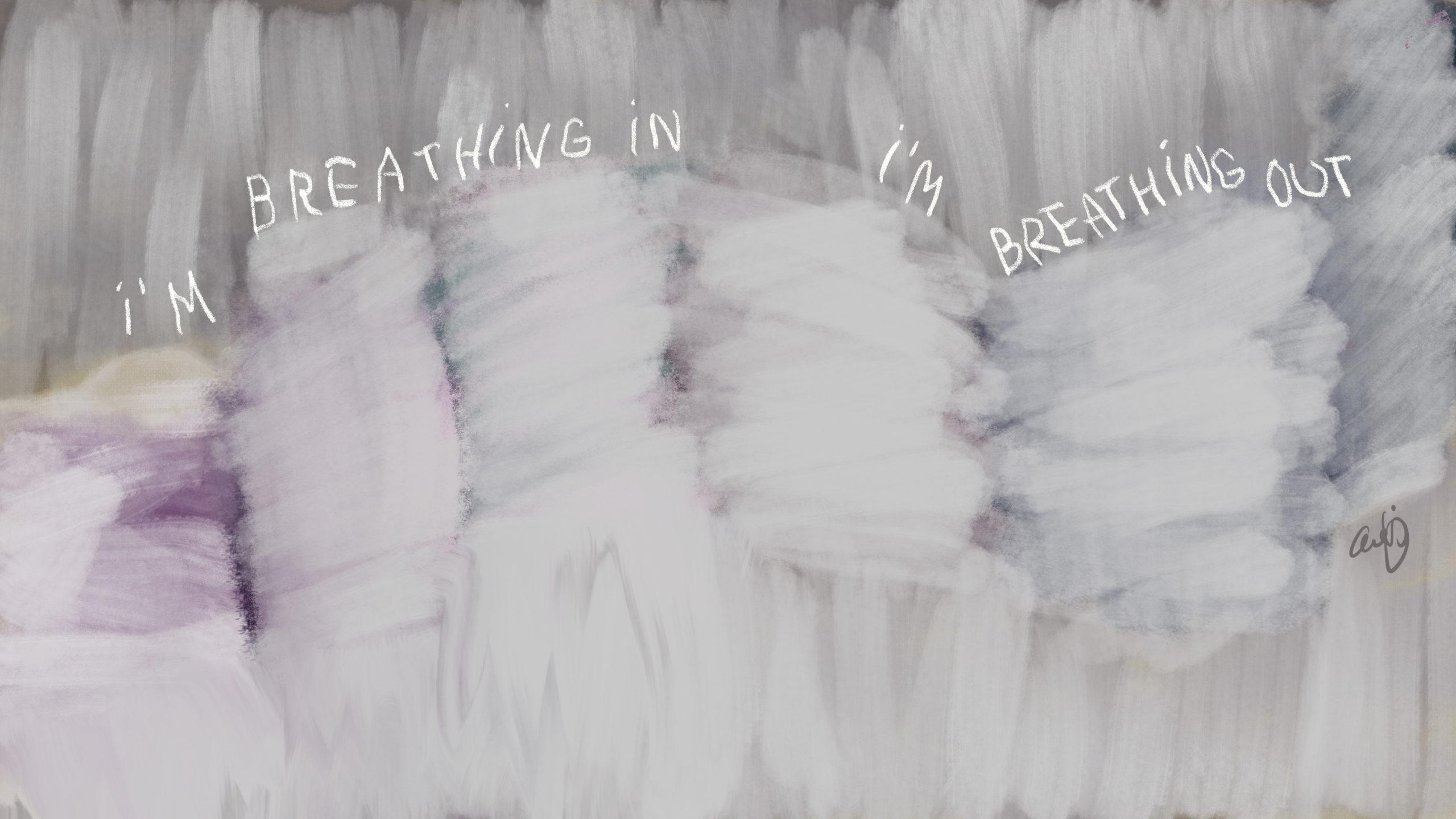
Taking a moment to just focus on our breath is a simple way to ground ourselves. It pulls us out of our heads and brings us right back into our bodies, making us more aware of what we’re actually thinking and feeling in the moment.
What’s s interesting about the breath is that it’s unique. Unlike our heartbeat or digestion, it’s an automatic process that we can actually step in and control. We can choose to slow it down, stretch it out, or change its rhythm, and then just let it go and let our bodies take over again. That gentle shift between taking the wheel and letting go is exactly what makes breathwork so effective. It’s like a back-door key to calming our entire nervous system.
Almost every breathing technique relies on the same basic idea: if we slow down our breath, our bodies and minds will naturally follow. When our brains stop receiving “emergency” signals from a racing heart or shallow chest, they finally get a chance to settle. And when things quiet down, we can start to notice our thoughts and feelings without immediately reacting to them or getting swept away by them.
The technique we’re looking at here takes that idea a step further—guiding us to a point where we can completely let go, and just trust our bodies to breathe all on their own.
One technique that is especially worth trying if we are struggling to sleep—or if our nervous system simply won’t quiet down at night—is deliberately lengthening our out-breath.
Lying down, we inhale through our nose until our lungs are full, and then we add three small, extra puffs of air. These shouldn’t be forceful; they are just enough to gently press the breath past its natural ceiling and into the subtler layers of our body. Then, we release the air slowly through our nose, creating a mild restraint in the back of the throat and the soft tissue of the gums to let it out as gradually as possible. When the exhale feels complete, we add three small, extra pushes there too—again, gently, without any strain. The whole cycle works a bit like an accordion: loaded at both ends, unhurried in the middle, with a slight hold between the inhale and exhale that doesn’t have to be long, just whatever feels natural.
One technique that is especially worth trying if we are struggling to sleep—or if our nervous system simply won’t quiet down at night—is deliberately lengthening our out-breath.
After several cycles, our breath naturally deepens, and we can drop those extra pushes at the end of the breaths. Our only task then is to slow the rhythm down even further, cycle by cycle, until at some point our body takes over entirely. There is no active involvement on the inhale, and none on the exhale; our breathing just continues on its own, at a pace our body has chosen for itself.
That handoff is the most important moment of the technique. It only happens once our rhythm has slowed down enough, and our body is relaxed enough to run the process without any prompting from us. When it does, something in our entire system settles—bringing a feeling that is closer to the deep rest of a long float tank session than to ordinary relaxation.
In the beginning, it can take twenty to forty minutes to reach this point, but with practice, it takes considerably less time. And that time isn’t wasted: the depth of rest we reach this way tends to reduce our overall need for sleep and shorten our recovery time.
Over time, this also raises the threshold at which our nervous system fires. That is why the practice tends to help so much with panic attacks and general nervousness—not just as a quick fix in the moment, but as a deeper, structural shift in how easily we get triggered.
You may also like

We are all giants
While we might identify ourselves with our small egos, there’s a giant within us. THE SMALL EGO Our…

Looking outside for what’s inside — The real work is internal
We are so used to searching for solutions outside ourselves — in the light of the world — that we…
You may not know that meditation is…
When we thought meditation was sitting on a cushion in a certain posture focusing on something,…