
The Luxury Illusion: Behind the High Life of a Met Gala
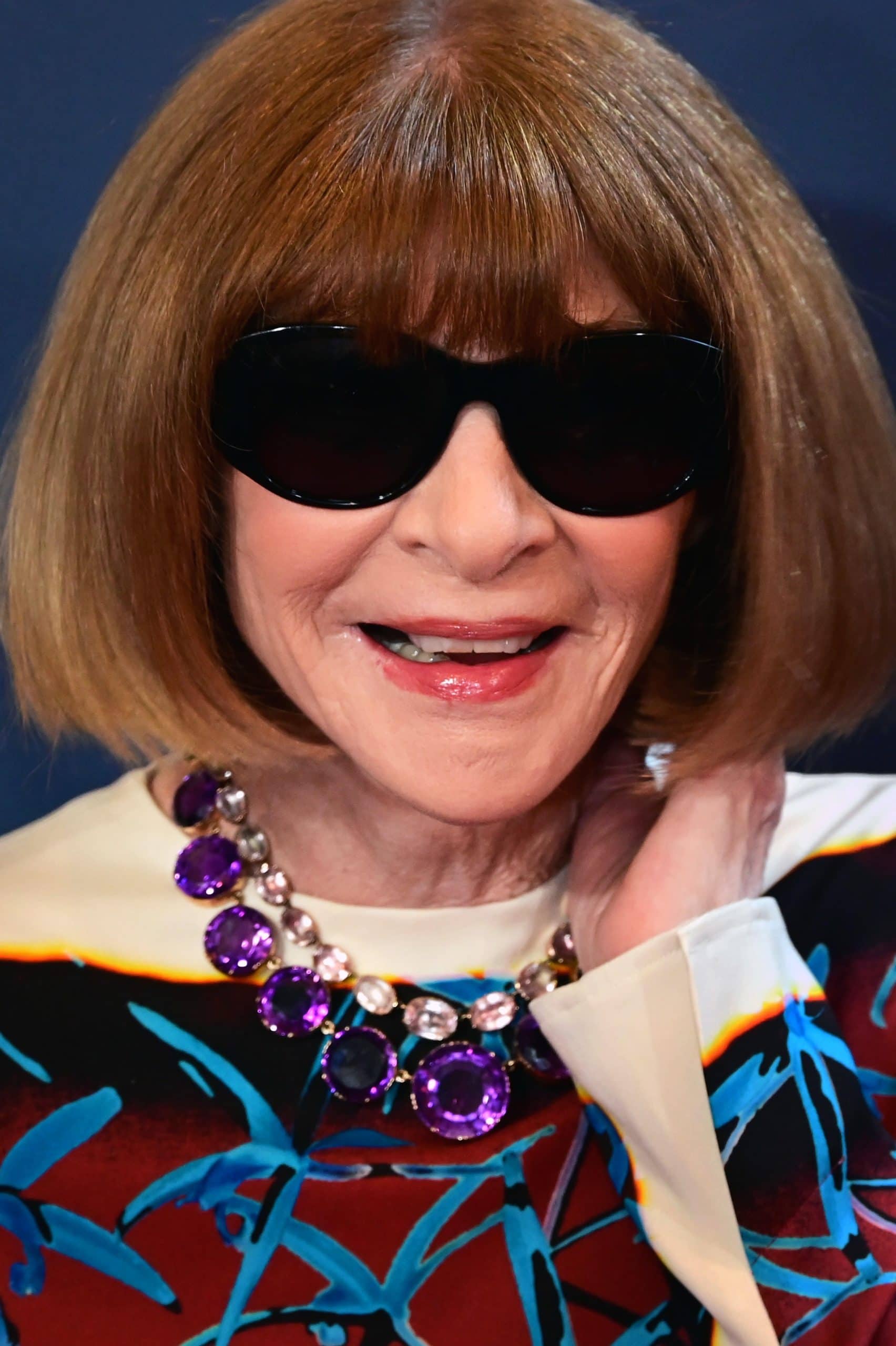
Image Credit: Philip Romano, CC-BY-SA-4.0
Taraji P. Henson didn’t attend this year’s Met Gala.
When a writer warned celebrities not to wear their “ICE Out” pins to a gala “sponsored by Jeff Bezos, who has backed Trump, who has slashed arts funding” — Henson co-signed it loudly: “I am so confused by some ppl that are going. I am just like WTF ARE WE DOING.”
She also reposted an image from EU reproductive rights organization My Voice My Choice, placing Bezos’ $500 million superyacht next to the fact that immigrant workers in Amazon warehouses face precarious conditions, low wages, and high injury rates. Her caption: Enjoy the MET. With a side-eye emoji.
It’s a striking image. The boat. The warehouse. The ballgowns. The juxtaposition is obscene. But here’s the thing: the juxtaposition was always there.
Henson attended last year’s Met Gala. And the year before. She’s been a regular. The divide between the people serving canapés and the people eating them didn’t originate with Bezos’ ten million dollar check. It’s constitutional to the event. What Bezos did was put a face — his face — on a dynamic that the gala has always depended on but has always preferred not to name.
The concept of a fundraiser in high society is as old as high society itself.
The concept of a fundraiser in high society is as old as high society itself. The mechanism is simple and has not changed: the wives of powerful men drape themselves the way they drape themselves in couture: as an aesthetic, as an identity, as a form of social credibility, while their respective husbands extract what is there to extract. The generosity is the aesthetic. The charity is the accessory. And the wealth that makes it all possible is generated elsewhere. The Met Gala is not a deviation from that tradition. It is its most photographed expression.
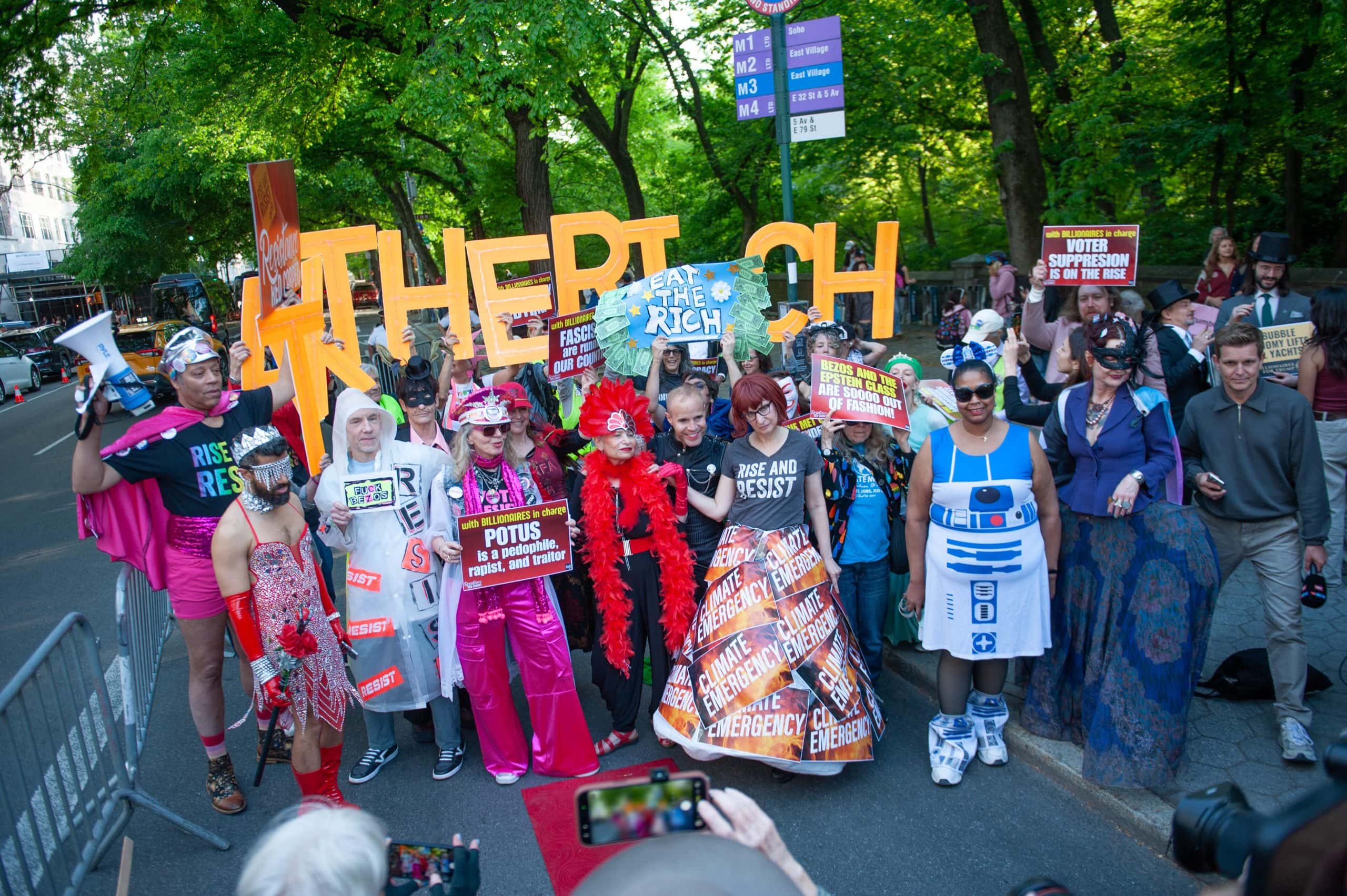
Image Credit: SWinxy, CC-BY-4.0
The Costume Institute of the Metropolitan Museum of Art is an institution. It preserves the history of fashion as cultural artifact, which is a thing worth or not worth doing. But let this be a question for another article. The gala has raised hundreds of millions of dollars over decades. At what point does a costume archive have enough runway? Is this department not already funded for the next century? And if so, what is actually being celebrated every first Monday in May — the art, or the act of being seen celebrating it?
Anna Wintour exposes nothing. And from behind that fortress of sameness, she sits in judgment of everyone else’s risk.
At the center of it all is Anna Wintour. Who has somehow convinced — and this is the trick — the entire world that she is the ultimate authority on taste and head of the Taste Police. That taste is hers to distribute. That an invitation from her is a verdict, and the absence of one is a sentence.
Look at her. The same hair for decades — or is it a wig. The same conservative, covered-up dresses that our aunt Genevieve might wear to a christening. The sunglasses, always, indoors and out, which function less as eyewear than as a moat. She has constructed, with great precision, the most risk-free personal aesthetic of anyone in the building. She takes no chances. She exposes nothing. And from behind that fortress of sameness, she sits in judgment of everyone else’s risk — who took too much, who didn’t take enough, who is in, who is out, whose career gets the oxygen of her approval and whose quietly suffocates without it.
Image Credit: SWinxy, CC-BY-4.0
This is not taste. Taste is subjective. Taste is plural. Taste cannot, by definition, be monopolized — the moment one person owns it, it becomes something else. It becomes control. It becomes the thing Anna Wintour has actually been practicing all along, which is power, dressed up as discernment.
Every year there is the question of who got invited and who got snubbed. Grown adults — celebrities, designers, editors, publicists — waiting to find out if they made the list. Whether they are in or out of favor. Whether they belong. Are we still children waiting to find out if we’re invited to the birthday party that matters? The answer, apparently, is yes. As long as Wintour holds the list, the answer is yes.
Are we still children waiting to find out if we’re invited to the birthday party that matters?
The backlash began when Bezos and his wife were announced as financial sponsors — prompting many online to rename it the “Amazon Prime Gala” or the “Bezos Ball.” Senator Elizabeth Warren said what was obvious: if he can drop $10 million on a gala, he can afford to pay his fair share in taxes. Activists projected “Boycott the Bezos Met Gala” onto the side of his Manhattan penthouse. Nearly 300 bottles of fake urine were deposited inside the Metropolitan Museum — a reference to the longstanding allegations that Amazon drivers are forced to urinate in containers while on shift.
The symbolism is almost too clean. None of this is new. The picture hasn’t changed. Bezos just made it harder to look away from what was always in the room: the oldest arrangement in high society, still running, still raising money, still perfectly dressed, still not naming itself for what it is.
Image Credit: SWinxy, CC-BY-4.0
Still: Beyoncé attended. Rihanna attended. Nicole Kidman co-chaired. The Kardashians walked in. The people who went are people embedded in systems that make this kind of attendance feel, at worst, like a professional obligation, a fashion commitment, a charity contribution.
What’s harder to hold is the longer view — that the discomfort most people feel about this year’s gala is not really about Bezos. It’s about the fact that the distance between a superyacht and a warehouse is not a Bezos invention. It is a structure. And the Met Gala, every year, with or without him, is a celebration of the people on one side of it.
The tragedy is that the answer hasn’t changed at all.
Henson asked “WTF are we doing?” The same question applies to every year she attended before this one. The tragedy is that the answer hasn’t changed at all.
It is as old as Edmund Hillary being acknowledged as the first man to summit Everest, while Tenzing Norgay — the Sherpa who laid the path before him — barely enters the picture.
The high and mighty bask in the spotlight and parade in luxury labels, while the people who make it physically possible — the seamstresses, the chauffeurs, the waiters, the security guards, the photographers, the writers, the makeup artists, the venue builders, the ones who laid the floor they’re standing on — are and will likely to stay the unsung people.
You may also like
Breaking the Illusion: Jennifer Lopez Opens Up About Her Struggles with Low Self-Esteem
When you think of Jennifer Lopez, what comes to mind? Glamour, success, and the kind of confidence…

Will I Am about putting a dream into reality
When you're living your purpose, it’s no longer "work" in the conventional sense. It’s more like a…

The Naked Red Carpet – From Gwyneth Paltrow to Jennifer Lawrence
On today’s red carpets, the fabric is mostly an afterthought. The “naked dress” - sheer panels,…