The End of the Hero
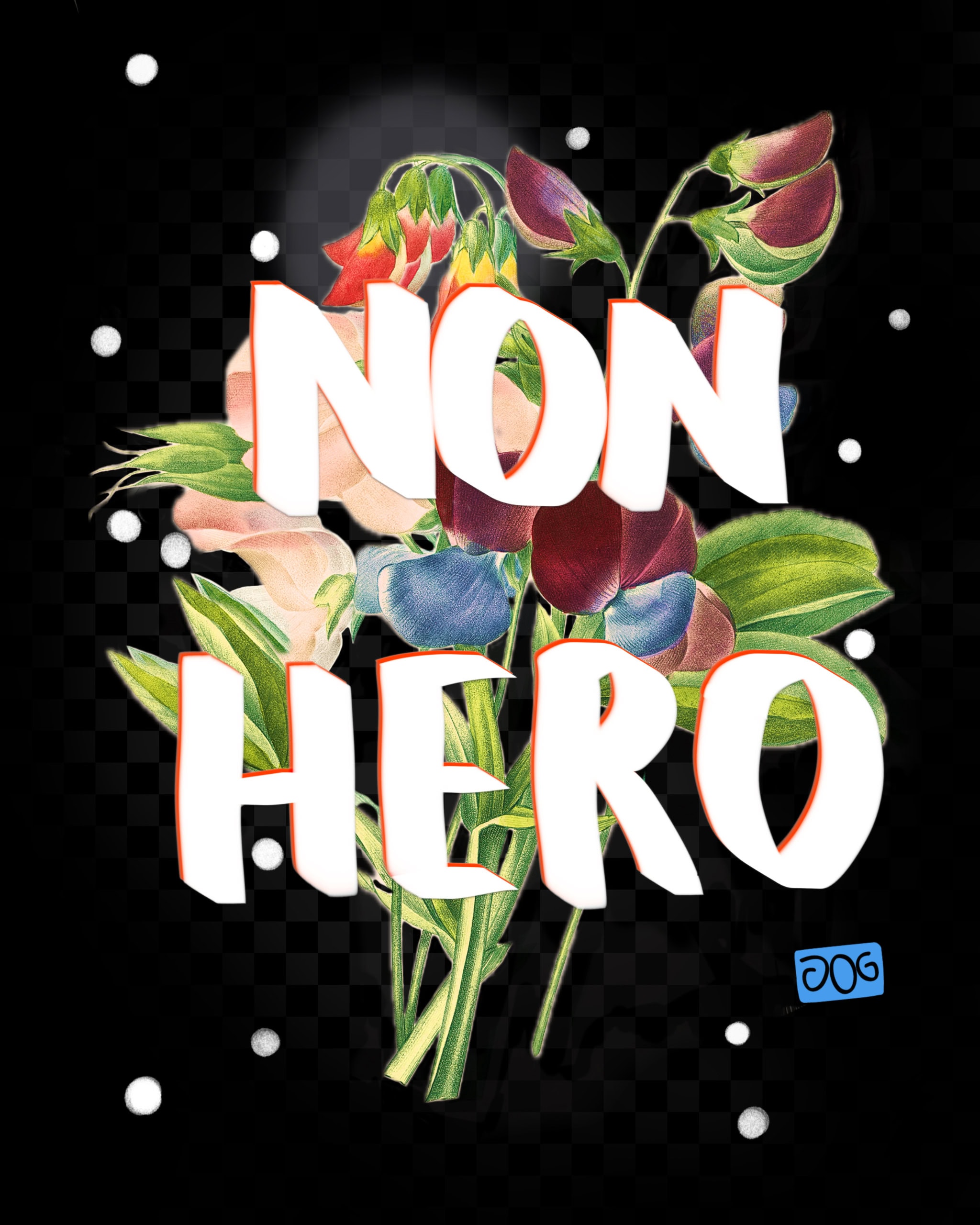
We grow up inside stories.
Fairy tales, myths, films — again and again, the same structure repeats: the hero. The one who leaves, fights, overcomes, returns transformed.
When George Lucas openly credited Joseph Campbell and his work The Hero with a Thousand Faces as the blueprint for Star Wars, something crystallized. The pattern became conscious. And from there, it spread everywhere.
Now it’s difficult to find a story that isn’t built on it.
The hero’s journey has become the default lens through which we understand meaning, growth, and even our own lives.
The Structure We Inherited
The pattern is simple.
A person leaves the known world.
They face trials, enemies, and inner doubt.
They are helped along the way.
They confront a final battle where good defeats evil.
They return with something — a boon, a lesson, a gift — for the collective.
This structure is not just fiction. It was mapped from real lives — like Gautama Buddha — to reveal a universal pattern.
But something sits at the center of all of it:
Fight.
Fight to leave.
Fight to become.
Fight to win.
Fight to prove that good deserves to triumph over evil.
Even transformation is framed as a kind of war.
The moments that stayed were not the “heroic” ones.
The Quiet Cracks in the Story
There was a time I believed in this.
Not in the cinematic version, but in a quieter, more spiritual one.
The idea of the one who “wakes people up.”
Who moves through the world with purpose.
Who meets others like him/her/them along the way.
And sometimes, that did happen.
On a market in Himachal Pradesh.
In retreats in Canada, Australia, France.
On the long path to Santiago de Compostela.
But the moments that stayed were not the “heroic” ones.
Standing around after setting up a retreat.
Sharing a sandwich.
Saying not much.
Just people, doing something ordinary.
That’s where the seam showed.
Because the “heroes” didn’t feel like heroes.
They felt… human.
The Problem with the Hero
The hero needs a problem.
A villain.
An obstacle.
Something to push against.
Without that, the hero has no function.
And this is where the structure begins to distort.
Because once you see the world through this lens, everything becomes something to fight.
Everything becomes divided:
Good / Evil
Awake / Asleep
Right / Wrong
Us / Them
And even when the hero “wins,” something is left behind.
A loser.
A suppressed side.
Something that had to be defeated to make the story work.
This is the hidden cost of heroism.
The Shift
Do you still believe in the hero? In the way you’ve been taught?
That doesn’t mean there can’t be people who do extraordinary things. There can. And there will.
But something fundamental has to give.
The non-hero does not try to convince.
If someone is ready, they are ready.
If they are not, they are not.
If someone doesn’t want it, they don’t want it.
And that is not a problem to solve.
It is their right.
The non-hero does not assume they know what another person needs.
They don’t impose.
They don’t push.
They don’t try to win.
They might speak.
They might act.
They might create.
But they don’t require an outcome.
They plant something — and leave it alone.
A dualistic frame that always produces: A winner and a loser. A dominant and a repressed. The non-hero steps out of that frame.
No More Fight
Once the need to convince dissolves, something else falls away.
The fight.
There is no longer a villain to defeat.
No “evil” to overcome.
Because good and evil, as fixed opposites, belong to the same structure.
A dualistic frame that always produces:
A winner and a loser.
A dominant and a repressed.
The non-hero steps out of that frame.
Not by opposing it.
But by no longer participating in it.
The Non Hero
What remains is not passivity.
It’s not withdrawal.
It’s a different kind of presence.
Clear.
Non-aggressive.
Uninvested in controlling outcomes.
The non-hero still moves, speaks, creates, and acts — but without the inner war that needs to justify itself through victory.
Nothing needs to be proven.
Nothing needs to be conquered.
In that sense, the non-hero is not the opposite of the hero.
It is what the hero becomes when the fight is no longer needed.
You may also like

Turn on the light – Learn to Control the Focus and Direction of That Beam
Every beam of light expands our understanding, bringing clarity, integration, and liberation. The…
Stop normalizing greed
The normalization of greed in society has indeed reached a point where people who make or amass a…
You have a choice: Fight, flight, freeze or fawn
Do you remember what it felt like to be unsafe at home? How, even in your own family, being…