
Image Credit: shankar s., CC-BY-2.0
The Flood and The Tension
Sometimes it arrives as flooding. There is no gap between you and what is moving through you — no pause, no space, no shore to stand on. You are not someone experiencing anger. You are the anger. Not someone grieving. You are the grief. Like a fish that has never left the water, there is no outside from which to see what is happening — no breath of air, no moment of not-this. Just total immersion. Just the flood.
Sometimes it arrives differently. There is an imaginary rubber band stretched between two poles that feel irreconcilable, and a high tension runs through it. One pull says run, hide, make yourself small. The other says attack, push back, stand your ground.
Every move meets a wall. No move exists that does not make something worse. The space available is the size of a cell — and the cell keeps getting smaller.
The experience presses from the inside. And beneath both — or within both — there is often this: you do not know what is happening. That adds its own weight. What cannot be recognized can only be survived.
This is where most of us actually live. Not in concepts. Not in clarity. Here — in the flood, or in the tension that could snap.
No Way Out
There are two things we do in the absence of space.
The first is identification. We become what arises. The anger is no longer something present in awareness — it is what we are. The desire is no longer something moving through — it is the only thing that exists. The wave swallows the ocean. There is no longer a space holding the experience. There is only the experience, and it is total.
The second is solidification. We make the experience into an object — something out there, that can be assessed, fixed and dealt with. This feels like awareness. It is not. It is the management position. The experience has been placed in a cell, and we have appointed ourselves the warden. From that position — tightly controlled — we run the prison in one of several ways.
-
-
- We let one side win.
- We dissolve the distinction entirely and call the forced harmony peace.
- We allow the two poles to take turns, swinging from one to the other without ever touching the ground between. Or
-
- We move the unwanted to solitary — out of sight, out of acknowledgment, apparently resolved.
Identification has no space. Solidification has space that functions like a cell. Neither is a way out. Neither is a way through.
-
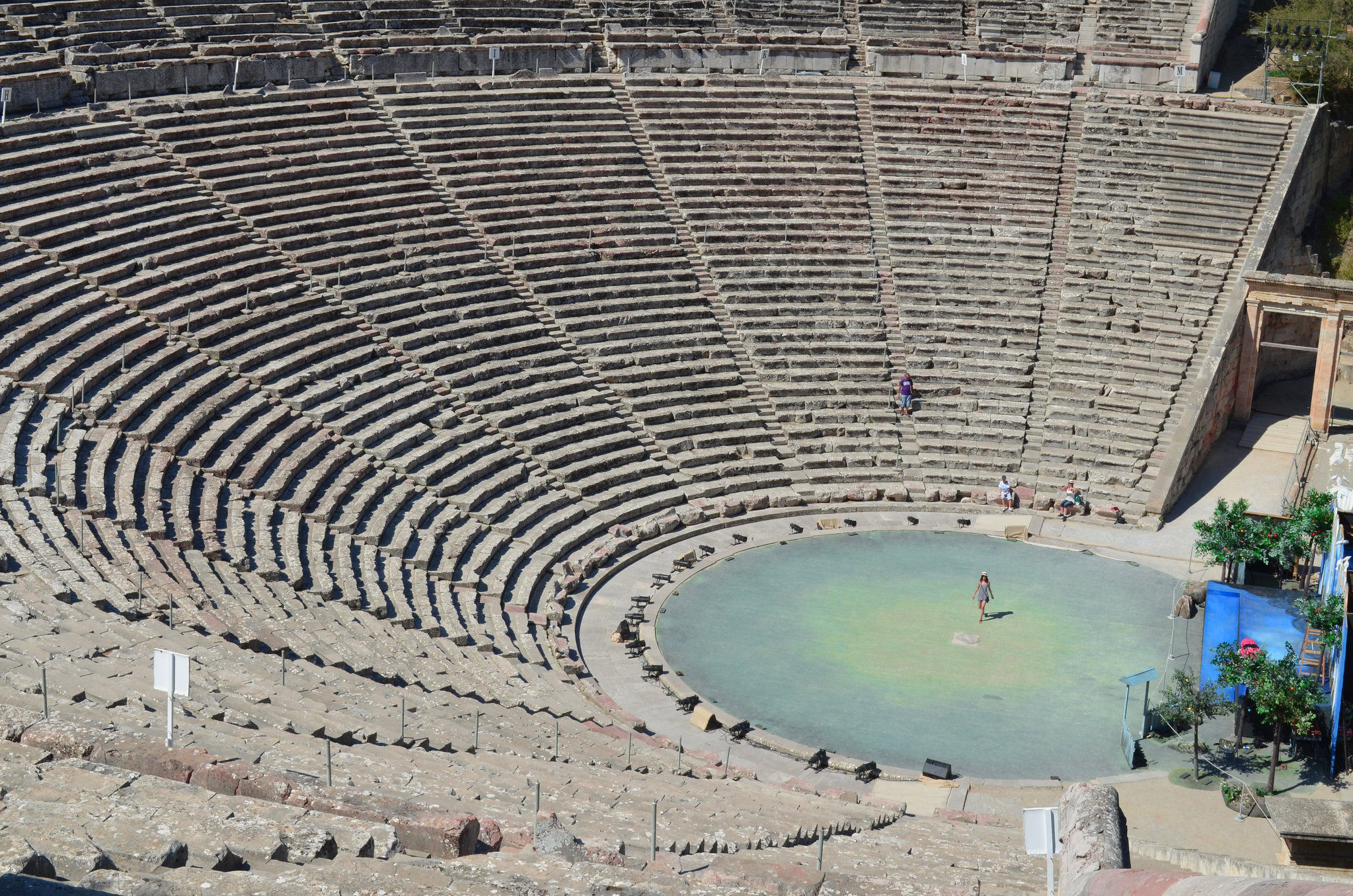
Image Credit: Isocyclo, CC-BY-SA-4.0
Before the mind moves to name, to separate, to place this here and that there — before the familiar operation of distinction has run its course — there is a space that holds everything that is about to appear.
Before the Cut
There is something in awareness that does not divide.
Before the mind moves to name, to separate, to place this here and that there — before the familiar operation of distinction has run its course — there is a space that holds everything that is about to appear. It has no preferences among what enters it. It takes no sides. It does not become what it holds, and it is not diminished by what passes through.
This is not an abstraction. It is the most intimate thing there is. Every experience you have ever had has arisen within it. Joy arose there. So did grief. Certainty arose there, and so did the confusion that followed certainty’s collapse. The space did not choose between them. It held them all, without itself being any of them.
Most of us have never been introduced to this space directly. We have been introduced instead to its contents — to the feelings, the thoughts, the memories, the identities — and we have learned to manage those contents, to prefer some and exile others, to build a life around the ones we have decided are acceptable and a wall against the ones we have decided are not.
What Diochore (Dai – oh – KOR) names is something prior to that management. Prior to the preference. Prior, even, to the decision that a divide exists at all.
We forget that the divide is something the mind does — and begin to experience it as something how the world simply is.
The Illusion of the Divide
The mind is organized around division.
This or that. Right or wrong. Light or dark. Sacred or worldly. Strength or vulnerability. The operation happens so quickly, and so continuously, that it begins to seem like the nature of things rather than a habit of perception. We forget that the divide is something the mind does — and begin to experience it as something how the world simply is.
But look more carefully at what is actually here.
Grief does not exist without the relief. Aggression is not separate from the fear it moves through. The arrogance that comes with ignorance was not elsewhere while the ignorance was present — it was latent within it. What appears as opposition, examined closely, reveals itself as relationship. The poles are not enemies facing each other across an unbridgeable distance. They are the two ends of a single axis, and the axis itself is what is real.
The divide, in other words, is not nothing. At the level of lived experience — the relative level, where despair is despair and love is love and the tension between opposing forces is felt in the body — the divide is absolutely real. It must be met, not bypassed. It cannot be dissolved by thinking one’s way to a higher perspective.
But at another level — the level at which awareness itself is recognized — the divide was never absolute. The space in which grief and love appear is the same space. It was never cut. Nothing that appears within it has ever been truly separate from anything else that appears within it.
To see this is not to escape the relative. It is to stop being deceived by it into thinking that the cut goes all the way down.
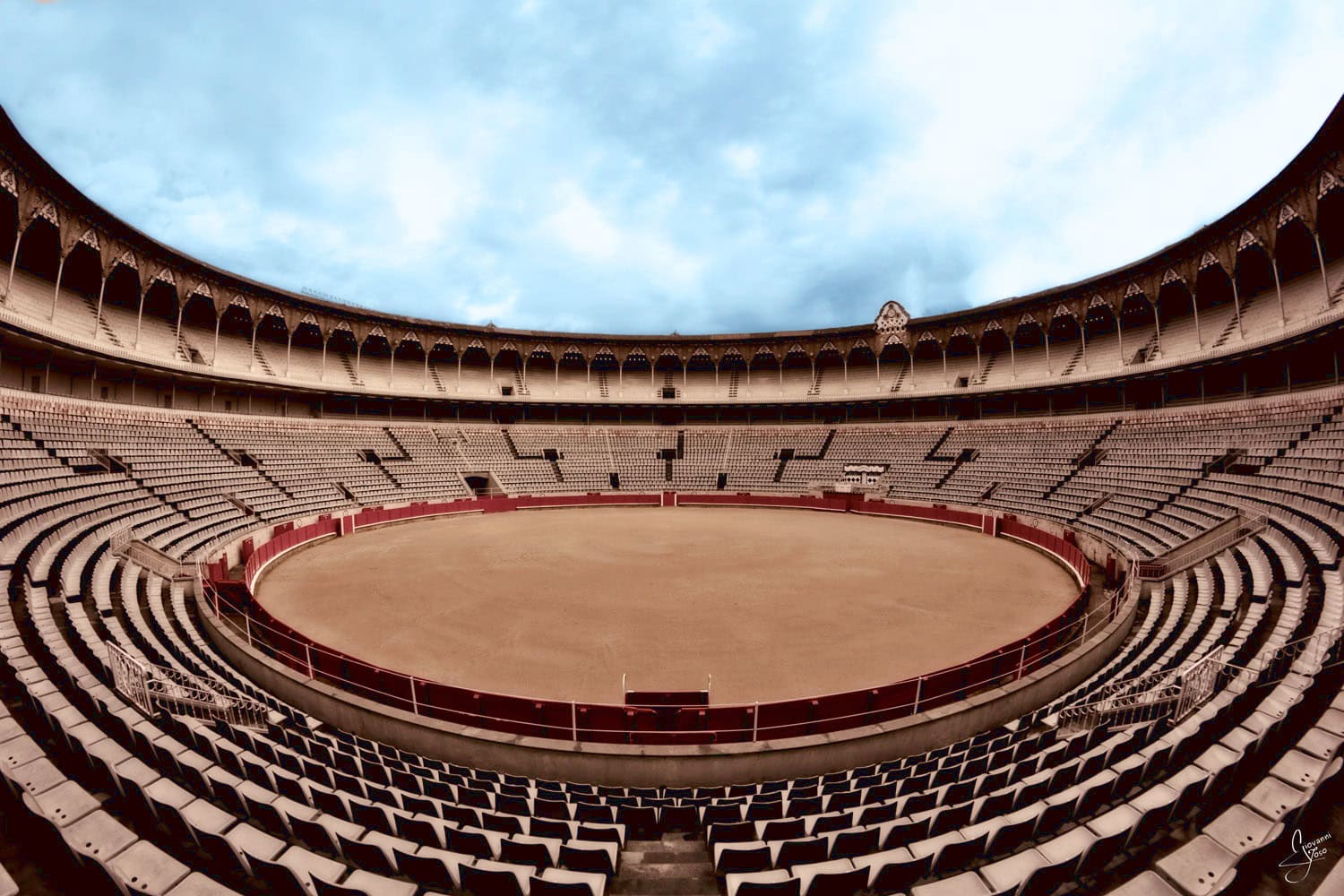
Image Credit: Giovanni Toso, CC BY-NC-SA 2.0
A life organized around keeping certain things out is a life that cannot fully open and thrive.
What Exile Does
What we reject does not disappear.
When a part of experience becomes unacceptable — a feeling too difficult, a quality too threatening, a memory too heavy to carry consciously — we do not destroy it. We exile it. We push it beyond the boundary of what we are willing to see, and it continues from there, shaping everything from just out of sight.
There is a German phrase for what refused anger becomes in the body: Ein dicker Hals — a thick neck, a throat swollen with what was never allowed to speak.
Suppressed anger becomes the sharpness that appears without warning, the distance kept from anyone who might touch it. The grief pushed away becomes numbness, restlessness, the persistent sense that something essential is missing even when everything appears to be in order. The tenderness exiled in the name of strength becomes the inability to be truly met by another person — a life that is controlled and armored and quietly starving.
This is what division costs. Not only the loss of the exiled qualities themselves, but the energy required to maintain their exile. A life organized around keeping certain things out is a life that cannot fully open and thrive. The very act of holding the wall in place prevents the openness that would make real connection — with others, with experience, with oneself — possible.
And the wall is maintained at a cost that is rarely acknowledged, because the division itself has usually become invisible. It no longer feels like a choice. It simply feels like the shape of things.
Diochore is not the healing of this division. It is the recognition that the division was never as fundamental as it appeared. And from that recognition — gradually, and without forcing — the exiled parts find their way back. Not because they have been accepted as acceptable. But because the space that holds them has been recognized as larger than anything it contains — boundless, in the end — and therefore cannot be destroyed by any of it.
What the Greeks named khora, Vajrayana Buddhism calls it rigpa — the natural state of awareness, prior to division. Mahayana Buddhism calls it sunyata — emptiness, the absence of ultimate separateness in things.
Diochore
The ancient Greeks had a word — khora (receptacle)— for the space that holds all appearance without becoming any of it. Plato introduced it carefully, knowing ordinary language could barely carry it. It was neither the eternal forms nor the physical world, but the space in which the physical world appears. It has no qualities of its own. It cannot be perceived directly. It can only be inferred — felt at the edge of thought, where thinking begins to dissolve into something quieter.
What the Greeks named khora, Vajrayana Buddhism calls it rigpa — the natural state of awareness, prior to division. Mahayana Buddhism calls it sunyata — emptiness, the absence of ultimate separateness in things. Each tradition arrived at a different face of the same ground that does not choose among what enters it. It does not prefer light to shadow, form to formlessness, the beautiful to the difficult. It simply holds. Without grasping. Without becoming. Without being diminished by anything that passes through.
What had not yet been named — what remained as an open question inside that ancient insight — was the specific case of the two. The holding space not of everything undifferentiated, but precisely of what appears divided. The space that holds both poles of a tension simultaneously — without collapsing them into each other, without choosing between them, without the space itself being split by what it contains.
Diochore: the space holding two
Dio — the two. Khore — the space that which contains without becoming.
This is not a metaphor. It is a description of something that can be directly recognized — a quality of awareness that most people have touched at least once, in moments when opposing forces were both fully present and neither needed to win. A moment of grief that did not exclude appreciativeness. A moment of fear that did not exclude resilience. A moment in which the tension was real and the ground beneath the tension was also real, and neither cancelled the other.
Those moments were Diochore. The space was always there. And with it, the possibility of recognizing the space deliberately, returning to it, learning to inhabit it more fully.
This is the movement Diochore names: not the escape from the relative into the absolute, and not the collapse into the relative that forgets the absolute, but the capacity to inhabit both simultaneously.
Two Levels, One Space
Diochore operates at two levels simultaneously, and this is essential to understanding what it is.
At the level of the absolute — the level at which awareness itself is recognized — the divide between the two was never real. The space that holds grief and joy, strength and vulnerability, clarity and confusion is the same space. It was never cut. The apparent opposition between the poles is a feature of the relative level of experience, not of the ground in which that experience arises and falls back into. To recognize this is to stop being fully deceived by the divide — to see through it, without pretending it isn’t there.
At the level of the relative — the level of lived, embodied, temporal experience — the tension between the two is absolutely real and must be fully met. Shame is shame. Pride is pride. The pull between opposing forces is felt in the body, shapes decisions, demands response. Nothing about recognizing the absolute level of Diochore permits the bypassing of this. The relative cannot be transcended by thinking. It can only be lived — with the full presence that the absolute ground makes possible.
This is the movement Diochore names: not the escape from the relative into the absolute, and not the collapse into the relative that forgets the absolute, but the capacity to inhabit both simultaneously. To be fully present with what the tension of the two produces in lived experience — the grief, the fear, the confusion, the longing — while remaining rooted in the space that was never split by any of it.
A tree in wind. The roots do not move. The branches move completely. The movement is only visible because of the rootedness. The rootedness is only visible because of the movement. Neither is a problem. Neither cancels the other. The whole thing — roots, branches, wind — is one event.
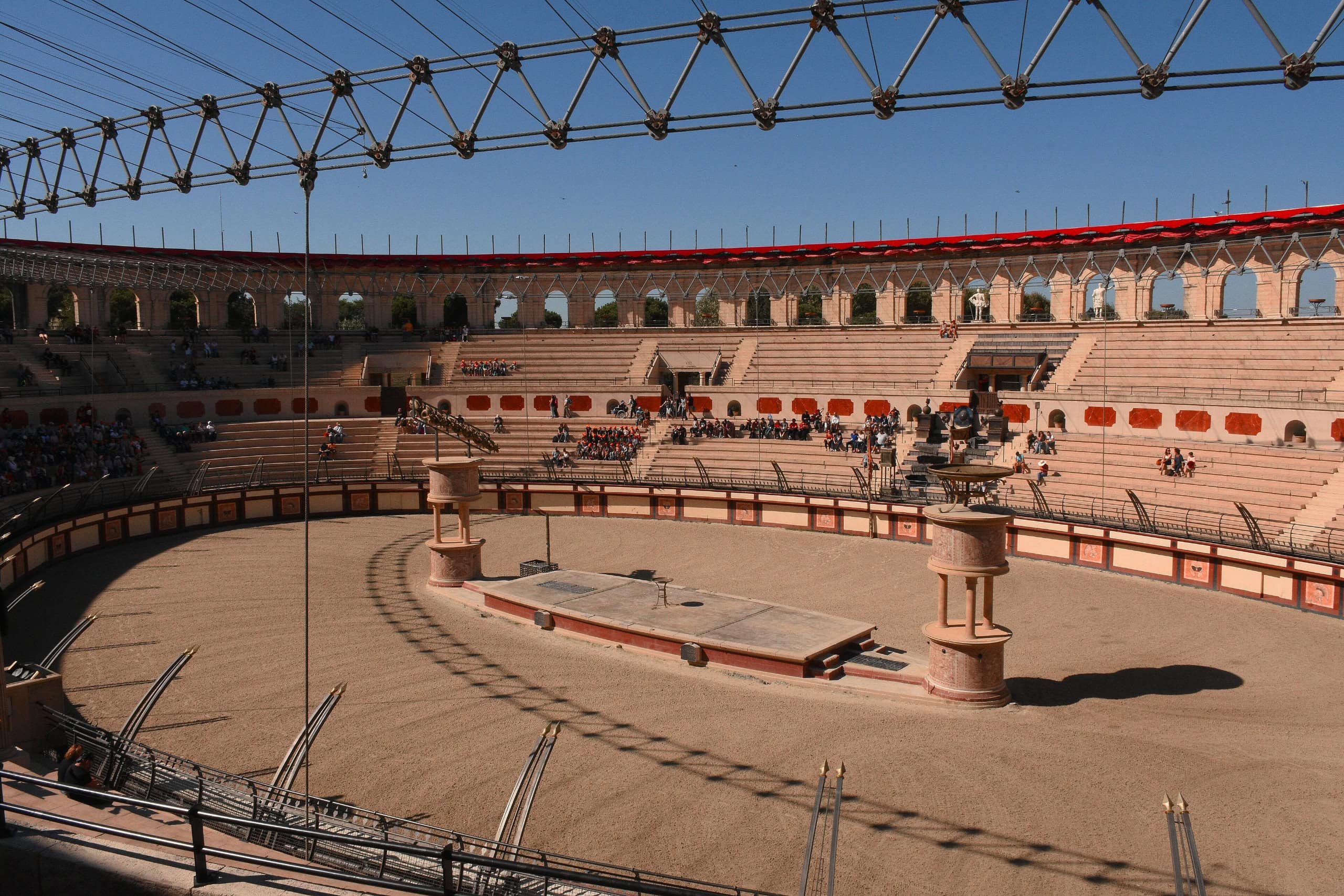
Image Credit: C.felix, CC-BY-SA-3.0
The Same Register
On a conceptual level, no one argues against pairings like fear and courage, confusion and clarity. Intellectually they are acceptable. But they are mismatched. It is like sending a minor league soccer player to face the GOAT — the registers are too far apart for the meeting to be real. If shame is low, contracted, visceral, then pairing it with something grand and abstract like self-acceptance or dignity does not land in the body. It lands nowhere. The gap between them is too large for the tension to be felt.
The true opposing force meets on the same register. Shame and pride. Both immediate. Both bodily. Both social. The polarity is real because the two can actually face each other.
And yet even this — even the right pairing — is not what Diochore asks for. It does not ask shame to transform into pride, or to be resolved into something more bearable. It asks only that shame be held in the space. And when it is — when it is no longer in exile, no longer pressing to be felt because it is being refused — its intensity naturally recedes. It falls back into the stillness of awareness. Without suppression. Without resolution. Without intellectual acceptance. Simply because what is allowed to be here no longer needs to fight to exist.
The human being stops splitting itself apart. Not because the differences have been resolved — they haven’t, and they don’t need to be — but because the space that holds them has been recognized as larger than any of them. Actually infinite.
The Return
When Diochore is recognized — when the space holding two is felt rather than merely understood — something that was braced begins to release.
The parts that were exiled begin to return. Not all at once. Not without difficulty. The fear that was pushed away returns as the experience of aliveness. The anger returns as clarity — a precise perception of where something real has been violated. The tenderness that was hidden in the name of strength returns as the capacity for genuine connection — with other people, with experience, with the full range of what it means to be alive.
This is not purification. Nothing is being cleaned out or transcended. Everything that returns belongs here. The full range of human experience — not only the noble and the beautiful, but the frightened and the furious and the lost — is the raw material of a real life, not an obstacle to one. Diochore does not make us purer. It makes us more connected, present.
And more connected is what allows a life to bear the full weight of what living actually asks of it.
The human being stops splitting itself apart. Not because the differences have been resolved — they haven’t, and they don’t need to be — but because the space that holds them has been recognized as larger than any of them. Actually infinite.
Nothing has to be denied in order for life to make sense. Nothing has to defeat its counterpart in order for the whole to remain intact.
What was experienced as contradiction begins to reveal itself as relationship. The sacred is not separate from the ordinary. Power is not separate from vulnerability. Light does not exist without shadow. The poles are not enemies. They are how the whole makes itself recognizable — each revealing the other, each giving the other its shape and its depth.
A Life That Does Not Require Resolution
There is a particular quality of exhaustion that belongs to a divided life.
It is the exhaustion of maintaining the border — between what is allowed to be seen and what must stay hidden, between what is acceptable and what has been exiled, between the self that is presented to the world and the self that continues, unseen, beneath it. This maintenance is continuous and largely invisible. It does not feel like effort after a while. It simply feels like the weight of being alive.
When Diochore opens — when the space holding the two is recognized and inhabited — this exhaustion drops off. What was armored softens, not into weakness but into true strength. The strength not of a wall but of an immovable, imperturbable, indestructible ground. Capable of holding far more than any wall because it does not need to keep anything out.
What becomes possible then is not a life without difficulty. Diochore is not the end of struggle. It is the end of one particular struggle — the struggle against one’s own fragmented reality. The war with what is actually here.
What remains is a life that can contain its own contradictions without losing its centredness. A life that does not require resolution in order to remain whole. That can hold helplessness without being helplessness, hold resistance without being resistance, hold the full tension of opposing forces without the space itself collapsing under their weight.
The center that Diochore makes available is not the center of a person who has resolved everything. It is the center of a person who has stopped needing to. Who has recognized the space that was always already present — prior to the divide, prior to the exile, prior to the exhaustion of maintaining what was never truly separated in the first place.
That space is Diochore. It was always here. It was never cut.
You may also like

When fearing abandonment: Do you fear losing others or facing yourself alone?
The fear of abandonment might be a fear of being left without support or connection, which touches…

The perspective of sacredness: The key to relating to the world
Sacredness is a key concept that helps us shift from a worldview based on separation and hierarchy…
Underneath mistrust lies our greatest power
We can easily see that when a dog has been mistreated, it may act aggressively and mistrustingly.…