
Shame — The Organizing Wound
Part One: How It Became You

There is a weight you’ve been carrying for so long that you’ve stopped noticing the burden. It isn’t hidden away in a locked room; it has simply woven itself so tightly into your personality that you can’t tell where it ends and you begin. You don’t think of it as a “problem.” You think of it as “just who I am.”
How Shame Shows Up
It lives in the quiet that isn’t really quiet. It’s the “stuckness” that defies logic: The project you’ve been preparing for but never start. The honest conversation you’ve polished in your head but never have. The threshold you approach and then — without deciding to — step back from. Again and again.
You aren’t tired. You aren’t lazy. In fact, you have the hunger and the blueprints ready to go. But there is a foot on the brake. A silent counter-force at work — an invisible hand firmly gripping the back of your collar every time you try to lean forward.
The most dangerous part is that it doesn’t feel like a crisis. You just feel… stalled. Because you can’t see the hand holding you back, you assume the lack of movement is a character flaw. You start to blame your own willpower, your own discipline. You tell yourself you’re just someone who doesn’t finish things. This self-blame becomes a second skin, making the original weight even harder to find.
This is shame. Not the “feeling” of shame we talk about, but the actual architecture of it. It’s the invisible framework that quietly dictates the boundaries of your world, convincing you that staying small isn’t a choice — it’s just your nature.
Shame — you don’t think of it as a “problem.” You think of it as “just who I am.”
Where Shame Actually Started
This is about where the weight actually began.
It isn’t found in the loud moments you remember — the times you were called lazy, or told you were being “too much.” It started much earlier, in the silence before you even had words to describe your world.
The Mirror of Absence
Before memory, there was just a feeling. A warmth that was there, and then suddenly wasn’t. A connection that flickered like a dying bulb. It happened in a thousand tiny, wordless exchanges where you looked for a reflection and found: A sudden withdrawal. A subtle tightening of a shoulder. A door closing where there should have been response.
As a child, you couldn’t rationalize it. You couldn’t see that your parents were overwhelmed, or that they were drowning in a pain they never asked for. You didn’t know they couldn’t give you what they never received themselves.
The Body’s Conclusion
A child has only one way to make sense of the felt absence: “It must be me.” This interpretation isn’t a conscious thought; it’s an impression that settles into your nervous system. It lands in your body as a felt sense of being fundamentally “wrong.” And it didn’t just happen once and stayed that way. It was reinforced in thousands of small interactions — every time your emotions were not met, every time a connection was broken and never repaired, every time love felt like a prize you had to earn. The same verdict quietly confirms itself. Not through drama. Not through choice. Through repetition.
The Deepened Groove
By the time someone finally used their words to shame you years later, they weren’t creating anything new. They were simply pouring water into a canyon that had already been carved and deepened over time.
The insults and the criticisms just found the groove that laid down in the dark, long before you ever learned to speak.
When Guilt Becomes Shame
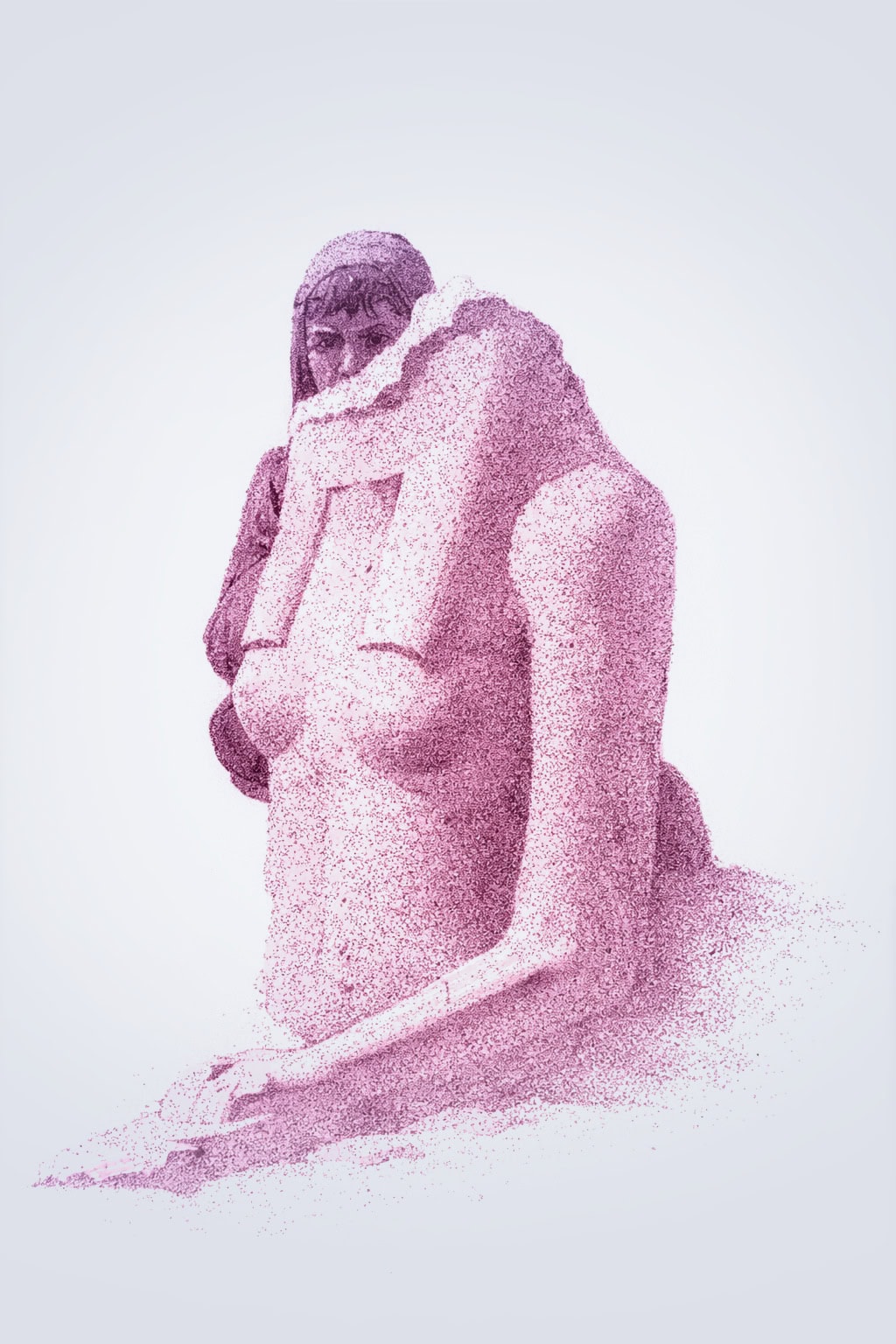
There is a vital distinction between making a mistake and becoming one.
Guilt says: I did something wrong. It is about what you do. It’s the feeling that you’ve tripped or veered off course. It can be heavy, but the ground stays solid beneath your feet. Because it’s about an action, it’s something you can fix, learn from, and move past. You remain “you,” separate from the mistake.
Shame says: I am wrong. It is about who you are. The ground vanishes entirely. It’s the feeling that you didn’t just stumble, but that the floor opened underneath. It tells you that the problem isn’t your behavior — it’s your being.
The Eroding Buffer
This move from “I did something bad” to “I am bad” doesn’t happen by accident. It happens when your internal buffer has been worn thin by years of feeling unheard, of wounds left unhealed, and of love that felt like a reward for good behavior wear down your spirit.
Eventually, you lose that quiet confidence that — no matter how badly you mess up — your worth remains intact.
Shame as the Lens
Once shame moves from a feeling to an identity, it stops waiting for proof and starts shaping it. It begins to organize how you see the world: Every failure isn’t a lesson; it’s a “told you so.” Every success feels like a fluke — a fragile, temporary mask you’re wearing until the world finds you out. What you notice, how others respond, what situations you enter or avoid – your perception begins to align with the weight you carry.
It no longer matters what actually happens to you; everything is filtered through that original, quiet conclusion that you are the problem. At this point, shame doesn’t just live in you — it runs the show.
There is a foot on the brake. A silent counter-force at work — an invisible hand firmly gripping the back of your collar every time you try to lean forward.
Three Floors
Shame isn’t a single room; it’s a building with different levels. And what works on one floor is irrelevant on another.
The First Floor: The Experience Layer
This is where most public conversation about shame lives. It’s the shame we recognize in the mirror or at work. It’s the “not enough” feeling that follows social media scrolling, the sting of imposter syndrome, or the heat in your chest when you feel judged.
It hurts, but it’s manageable. You can still get through your day. On this floor, you see shame as a weather pattern — something uncomfortable that passes through you, but isn’t you.
This is the level where self-help books, podcasts, and workshops do their best work. When you name the shame, build empathy, reach out to others, you can actually feel the weight lifting.
There is genuine value in building a life that adds weight to the other side. Service. Contribution. The discovery that you have something to offer, that your presence changes something for someone. The whole tradition of karma yoga lives here — give, help, add yourself to something larger. It builds a counterweight. It stabilises the ground. It can lift you out of the pit to a degree. But it cannot liberate you from shame. While service and positive habits add weight to the “good” side of the scale, they don’t necessarily remove the heavy weights on the other side.
For many, this is enough. Life becomes functional, and the “stuckness” feels more like a nuisance than a tragedy. On this floor, the deeper, more silent layers of shame still feel like a distant story — something that only happens to people who are truly “broken.”
The Sub-Basement: The Identity Layer
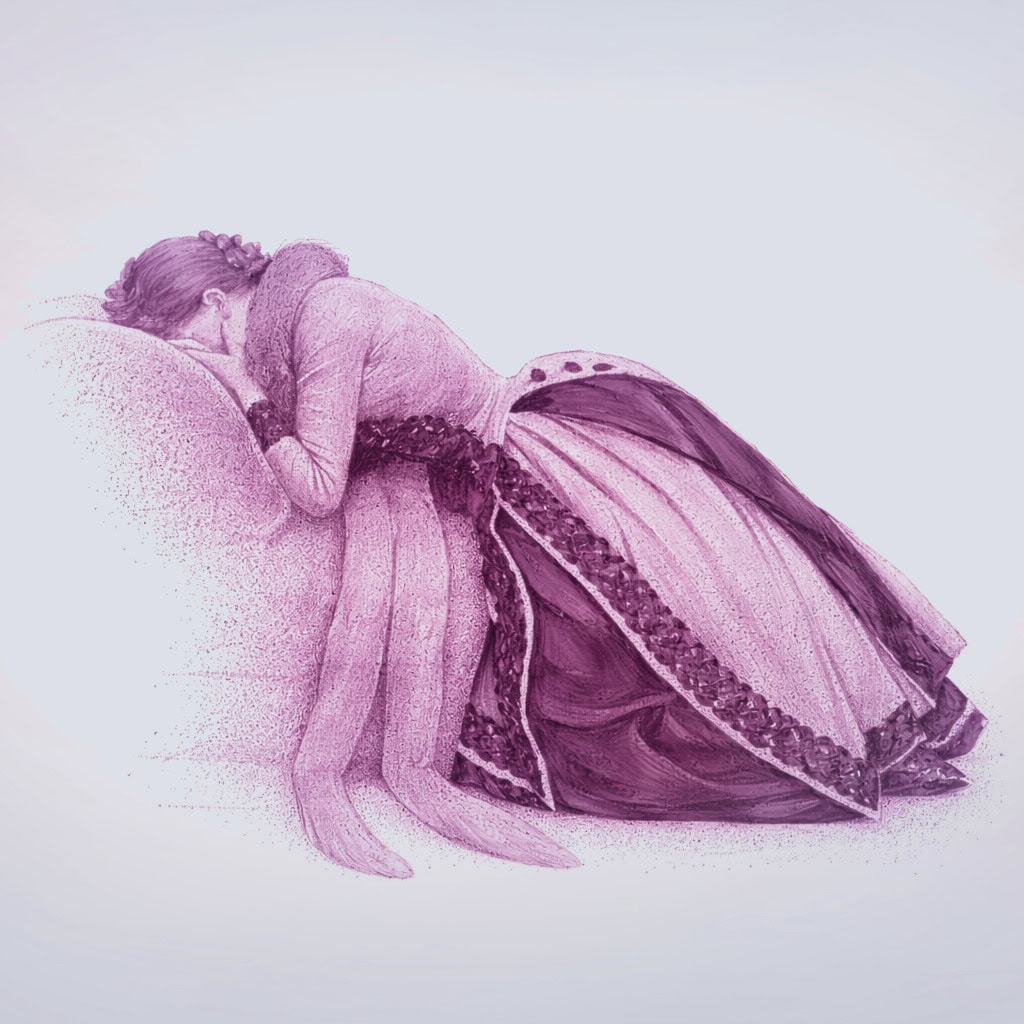
When you descend to this level, everything changes. Shame is no longer a feeling that visits you; it is the skin you wear. At this depth, your brokenness isn’t a wound to be healed — it’s an identity.
The part of you that carries this weight doesn’t feel like a “wounded child” you can simply reach out and comfort. It feels like something much darker. It’s the creature in the cellar —deformed, hidden, and kept in the dark because you are convinced its existence is a crime. It’s the version of yourself that fills you with a deep, visceral revulsion. You don’t want to “heal and nurture” this part; you want it to stop existing. And sometimes, because it feels like who you are, you want to stop existing, too.
From this floor, the standard language of self-love sounds like someone describing a sunset to a person buried alive.
“You are worthy of love.” “Embrace your vulnerability.” “Be kind to yourself.”
These sentences land in the sub-basement as confirmation that whoever is saying them has absolutely no idea where you actually are. The distance between their “light” and your reality is so vast it feels like a cruel joke.
Most self-help approaches at this level are just new ways to polish the mask. Affirmations, positive self-talk, reframing your narrative often use the same mechanism that caused the problem in the first place: they try to make the surface look so bright that no one will notice the darkness underneath.
Even the tools designed to help — like affirmations, positive self-talk, “reframing your story”— often just use the same mechanism that caused the problem in the first place. They ask you to work harder on the version of yourself that the world sees, hoping a brighter exterior will make up for the darkness inside. But you’ve spent your whole life perfecting that split: the acceptable face you show the world and the “unacceptable” you hide.
You already know that game. You know the collective pattern where we perform “okay-ness” while rejection runs underneath. “Niceness” covering up violations. “Care” covering up control. You know exactly what a polished mask feels like from inside. And being offered another one, even a kinder one, is not help. It’s the same pattern wearing yoga pants.
Your perception begins to align with the weight you carry. It no longer matters what actually happens to you; everything is filtered through that original, quiet conclusion that you are the problem. At this point, shame doesn’t just live in you — it runs the show.
The Sub-Sub-Basement: The Absence Layer
Below the monster, below the identity, there is a final floor. This is the place where the part of you that would even feel the shame has simply checked out. It isn’t peace or some higher state of being; it is a profound, echoing absence.
The shame didn’t disappear — it just became so total that your system chose to leave rather than keep feeling it. At this depth, you are a functional shell. You go to work, you answer when spoken to, and you might even seem “fine” to a casual observer. But inside, there is a flatness that isn’t calm — it’s vacancy. You aren’t managing shame anymore; you’ve just stopped being home.
The Survival of the Void
This is where the deepest dependencies live. At this level, things like substances or self-destructive habits aren’t about chasing a high or acting out; they are the only tools left to make an unbearable existence feel momentarily bearable.
These things offer a counterfeit version of what you can no longer give yourself. They provide a brief moment where the rigid walls of your identity loosen, and the cellar door cracks open just enough to let in a breath of air. You aren’t trying to feel “good” — you’re just trying to feel anything at all, or perhaps to feel nothing in a way that you finally got to choose.
The Black Hole in Action
But the relief is a trap. Afterward, the void only looms larger. These escapes don’t fill the hole; they erode the edges and make it wider. This creates a downward spiral where your outer life begins to mirror the desolation inside: You find yourself in relationships that “prove” you are unlovable. You drift into situations that confirm your worthlessness. You become unable to have an experience that contradicts your own pain.
The loop tightens. Your expectations become a self-fulfilling prophecy until the world and your view of it are one and the same.
This is the black hole. It isn’t a poetic metaphor. It is a gravitational pull toward dissolution that doesn’t want to merge with something greater — that wants to stop being. Not to make a dramatic statement. But the longing to evaporate.
It is the quiet, heavy desire to stop having to inhabit what feels like it never truly began.

What the Body Carries
Shame doesn’t stay in your head; it eventually migrates into your body. It takes up permanent residence in the physical way you carry yourself.
It shows up in the curl of your shoulders, the tilt of your head, or the way your chest slightly caves in. These aren’t intentional choices you’re making in the moment; they are physical patterns that your body learned long ago and simply never forgot. Your posture isn’t just a shape — it’s a signal.
The Unspoken Conversation
Even when you aren’t speaking, your body is constantly signaling how you feel about yourself. Every nervous system in the room picks up on this signal instantly, far below the level of conscious thought. Before you even open your mouth to say “hello,” your body has already told everyone where you believe you sit in the hierarchy of the room.
The Loop of Reinforcement
And others respond — not from judgment, but from instinct as old as hierarchy itself. Every creature reads every other creature. The body broadcasts. The room receives. People treat you according to the signal you transmitted. Their reaction proves what your body already “knew.” Which deepens the signal. Which deepens the response.
A loop nobody entered consciously and nobody knows how to exit.
You don’t just feel low; you actually get positioned as low by the world around you. This low position proves the feeling right. And the cycle tightens.
It is a quiet, powerful mechanism running in the background of your life, proving your worst fears about yourself over and over again without a single word ever being spoken.
Your body has already told everyone where you believe you sit in the hierarchy of the room.
The Ground That Keeps You Stuck
The reason it is so incredibly difficult to let go of shame — even when you know it’s hurting you — is that it has become your foundation.
Every human being needs a place to stand, a sense of what they are in relation to the world. When you were a child and didn’t receive the unconditional presence or acceptance you needed, you were left without ground. But the human spirit cannot function in mid-air. It will grab onto any floor it can find, even if that floor is made of glass and thorns.
The Comfort of a Known Pain
“I am broken” is a terrible place to stand, but it is solid. It gives you a position. It makes a confusing world feel predictable. If you believe you are fundamentally “wrong,” then rejection finally makes sense. If you tell yourself you aren’t enough, then failure is no longer a surprise; it’s just the expected outcome.
The pain of this identity is enormous, but for your nervous system, it is still better than the terrifying uncertainty of having no identity at all.
The Fear of the Open Space
When you consider letting go of the idea that you are broken, you don’t immediately feel “whole.” Instead, you feel like you are falling. You are dropped into a vast, open space where you don’t know who you are anymore.
This “void” is exactly what your entire psychological system designed to protect you from. You find yourself clinging to an identity that hurts you — not because you’re stupid, but because the alternative feels like disappearing into nothingness. For a human that has felt a sense of disconnected hollowness since childhood, “nothing” is the most dangerous thing in the world. It’s safer to be “broken” than to not be at all.
The Security of the Cage
This is also why some of us who carried the family’s shame as a role become so attached to being the “troubled” one, the “scapegoat,” or the “problem child.” It is a position. And being positioned means being seen. In a family where the only other option was being invisible, being the problem was the only way to confirm you actually existed.
The cage is still a cage, but at least the bars are familiar. To a nervous system shaped by unpredictability, a known prison feels much safer than an unknown freedom. You stay because you know how to survive inside these walls; you have no idea who you would be outside of them.

The Central Lock
This is why shame isn’t just one problem among many — it is the central lock. It is the one that keeps every other struggle bolted in place.
Shame doesn’t just make life harder; it closes the system. Shame says: Whatever is inside you doesn’t deserve to be held. It tells you that your pain, your needs, and your confusion are not worthy of care, understanding, or even simple kindness. Not as a belief you can question — but as a condition.
The Interrupted Flow
When this lock is engaged, you are cut off from the only thing that could actually help you heal. Usually, when we feel pain or fear, the natural movement is to meet that feeling with a sense of “it’s okay to feel this.” But shame stands at the gate.
Anything that arises within you — whether it’s rage, fear, or simple exhaustion — is immediately met with a wall: This should not be here. This this is not worthy of being held.
Because of this, nothing in your inner world is ever truly received. Instead, your feelings are pushed away, suppressed, managed like a crisis, corrected, explained away, or acted out.
Nothing is allowed to simply exist in the light; it is immediately judged, edited, or managed the moment it surfaces.
This is why your patterns persist. They aren’t permanent by nature; they stay because they are never actually met.
The Paradox of Self-Correction
Shame makes sure the wound stays unreachable — by closing off the only thing that could touch it: direct, unguarded presence.
This creates a painful paradox: you are trying to “fix” yourself while excluding the only thing that actually resolves human suffering.
Healing doesn’t happen through force, or correction, or by finally becoming “someone else.” It happens when what is present is allowed to be present. Fully. Without condition.
Without it, your intensity becomes unbearable. Your thoughts race because nothing is there to settle them. Your body stays tense because it has no permission to ease.
It’s not that your problems are getting worse; it’s that shame has already decided that you are not allowed to be the one who comforts yourself.
Outsourcing the Light
When you are blocked from being kind to yourself, you are forced to look for that warmth elsewhere. This is why we often cling so tightly to others:
· To a partner we can’t let go of.
· To a child we can’t stop hovering over.
· To a friend whose approval feels like a hit of oxygen.
They have simply become the last remaining access points to a benevolence you no longer feel you can provide for yourself.
Ultimately, shame is the lock because it doesn’t just create the wound — it blocks the only doorway through which the wound could ever be reached.
You may also like
The real treassure of reparenting yourselves
The concept of the "inner child" refers to a psychological perspective that suggests that…
Let’s heal so we can stop bleeding on others
When we go through tough emotional experiences, it's not uncommon for us to carry that pain into…

Healing the Emotional Dragon
The classic quote "walking on eggshells" captures the feeling of tiptoeing around the sensitivities…