
Armor — The Defense That no Longer Looks Like Defense
Armor is the distance. Defense is how it is kept.
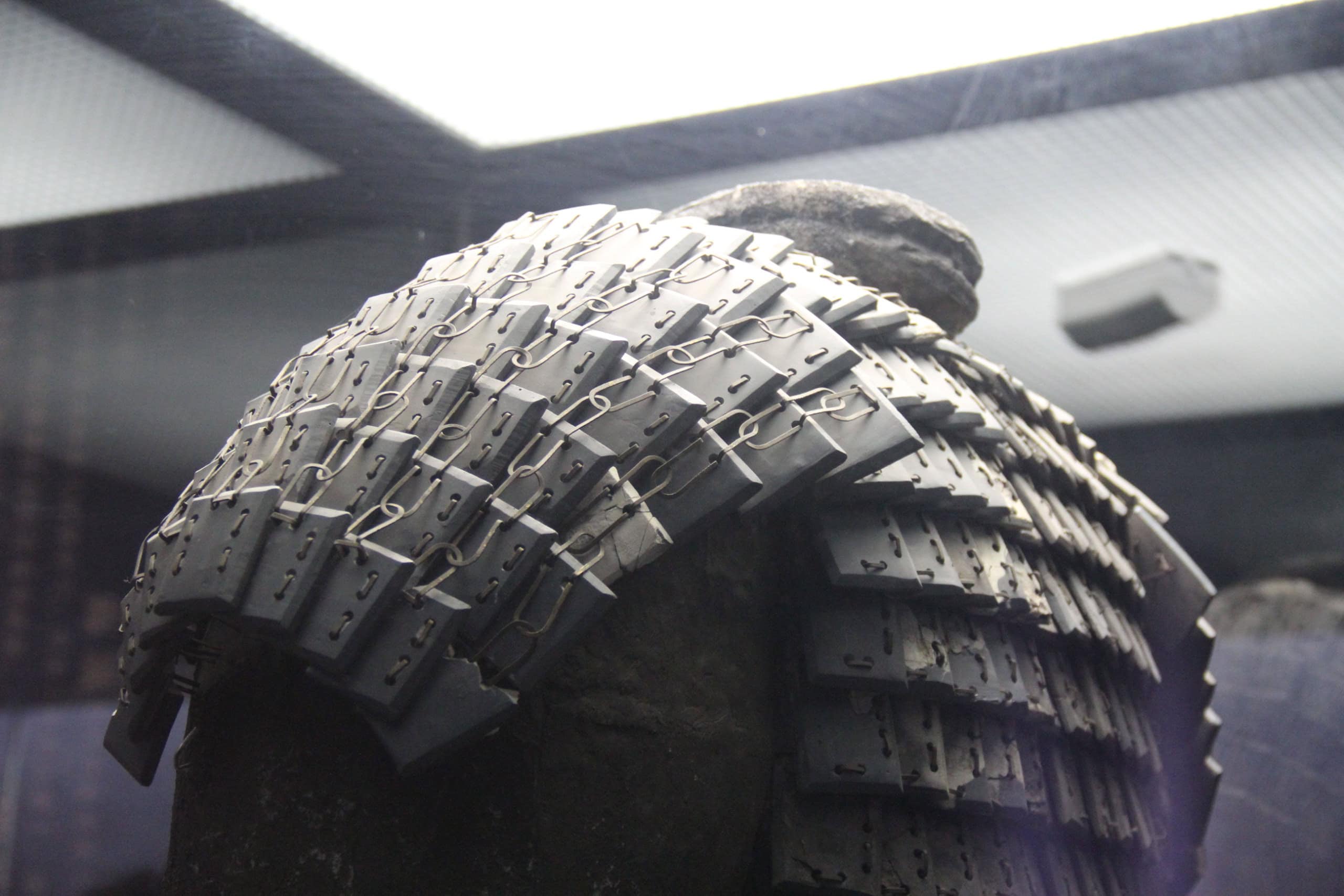
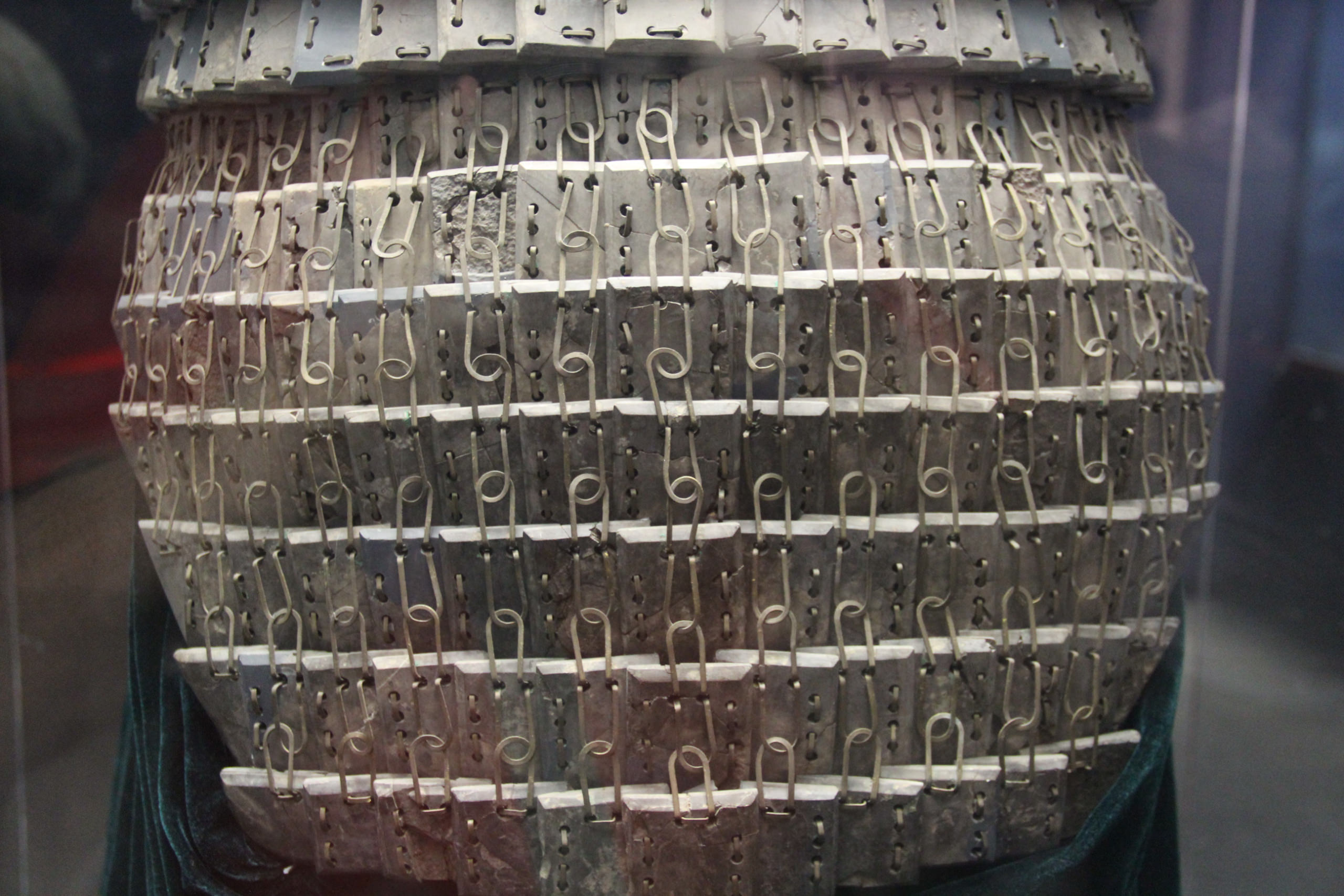
Images: Qin Stone Armor
The wound this armor formed around is mapped in Shame – The Organizing Wound. The architecture of how it operates is in Shame — The Architecture. This text looks at what grew on top of both.
Armor begins as contraction.
When a child grows up in an environment that is too much to carry, violates their boundaries, or does not meet them, they don’t have the luxury of staying open. They adjust and contract. This isn’t a conscious choice you made. It is the nervous system protecting the organism. Since a child cannot leave their conditions, the body finds a way to live inside them.
This is the first layer of the armor we all eventually learn to wear: the body learning to contract.
The First Layer: The Body
In the beginning, the contraction is physical. The body holds. Breath shortens. Feeling narrows. Sensitivity pulls inward. The organism, in its wisdom, decides to reduce its exposure — a quiet withdrawal from a reality that feels like too much to bear.
This is the first layer of the armor we all eventually learn to wear: the body learning to contract.
Contraction creates distance.
Not fully — but enough. Enough to continue. Enough to not be overwhelmed. At first, it is temporary. You contract, then you release. You close, then you open again. But when the conditions persist, the release never fully happens. The tightening remains. What was a movement hardens into a state. This is where armor begins.
It’s worth noticing how early this begins — and how deeply this takes root:
- The child who is regularly shouted at begins to pull their shoulders forward.
- The child whose boundaries are crossed learns to be “somewhere else” while their body remains present.
- The child who is neglected learns to shrink their own hunger — to need less, want less, and occupy as little space as possible.
- The child in an unpredictable home learns to scan constantly, reading faces and tones like a hawk while keeping their own inner world as still and invisible as possible.
Your body becomes a “held thing.” But you aren’t just holding tension; you are holding life itself. Your impulses, your longings, your feelings, and your joy are all compressed into a smaller and smaller interior. Your system doesn’t put these fires out; it just traps the smoke inside the house.
The result is a baseline alertness that never quite resolves into rest:
- The jaw that never unclinches.
- The hips that stay locked in a “ready” position.
- The vigilance that acts as a buffer against pain.
The body has learned what is safe to feel and what must remain unfelt in order to keep functioning. Within the reality you inhabit, this response makes complete sense.
But the response hardens into structure. The tragedy is that structures stay, even when what created them is no longer there.
The armor doesn’t just keep the pain out; it changes the map of what we believe we are allowed to feel.
The Second Layer: The Emotional Field
Over time, the contraction begins to move inward, settling into our emotional life. We find that certain feelings become harder to reach, while others feel far too loud and must be contained. Our expression becomes smaller, more cautious. We instinctively learn which parts of our inner world are allowed to move and which must remain under lock and key.
The armor no longer lives just in the muscles; it inhabits our very capacity to feel.
The Managed Heart
We learn to navigate around our own emotions before they can even fully form. This isn’t a conscious choice; it is the organism learning to interrupt itself to stay safe.
Grief may have been too much for the people around you. In a home where tears were met with impatience or seen as a weakness, a child learns to close. The eyes stay dry; the chest tightens slightly before the feeling can rise.
Anger may have been too dangerous to own. If a parent’s rage was unpredictable, your own fury became something to be erased before it could even surface. It wasn’t just suppressed; it was organized away — transformed into a helplessness, into self-blame or a rigid, exhausting composure that won’t allow the fury to show.
Fear often goes underground when there is no one safe to catch it. If you couldn’t afford to feel how frightened you were, that terror became a background hum. It turns into a hypervigilance that you eventually mistake for your own personality.
Joy can also be something we armor against. If your delight was once ridiculed or if being “too happy” always seemed to invite a disaster, you learned to keep a lid on your own aliveness. You learned not to rise too high, and never to let the inside show on the outside.
The Missing Landscape
Eventually, the emotional field becomes a managed field. Some states are let through. Others are blocked. We don’t experience this as “management”; we simply experience it as who we are. We don’t notice the feelings that are missing. They don’t announce their absence.
Instead of grief, there is a lingering flatness. Instead of anger, there is a tired irritability. Instead of fear, there is a baseline anxiety with no clear name.
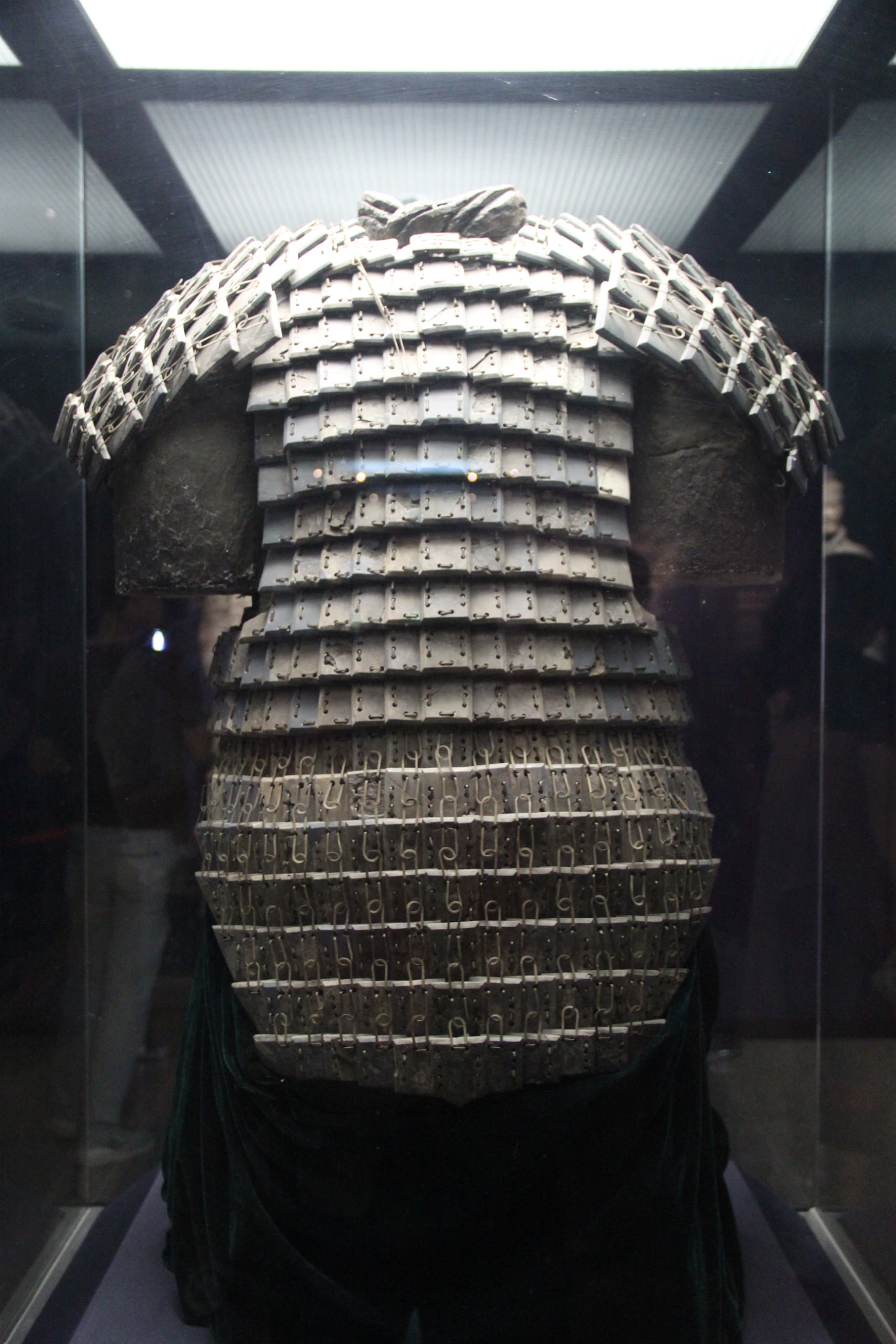
We mistake the shape of our cage for the shape of our being.
The Third Layer: Identity
As we grow, our minds begin to build a story around these old restrictions. We find words for the walls. Roles begin to take shape, and we learn how to live — and even thrive — within the limits our bodies and emotions set long ago.
We begin to say things like, “I’m independent,” or “I’m the responsible one.” We tell ourselves, “I don’t need much,” or “I’m not the kind of person who falls apart.”
This is the outer layer of the armor: identity forming around the contraction.
What started as a simple physical reflex has now become a structure that organizes your entire person — shaping how you explain yourself, what you pursue, what you avoid, and what you believe is possible, what you believe you deserve.
The Story We Tell Ourselves
It’s important to realize that this identity isn’t a lie. It’s the closest thing to a true account of how the person experiences themselves from inside the structure.
When you say, “I don’t need much,” you aren’t describing your true nature. You are describing what it felt like when needing was dangerous — and the quiet solution you found to survive it.
The roles we take on can be functional, even admirable. The child who took on responsibility early may become genuinely capable and reliable. The child who learned self-sufficiency may develop a real independence of spirit. The one who suppressed their own feelings to soothe a parent may develop a beautiful, finely tuned empathy for others.
Armor does not only cost. It also builds. We carry the restriction, but we also carry the remarkable skills that grew in its shadow.
But a role, no matter how well-played, is never the whole person.
Underneath the competence is the child who had to be strong before they were ready. Underneath the self-sufficiency is a longing that was simply set aside. Underneath the attunement to everyone else is an interior world that has never quite been fully met.
By the time we reach adulthood, the armor is so seamless that we no longer recognize it as protection. We just call it personality.
The Event-Related Defenses are like internal circuit breakers. When the voltage of life becomes too high, experience is interrupted. Reduced. Distorted. Cut off.
Event-Related Defenses
Armor is the distance we’ve placed between ourselves and life. Our defenses are simply the tools we use to keep that distance in place — not because we need them now, but because at some point, we truly did.
The first are the defenses most people have heard of. Denial. Projection. Repression. Rationalization. Displacement. Dissociation. These are the classical mechanisms, named and mapped by psychology over a century of clinical observation.
What they share is a single function: they activate at the point of impact.
When a feeling rises that is too much to hold, or a truth approaches that we aren’t yet ready to face, the system responds immediately before the person does. It moves automatically and fast to interrupt the experience before it can overwhelm us.
These defenses are like internal circuit breakers. When the voltage of life becomes too high, experience is interrupted. Reduced. Distorted. Cut off.
- Projection: We don’t recognize a feeling as our own; instead, we see it clearly in someone else.
- Repression: An experience that was once too much is no longer accessible. It is tucked away, kept out of awareness.
- Rationalization: When we cannot accept a painful reality, we explain it away until it feels manageable.
- Displacement: We take a feeling from where it belongs and move it to somewhere — or someone — where it feels safer to express.
- Dissociation: We disconnect from the experience while the body remains present.
- Denial: We simply do not acknowledge what is real as being real.
These particular defenses are tied to moments and events. They appear when the pressure mounts and recede when the immediate threat passes. They don’t necessarily organize our entire life but they do mark its limits.
Where these defenses activate, openness is no longer possible.
Where event-related defenses interrupt a moment that has become too much, life-related defenses ensure that “too much” can never happen in the first place.
One interrupts. The other prevents it.
Life-Related Defenses
While event-related defenses act like circuit breakers — tripping when the pressure gets too high — there is a second, more subtle form of defense.
This one isn’t tied to specific events or moments of impact. It doesn’t wait for something to happen; it is already there, standing watch before you even wake up. It is woven so tightly into the fabric of your daily life that it no longer looks like a shield at all. It looks like your personality. Like lifestyle. Like capability. Or like simply being the kind of person you are.
Like all armor, they function to keep direct experience at bay. Where event-related defenses interrupt a moment that has become too much, life-related defenses ensure that “too much” can never happen in the first place.
One interrupts. The other prevents it.
- Outward orientation: Our attention is placed outside. Fixed there. Turned outward. That’s by default. Since eyes face away from us, this is the most natural thing there is. That is simply how a human being is built.Which is why it doubles as armor. We don’t look inward. Our inner life goes unvisited. Our own involvement in what unfolds — our choices, our part, what we keep setting in motion — stays permanently out of frame.And so the one thing that is not happening goes unseen: we never truly face our own side.
- Forward living: Life is lived perpetually ahead of itself.
We orient ourselves toward the next milestone: when this project is done, when the weekend arrives, when I finally get there. In this state, the present moment is treated as nothing more than a corridor — a space you have to walk through to get to the “real” destination.But the horizon moves as you move. Each arrival simply reveals a new threshold, just as promising and just as far away. This way of being is often rewarded by a world that celebrates ambition, so we rarely stop to ask the deeper question: What am I moving away from? Life is lived in a time that does not exist, at the total expense of the one that does.
- Control of environment: This is the subtle art of the “managed life.” It is where our defense mechanisms stop looking like emergencies and start looking like maturity, preference, or even success.We often believe we are simply curating a life that suits us, but often, we are actually curating a life that keeps us from being triggered. We arrange our environment, select situations, and steer our conversations away from anything that might “open” something we aren’t ready to hold. We call this having healthy boundaries or good self-knowledge. But if we look closer, we see that the external world is being managed so that the internal world doesn’t have to be met.The controlled environment is just a controlled interior by other means. We aren’t just trying to be comfortable; we are trying to remain intact.
A buffer is created between the organism and direct experience: close enough to function, distant enough to not be touched.
- Busyness: Life is so fully organized around activity that there is simply never space for what might arise in the absence of it. Life itself becomes the distance. We fill every pocket of time with activity so that nothing deeper can surface. We don’t know who we are when we aren’t “doing,” so the doing never stops. A full life can be the most complete form of absence.
- Optimization: We treat our lives — and ourselves — as something to be constantly improved, refined, and upgraded so it never has to be met as it is.Life lived as project — as career, as self-improvement, as the perpetual construction of a better version. Everything is “material” for development. Every experience is approached as something to be learned from, optimized, refined. The present is a placeholder.
- Narration: We turn our experience into story so it does not have to be directly felt. We think about how we’ll tell it, what it means, and what it says about us. This narration arrives so fast that the raw, “un-storied” experience is barely touched. Life becomes a sequence of episodes, rich in content but somehow never quite real.
- Substitution
Life-related defenses do not block experience. They substitute for it. When the real thing feels like too much, we settle for something that is close enough to quiet the system, but far enough to avoid the actual exposure.
-
- Consumption for Connection: We scroll, we stream, we feed. These give us a “relational signal” that mimics contact without the vulnerability that contact requires. We can feel accompanied for hours without ever having been truly met once.
- Constant Input: Silence is never allowed to settle. It’s not that we fear silence; it’s that silence is where things surface. Rest becomes stimulation. We keep the music, series, podcasts, phone running from the moment we wake until the moment we sleep. Stimulation keeps our own interior at a manageable distance.
- Sexuality for Intimacy: Connection remains on the surface, so deeper contact never happens. We offer the body because it feels safer than offering what’s inside. Physical closeness without the exposure of true emotional intimacy.
- Intensity for Aliveness: Strong experiences override the quieter layers.
Aliveness is translated into intensity — the chase for stronger sensation (speed, risk, drama, crisis) to imitate the vitality that real contact would bring. Intensity is aliveness stripped of vulnerability. - Addiction is where this substitution completes itself. It is the logical conclusion of a search that began the moment we learned that the real world was too much. Whether it is a substance or a behavior, it reliably delivers what we cannot find elsewhere: warmth, relief, a sense of being “at home,” escape, aliveness. Without exposure. It works. That is the whole problem.
The ways we’ve learned to cope are remarkably intelligent. Our system found the most efficient route to something it genuinely needed. That the path blocks the actual need itself doesn’t make the seeking less intelligent — it makes it tragic.
Armor is not only about protection from pain; it is about protection from exposure.
What all these defenses share isn’t drama; it’s normalcy. They are the texture of an ordinary life as it is lived by most people most of the time. This is what makes them so difficult to see. They aren’t imposed on our lives from the outside. They have grown inside it, becoming indistinguishable from our preferences, our character, or simply “who we are.”
The person who is always busy is not hiding. They are just busy. The person who is always thinking is not avoiding feeling. They are just thoughtful. The person who is always oriented toward others is not fleeing themselves. They are just caring.
Eventually, the armor becomes the life. The distance becomes the landscape we walk every day.
The Foundation of the Armor
And because it has, the question is no longer, “What am I defending against?”
The question becomes: “Have I ever actually been here?”
It means armor is not only about protection from pain; it is about protection from exposure. From being seen. From the terrifying risk of being known — fully, without the managed version of ourselves, without the performance of being “okay,” or “strong,” or “capable.”
Shame is not a feeling that sits alongside the armor. Shame is the foundation the armor was built on.
The child who was never truly met — never seen or received as they were — didn’t only learn that the world was unsafe. They learned something about themselves: that who they are, as they are, is not acceptable. Too much, or not enough, or just fundamentally wrong in a way that was never named but always felt.
That quiet conclusion — I am not acceptable as I am — is the soil from which every layer of our defense grew.
The busyness, the forward living, the outward orientation, the narration, the controlled environment — these are not only ways to avoid pain. They are ways to ensure we never have to stand in the open. Never having to be fully visible. Never having to risk the confimation what shame already insists is true: that if we were fully visible, we would be found wanting.
To be truly alive is to be truly present. And to be truly present is to be truly visible. And that — that — is what cannot be risked.
This is armor.
You may also like

One trick pony – part 1 – What hinders authenticity
We may feel compelled to present a simplified and idealized version of ourselves, emphasizing the…

One trick pony – part 2 – Hidden parts of ourselves
Authenticity requires us to confront and accept the entirety of who we are, including the messy and…

Shame – The Architecture
The injury itself was simple, even if living inside it is not. It started with a basic human need —…