
The Question We Keep Avoiding: Hayden Panettiere, Her Mother, and the Pattern Beneath the Story

Looking Glass Films, CC-BY-3.0
When something terrible happens, human beings want an answer. More than that: we want a person. Someone did this. Someone is responsible.
And when the person we love has been hurt, this impulse becomes almost irresistible. We want to find the person who did it so that the world becomes comprehensible again.
Why, at the moment your child dies, are you concerned with establishing who is guilty?
In the public reaction to Hayden Panettiere’s death, one of the first things to emerge from her estranged mother, Lesley Vogel, was the identification of another person as the problem: Hayden’s on-and off-again partner, Brian Hickerson.
Hickerson had a documented history of violence toward Hayden. In her memoir This Is Me: A Reckoning, published only months before her death, Hayden described the abuse she experienced in their relationship. Hickerson had previously pleaded no contest to domestic-violence charges and served jail time. He was present when Hayden died.
And yet, when a mother is quick to point toward the abusive boyfriend, I cannot help asking an uncomfortable question: Why, at the moment your child dies, are you concerned with establishing who is guilty? Why are you eager to establish your innocence?
An abusive relationship does not begin when the abuser walks through the door.
Of course, abuse should be accounted for. That is not the question. The question is whether identifying him as the explanation allows everyone else to stop looking. Because an abusive relationship does not begin when the abuser walks through the door. The vulnerability to certain kinds of relationships and coping patterns begins much earlier.
Long before the boyfriend. Long before the first black eye, the first apology, the first reconciliation.
Because Hayden’s story didn’t begin with Brian Hickerson. It began decades earlier.
Lesley Vogel signed her daughter with modelling and acting agents when Hayden was less than one year old. Her career began before she was even old enough to choose it. Her mother was deeply involved in managing that career. And Hayden herself later described the complicated consequences of growing up in that environment: becoming a people pleaser, learning to perform, learning that approval and love could become intertwined, and eventually struggling with the question of who she actually was underneath all of it.
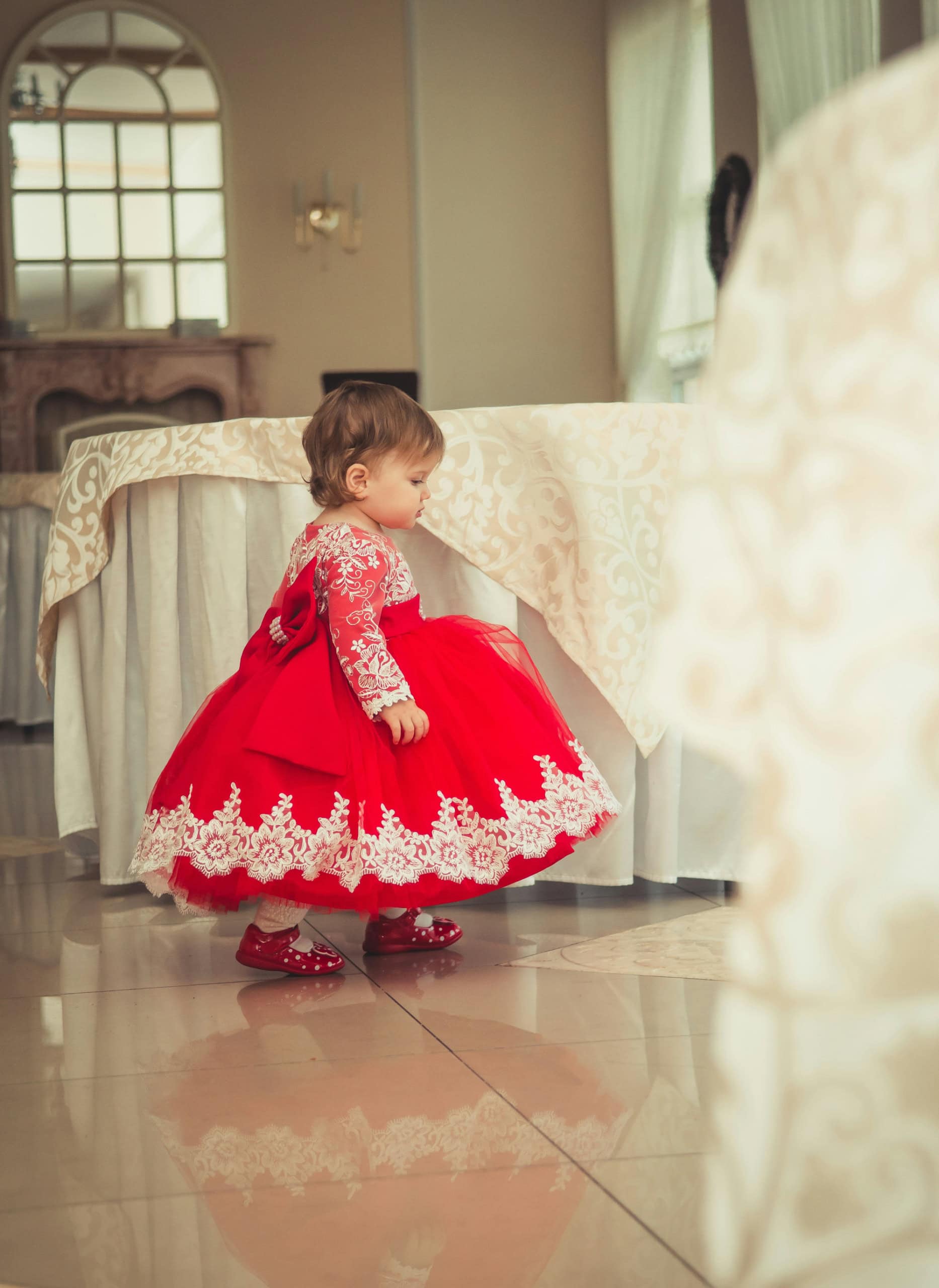
Image Credit: Andriyko Podilnyk
Because children don’t learn what love is from books. They learn it from their parents. They learn it through repetition.
A child watches, learns and adapts: This is how I get affection. This is what makes Mother happy. This is what makes Father proud. This is what happens when I disappoint someone. This is what I have to do to be loved.
And because the child depends completely on the adults around them, the child cannot stand outside the relationship and evaluate it objectively.The child doesn’t think: “This is an unhealthy, abusive pattern.” The child thinks: This is love. That is the terrifying part.
Familiarity can feel like safety, even when familiarity is painful.
We don’t enter adulthood with a blank definition of love. We carry our first definition with us. And then we meet people who either confirm it or challenge it. Sometimes we are drawn toward the people who confirm it. Not because we consciously want to be hurt. But because familiarity can feel like safety, even when familiarity is painful.
This is why a person can repeatedly find themselves in relationships that look different on the outside but feel remarkably similar on the inside. Different face. Same emotional architecture. Someone who is loving, then withholding. Someone whose approval has to be earned. Someone who makes you responsible for their emotions. Someone who gives affection and then takes it away. Someone whose needs become more important than yours. Someone who makes you work to keep the relationship intact.
And you keep choosing them. Why? Because, on some level, you are choosing what your nervous system understands. You are choosing, in a sense, what you know yourself to be. This is the relational language you learned first. The tragedy is that familiarity doesn’t announce itself as familiarity. It can feel like chemistry. It can feel like fate. It can feel like aliveness. It can feel like finally being understood. Until you discover that what felt like home was simply what you already knew.

Image Credit: Tanalee Youngblood
This is where I think we need to make an important distinction when discussing children who work as actors.
Not every child actor develops an addiction, and not every child actor ends up in abusive relationships. Saoirse Ronan was a child actor. Ryan Gosling was a child actor. Zendaya was a child actor.
Energetic temperament and personality matter. Family lineage, chance, and relationships all matter.
Some children seem to possess an extraordinary capacity to withstand pressure. They thrive under stimulation, attention, and competition, genuinely enjoying the stage, the intensity, and the constant movement. Other children, however, are extraordinarily sensitive. They may perform brilliantly while simultaneously being overwhelmed by what performing requires of them. Ultimately, there is a profound difference between a child being good at something and a child being well served by doing it.
The fact that a plant grows in the wrong environment doesn’t prove the environment was right for it.
A plant can grow rapidly in sunlight, but that doesn’t mean every plant belongs in full sun – some thrive in partial shade, while others need almost complete shade. The fact that a plant grows in the wrong environment doesn’t prove the environment was right for it; it may simply prove how hard the plant fought to survive.
So no, I don’t believe that being a child actor automatically destroys a child. But it always comes at an unspoken, hidden cost, even when the trade-offs are masked by money and privilege.
At its core, a child is a child, and child acting is child labor.
At its core, a child is a child, and child acting is child labor. If acting is not genuinely the child’s own dream, then they are working simply because an adult has decided that their labor has financial value. That distinction matters enormously, because there is a fundamental difference between allowing a child to pursue something they desperately love and turning a child into a source of income.
The exploitative element isn’t just about whether a parent profits. Rather, it lives in the underlying architecture: an asymmetry of power, combined with complete dependency, an inability to meaningfully refuse, and the extraction of value.
That is the true structure of exploitation.

Image Credit: Peter van der Sluijs, GFDL
And a child is almost the perfect person to exploit because the power imbalance is enormous. The child depends on the adult. The child cannot simply leave. They cannot negotiate from an equal position. They cannot say: “If you don’t like my decision, I’ll move out.”
And if the child’s income becomes important to the household, the situation becomes even more disturbing. Suddenly something that was presented as the child’s dream can quietly become the family’s business model.
That is where I draw the line. A child’s talent does not belong to the parent. Nor do their earnings or their dreams. And a parent should never need their child to succeed in order for the parent to succeed. They must not live through their children’s success.
Because once the adult depends upon the child’s performance, the child has acquired a responsibility they were never supposed to carry.
Our earliest relationships become the template against which later relationships are experienced.
It does not mean that a parent causes every choice an adult child makes. It means something much more uncomfortable: Our earliest relationships become the template against which later relationships are experienced.
And if that template tells us that love requires performance, submission, endurance, pleasing, rescuing or earning approval, then those things can become strangely difficult to recognize as warning signs. They can feel normal. They can feel familiar. They can feel like love.

Image Credit: Lisa Marie Theck
And that is why the mother who immediately points outward should perhaps look inward first. Because if your daughter has spent her adult life repeatedly entering destructive relationships, and you were one of the most powerful people in her childhood, you should at least be willing to ask yourself what she learned from you about love.
That is what parents owe their children. Not money, not perfection, not a clear-cut path or an easy life. They owe them awareness and honest self-reflection. And perhaps the hardest reflection of all is this: Are you guiding and supporting your children toward their own independence and truth, or are you using your children to quiet your unlived lives and hold your unhealed shadows?
Are you guiding and supporting your children toward their own independence and truth, or are you using your children to quiet your unlived lives and hold your unhealed shadows?
Hickerson may be responsible for what he did. But he did not necessarily create the template. And that distinction matters.
Because if we want to prevent another human being from ending up in the same kind of relationship, telling them simply to choose better partners is useless.
We have to teach people what healthy love actually feels like. And that work begins in childhood. It starts by letting a child say no and disappoint you, loving them even when they offer nothing in return. They must never have to earn their place in the family – or believe their worth depends on talent, appearance, grades, obedience, or earning potential.
That is the real issue I see underneath Hayden Panettiere’s story. Not the abusive boyfriend. Not Hollywood. Not addiction. Not fame. But a much older question: What did this child learn about love?
We have to teach people what healthy love actually feels like.
Because children grow up. And eventually they leave the house. But they don’t leave everything they learned there. They take it with them. Into the people they choose. Into the children they parent. Into the things they believe they deserve.
Because sometimes the most important question after a tragedy isn’t: Who is to be blamed?
It is: What did we teach this person to believe about themselves – and did we ever teach them that they were allowed to choose something different?
Asking that question takes bravery, but the answer is what allows us to finally see a child as their own complete human being – not as an extension, a project, a second chance, a remote control, or a trophy.
You may also like

Martha Stewart, Drew Barrymore, and the Fear of Intimacy No One Talks About
Martha Stewart and Drew Barrymore inadvertently reveal two expressions or the flip sides -…

Always is in the Middle – The secret formula of Rafael Nadal
For some time I have been watching the sky from the same place. Sometimes – when the clouds gather…

The Naked Red Carpet – From Gwyneth Paltrow to Jennifer Lawrence
On today’s red carpets, the fabric is mostly an afterthought. The “naked dress” - sheer panels,…