
Both Needy and Unavailable
There’s the classic joke about two guys trying to drive a car up a mountain road when the car starts losing power and slows down to a crawl.
The driver says to his buddy, “Hop out and push from the back!”
So the friend gets out, goes behind the car, and starts pushing. After ten minutes of sweating and grunting, the car hasn’t moved an inch.
Exhausted, the friend walks up to the driver’s side window, panting, and says, ” I don’t get it! I’m pushing with everything I’ve got!”
Totally confused, the driver looks at him and says, “Don’t look at me! I’ve got the brake pushed all the way to the floor so we don’t roll back down!”
This is a joke. But many inner conflicts are like that.
Have you ever wanted someone to be there for you, only to push them away when they actually showed up? Sound familiar? You crave attention, yet the moment someone gives it to you, you feel awkward, panicked, overwhelmed, or even trapped. You want affection, until someone gets close and you instinctively pull back. You want to be understood, until someone actually starts seeing past your walls and you get defensive. You want someone to stay, yet somehow you keep handing them every reason to walk away.
It’s a strange, frustrating contradiction. You can be desperately looking for something while doing everything you can to avoid getting it. You might not even realize you’re doing it, mostly because it feels ridiculous to flinch at the exact thing you’ve been asking for. Except it only seems ridiculous when we assume that wanting something and feeling safe with it are the same thing. They aren’t.
You can genuinely want something and be terrified of it underneath, both at the same time. That doesn’t make you broken or crazy – it just means two different parts of you are answering two totally different questions. Your heart asks, What do I wish I had? Meanwhile, your gut asks, What actually feels safe based on what I’ve lived through? Those two answers rarely match.
Think about growing up: a child can ache to be noticed but learn that being noticed comes with getting criticized, picked apart, embarrassed, or weighed down by impossible expectations. Years later, as an adult, the ache is still there – and so is the flinch. So when love finally lands in front of you, your mind goes: Finally, this is what I wanted. While your nervous system hits the alarm and yells: Danger. You pull back before your brain even has time to catch up.
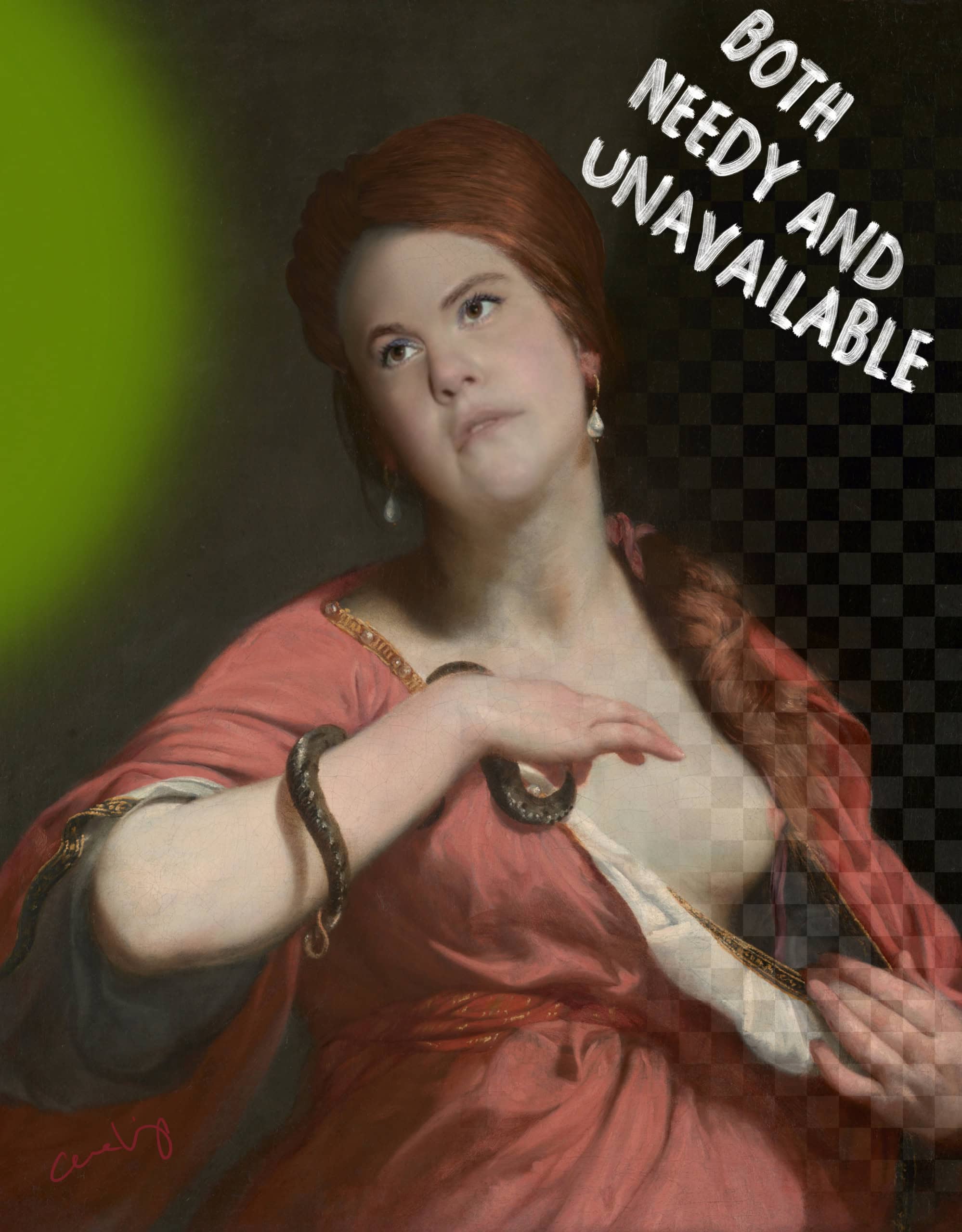
Image: cueljs
You want affection, until someone gets close and you instinctively pull back. You want to be understood, until someone actually starts seeing past your walls and you get defensive. You want someone to stay, yet somehow you keep handing them every reason to walk away.
It’s a strange, frustrating contradiction.
The exact same thing happens with closeness the moment it stops being a daydream and becomes real life.
A daydream is completely safe – it doesn’t ask anything of you. Real life requires you to actually show up.
You have to be seen. You have to reveal yourself – both in your light and in your shadow, in your shame, your inadequacy, and your self-doubt. And that is far more vulnerable, than longing for connection from afar. You also have to be willing to get hurt. And the only way to know if what you have is real is to actually test it.
That’s usually the exact moment the urge to pull away kicks in. You catch yourself flinching and think, Maybe I don’t really want this. Often, it’s the exact opposite – you’re only pulling back because it actually matters. Because the bigger the stakes, the more defensive you can feel when the door actually opens. Imagine spending years dreaming of a house, a relationship, a creative career, or recognition.
As long as something stays out of reach, it’s safe – it only exists in your head, where nothing can go wrong. But the second it becomes real, a whole set of fears kick in: What if I can’t handle it? What if I’m not enough for it? What if this actually changes my life? What if I finally get it, only to lose it?
Chasing something hurts, sure. But actually letting it in can feel way scarier. That’s why we end up sabotaging the exact thing we’ve been wanting.
When someone walks away because you didn’t let them near you, it hurts – but you never actually put the real you on the line. Your pride takes a hit, but not you. That kind of hurt you already know how to survive. It’s familiar ground.
But if someone actually stays?
If they actually stay? Then all the excuses you’ve relied on – that you’re too much, you’re hard to love, nobody really gets you, or you’re better off alone – stop holding up.
And honestly, that can throw you completely off balance. Because real life is suddenly asking you to drop an identity you’ve worn for years. Decades. Your whole life.
In that way, self-sabotage isn’t really about ruining good things. Our brains will almost always pick a familiar hurt over an unfamiliar possibility. It’s about protecting the version of yourself you already know how to be.
You can genuinely want something and be terrified of it underneath, both at the same time.
You aren’t pulling back from what you want. You’re pulling back from what having it demands of you:
- Actually letting yourself be seen, instead of just performing for attention.
- Learning to like yourself, instead of just aching to be loved.
- Figuring yourself out, instead of complaining that nobody gets you.
- Finally having a home, instead of always looking for one.
- Standing in a place your mind has daydreamed about a thousand times, even though your body has no idea how to relax inside it.
That’s usually where the real work starts – not in chasing what you want, but in learning how to stay present when it finally shows up. Daydreaming about something is easy; actually holding it comes with real-world stakes, messy changes, and the risk of losing it – all the parts fantasy conveniently edits out.
You might have spent your whole life getting really good at wanting things, without ever learning how to actually live with them. You might be so used to chasing love that you freeze up the second someone freely offers it. You might feel safer bracing for someone to let you down than trusting that they won’t.
So you keep looking. You keep asking. You keep hoping someone will finally give you what you need. Yet the moment they get close enough to do it, you pull away – and sometimes, you even blame them for leaving you empty-handed, when you kept your hands closed the whole time.
Of course, that doesn’t mean everyone who wants in belongs in your life, or that you should throw your boundaries out the window. Still, it’s worth noticing what actually happens inside you when someone genuinely tries to meet you halfway.
Do you actually let them? Do you tell them what you need, or do you quietly expect them to read your mind? Do you let them get close, or do you find yourself laying subtle traps to test how much they really care?
Sometimes we get so caught up searching for someone who is emotionally available that we never stop to ask if we are.
Because you can be both needy and unavailable at the same time. You can expect someone to understand your moods, your silences, and your reactions while leaving them completely in the dark about what’s actually going on inside you.
And the hardest thing to own up to is realizing that you’re often the one building the very cage you keep trying to escape.
You feel lonely, yet you keep everyone at arm’s length. You feel unseen, yet you hide how you actually feel. You wish someone would reach out, yet you make it nearly impossible for them to reach you.
You keep wandering around looking for an open door, completely missing the fact that you’re the one holding it locked from the inside. Not because you crave the pain, but because some part of you genuinely believes that locking that door is how you survive.
Anxiety is usually just trying to keep you safe. So is self-doubt. So is perfectionism. So is constantly scanning the room for danger.
You might be so used to chasing love that you freeze up the second someone freely offers it. You might feel safer bracing for someone to let you down than trusting that they won’t.
The trouble starts when a defense mechanism that once saved you keeps running on autopilot long after you actually need it. That’s when life starts feeling like that old joke about trying to drive with your foot pressed on the brake pedal:
You push harder. Nothing happens. You get frustrated with yourself. You even start thinking you just aren’t pushing hard enough. So you push even more. Still nothing. Eventually, you start believing the problem is you – that you’re just untalented, useless, undisciplined or missing out on whatever secret everyone else seems to be in on.
Except that’s not what’s going on at all. There’s nothing wrong with you – except you have two parts of you fighting each other. That’s why real change usually doesn’t start with asking, How do I push myself harder? It starts with asking, What part of me has its foot slammed on the brake – and what is it terrified will happen if it lets go?
Asking that changes everything, because it brings self-compassion into the room. The second you realize the brake is there for a reason – even an outdated one – you stop fighting yourself like an enemy and start listening to the part of you that’s scared.
That joke lands because from the outside, it’s painfully obvious why the car isn’t moving.
In our own lives, though, we can miss it for years. We just keep throwing more effort at the problem – more hustle, more willpower, more self-control – all the while oblivious to our own foot pressed flat against the brake pedal.
You may also like
Wear discomfort like your favorite sweater
We‘ve been taught to avoid discomfort, whether by taking shortcuts, deflecting challenges onto…
If life were coffee
A group of alumni, highly established in their careers, got together to visit their old university…

Lost instincts: How disconnection impacts our parenting
Isn’t it strange that we have manuals for everything, but for one of the greatest tasks in life, we…
