
The Conditioned Child
The Birth of the self
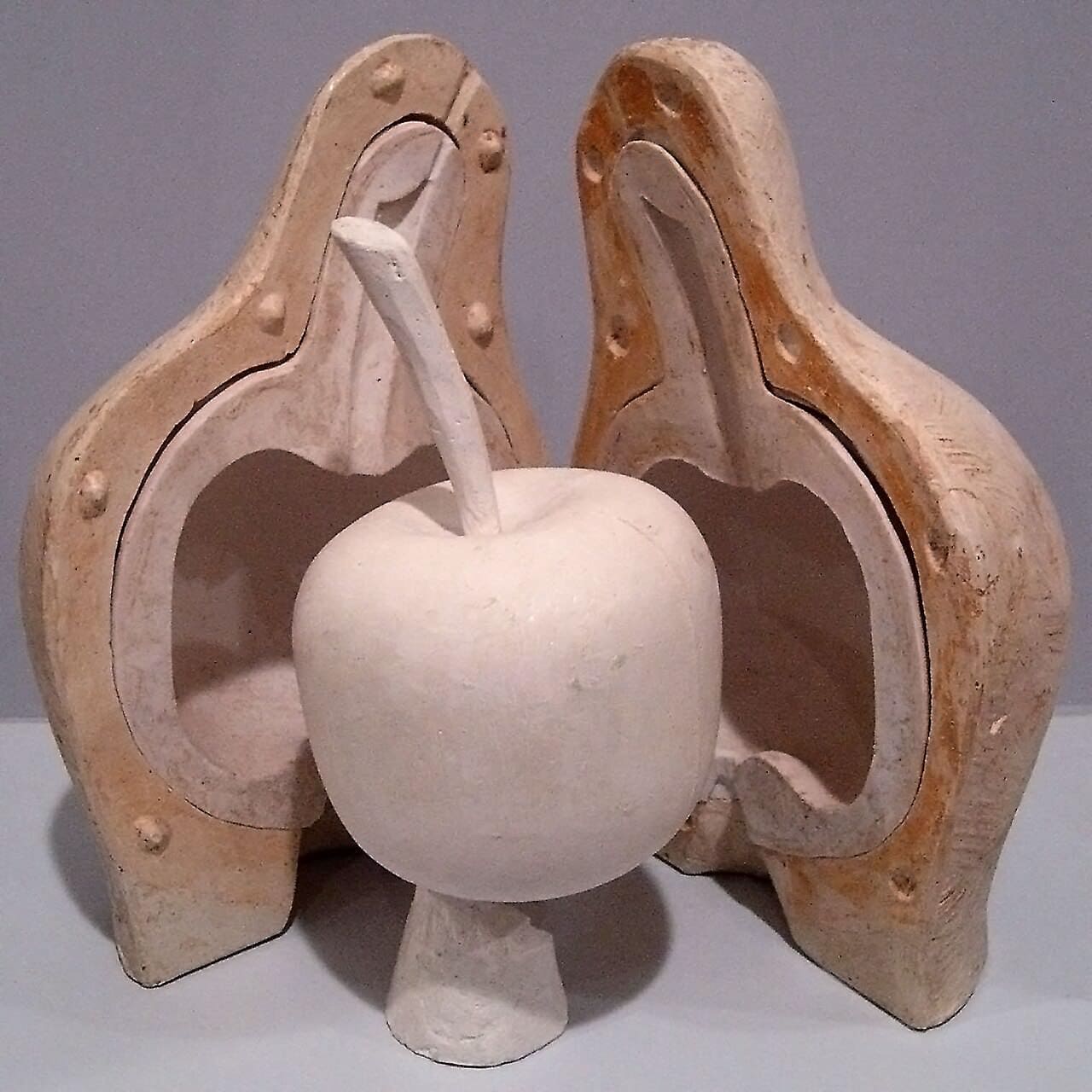
Before a child learns their name, they already are.
The child does not yet carry the concept that there is an identity to uphold, an image to defend, a story to live up to. They are not searching for an identity because they do not yet experience themselves as someone who needs one.
Experience simply unfolds. Directly, spontaneously. Warmth. Cold. Hunger. Touch. Sound. Movement.
Before they learn what is good or bad, acceptable or unacceptable, successful or unsuccessful, they experience life directly. A newborn does not know that crying is bothersome. A toddler does not know that curiosity can be inappropriate. A child does not know that some emotions are socially acceptable while others are not.
Adults rarely realize the extent to which they no longer experience reality directly. Most experience reality through layers of evaluation: Is this good? Bad? Successful? Failure? Desirable? Embarrassing? Normal? Abnormal?
The young child has not yet inherited most of these distinctions. The world appears before it is judged. A puddle is not dirty. An insect is not repulsive. A question is not stupid. A tear is not weakness. A fart is not embarrassing.
Things simply are what they are.
The child does not yet carry the concept that there is an identity to uphold, an image to defend, a story to live up to.
Curiosity moves without permission
Adults already have a manager installed in the psyche. A voice that asks: Should I? Will people approve? What will this look like? Am I allowed?
A young child often lacks this internal filter. When something catches their attention, their entirety just follows. A flower growing out of the broken pavement. A strange noise coming from the window. A hole in the wall. A crooked stick. They don’t stop to ask if it’s productive or worth their time. They’re just curious, purely for the sake of it, before the world teaches them that everything needs to have a point.
Tears fall without justification
An adult may cry and simultaneously create a narrative: “I’m crying because…”, “I shouldn’t be crying…”, “This isn’t a big deal…”
Adults explain emotions. Children express them.
A child often cries because crying is what’s happening. The emotion is not separated from the experience. There is no commentator.
Image: Ji-Elle, CC-BY-SA-4.0
The child does not stand apart from experience
Later in life, an observer develops. This isn’t awareness, but a kind of internal judge – a self-image watching itself. We become both the player and the referee. One part of us is doing the living. One part of us is monitoring the living and thinking about how it appears to others.
The young child is less divided. When laughing, they are laughter. When playing, they are play. When frightened, they are fear. The separation between the experience itself and the experiencer has not yet formed.
Later in life, an observer develops. This isn’t awareness, but a kind of internal judge – a self-image watching itself.
They don’t yet know there is an “I” and a “you”
This is even more remarkable when you actually listen to young children. Many refer to themselves by name, like “Emma wants juice.”
The fact that children often speak of themselves in the third person suggests that the sense of being a separate somebody is not as innate as adults imagine.
For a period of development, the personal pronoun “I” has not fully crystallized into a sense of “self.” That alone raises profound questions. We assume the “I” is fundamental. Yet every human being arrives without it. The ego is not present at birth. It emerges. It is constructed. Gradually. Piece by piece.
Only later does a sense of self begin to form. A name, a history, a personality, a collection of likes and dislikes. What most adults call “me” is largely built from these elements. The child has not yet assembled them.
Image: Coca Cola Mould CC-BY-SA-4.0,3.0,2.5,2.0,1.0
Theta waves
For much of early childhood, a child’s brain operates primarily in a theta-wave state. In this period, a child is remarkably receptive. They absorb language, emotional atmospheres, relationship dynamics, assumptions, fears, and beliefs long before they are capable of examining them.
When you realize this, the whole picture shifts. Raising children might actually be much less about giving instructions than we’ve always assumed.
We often focus on what to teach children. But perhaps the more fundamental question is: What are they learning simply by being around us?
A mother can beam with pride about offering “unconditional love,” yet freeze you out with an icy, silent treatment the moment something displeases her. A father can declare that family is everything, while structuring his entire life so he’s anywhere else – the gym, the office, the pub – just to shield himself from the demanding presence and intimacy of his own household. Parents can demand complete honesty, but you see them seamlessly slip into a fake smile the second they see the neighbor. They can lecture emotional honesty while spending a lifetime suppressing their own feelings.
Children learn from words. But they learn even more from what lies beneath them.
This is where conditioning begins.
Because whatever remains unresolved in you does not simply disappear when you become parents. It enters the room with you. It colors your reactions, your fears, your expectations, your need for control, your rewards and punishments, your ideas of success and failure.
Patterns through which we unconsciously transmit our own wounds, inadequacies and insecurities to the next generation.
The child receives countless messages: This is who you are. This is who you should become. This is what people like us do. This is what we never do. This is what makes you worthy. This is what makes others love you.
And because these messages arrive before critical reflection develops, they often settle into the subconscious unnoticed.
What begins as a survival strategy eventually becomes an identity. Not because the child chooses it, but because they have no other option. Dependency makes fitting in non-negotiable – a child simply can’t risk losing the people they rely on to survive.
So they learn. They learn to smile when upset. To hide anger. To suppress fear. To appear strong. To appear weak. To achieve. To please. To perform. To become whatever seems most likely to secure belonging.
And little by little, a strange thing happens.
The child no longer simply experiences life.
They begin to see themselves through the eyes of parents. Through the expectations of them. Through the values of culture. Through the judgments of society.
Children learn from words. But they learn even more from what lies beneath them. This is where conditioning begins.
Image: Ji-Elle, CC-BY-SA-4.0
The Conditioned Human Being
What begins in childhood rarely remains there.
The child grows into an adult, but much of the conditioning stays intact. The strategies that once secured love become personality. The masks that once provided safety become identity. The adaptations that once protected vulnerability become character traits. Many adults spend their entire lives defending structures they never consciously built.
Some pursue success to finally feel seen. Some seek relationships to complete themselves.
Some endlessly care for others because caring once earned approval. Some become fiercely independent because dependence once felt dangerous.
The forms differ. The mechanism is the same. An unconscious attempt to secure, through achievement or control, something that was never truly absent.
This is why human beings often experience an underlying restlessness. Even when life’s goals are achieved, the promised arrival does not come. The conditioned self immediately creates another destination. Another version to become. Another standard to meet. Another reason why this moment is not yet enough.
The search continues because the search itself has become part of the conditioning.
You may also like
Shame — The Organizing Wound
There is a weight you’ve been carrying for so long that you’ve stopped noticing the burden. It…

The Absent Father and the Birth of Enmeshment
The father archetype initiates that separation from fusion; he bestows the courage to individuate…
The invisible wounds caused by emotional abuse
Having grown up in an abusive environment, I understand firsthand the challenge of recognizing both…
