
Custom-Made Furniture for Our Camper Van Build
How we build the custom furniture for our Ducato Camper Project.
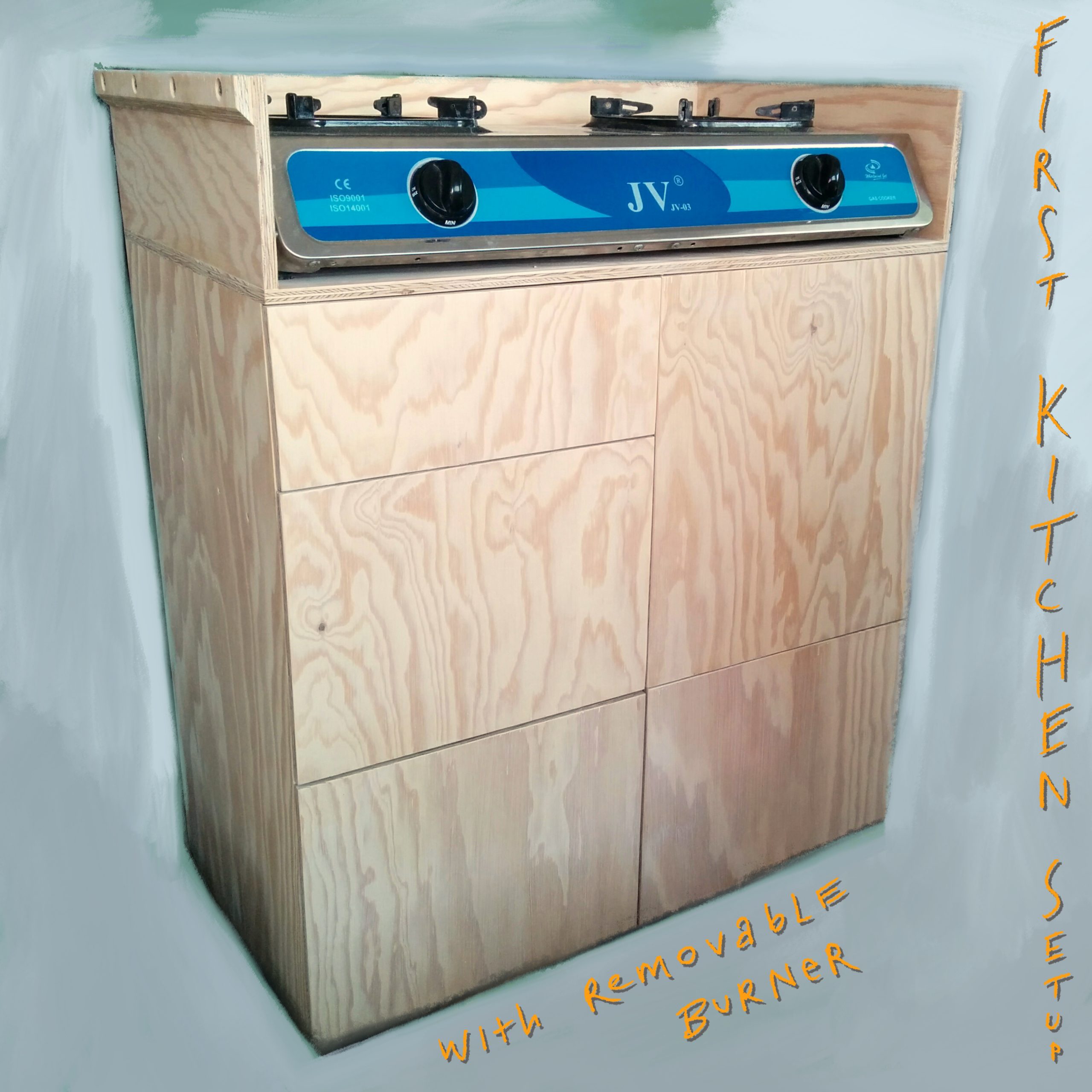
It was the first time we built wood furniture with little to no experience. Building a few skateboard ramps and halfpipes with friends as teenagers was all the woodworking experience we had to draw on. So we can say that it went surprisingly well, even though it was a real puzzle with a lot of precision measuring needed to fit everything in. With the convertible bed, the cushions that double as seating and sleeping, and the shower in the drawer, we can finally say that it has everything we ever wanted in a very small footprint.
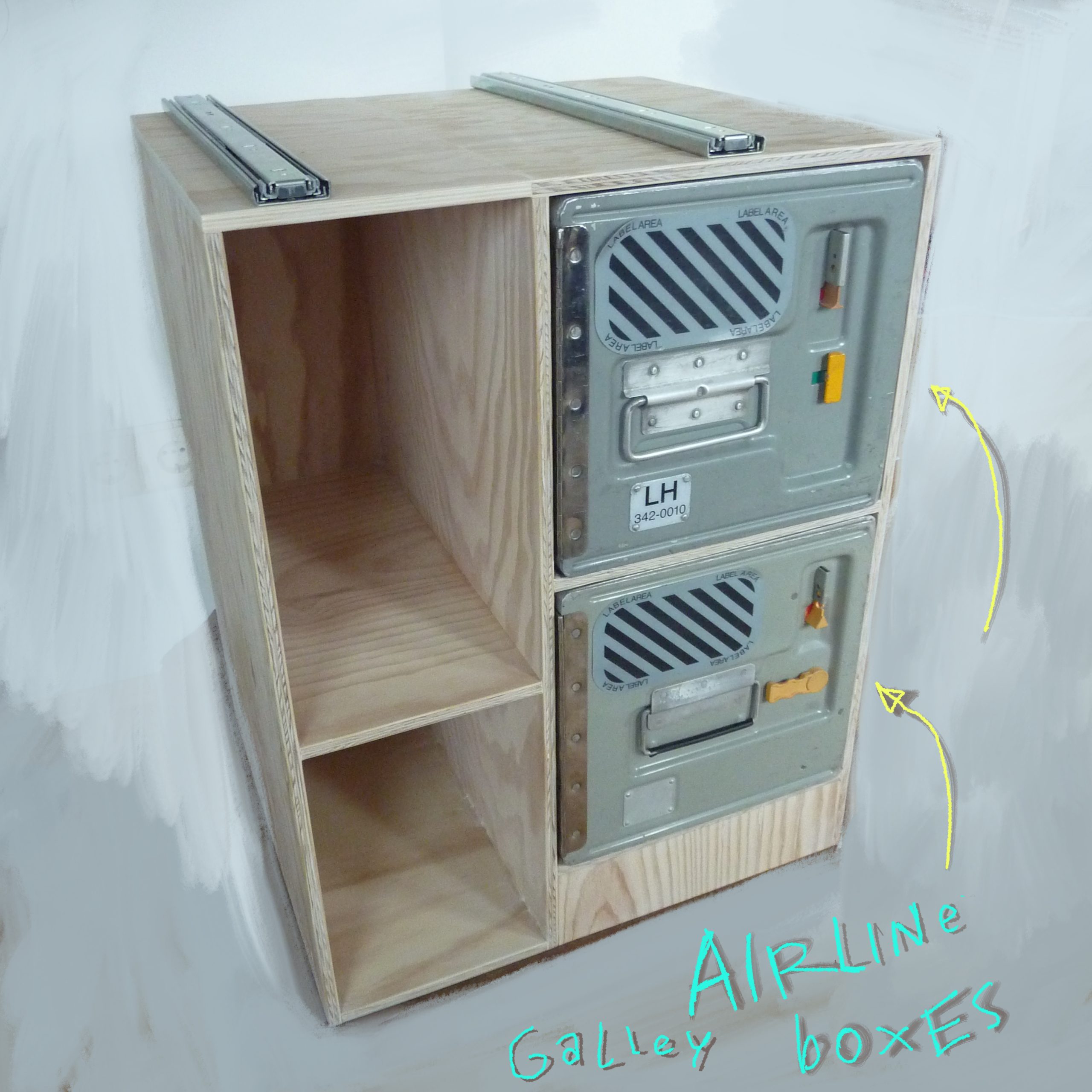
We used aluminum airplane cargo boxes, some integrated into the furniture and one above the heater as part of our toilet system. The cargo boxes are removable and the basic structure of the cabinet is wood. So from a weight saving point of view the whole thing makes no sense and it would have been better to just install some doors instead. But it has such a special look that we wanted to integrate into the design that we didn’t mind the extra weight. And since they are made of lightweight aluminum, it is not really a big deal.
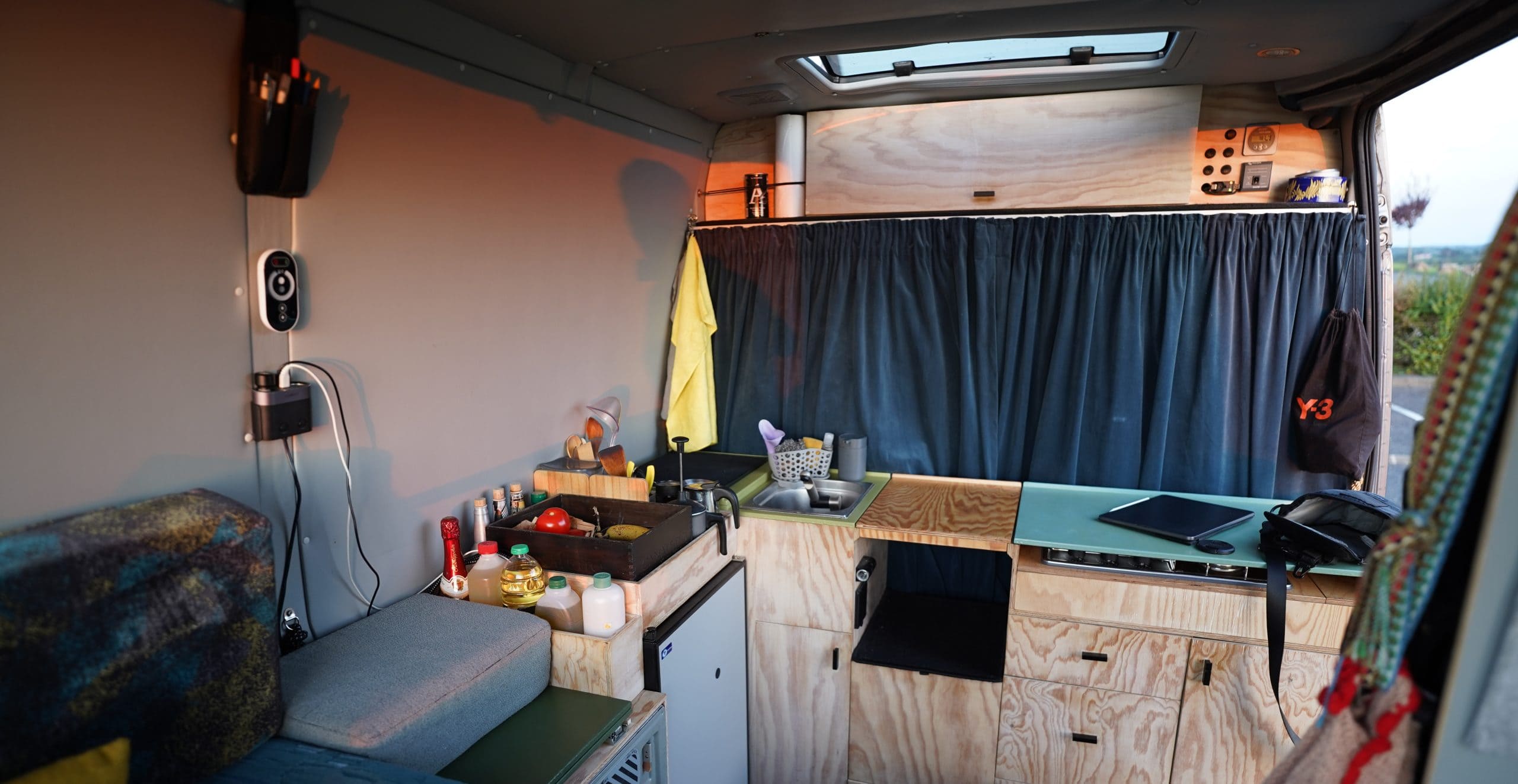
What turned out to be really practical is the area above the fridge where we can store veggies and fruit, a small compost bin, oil and bottles, and the larger cutlery and tools that are too big for the drawers. It looks a little more messy and cluttered, but the practical aspect of having an easily accessible place to put all these things we use every day makes it worth it.
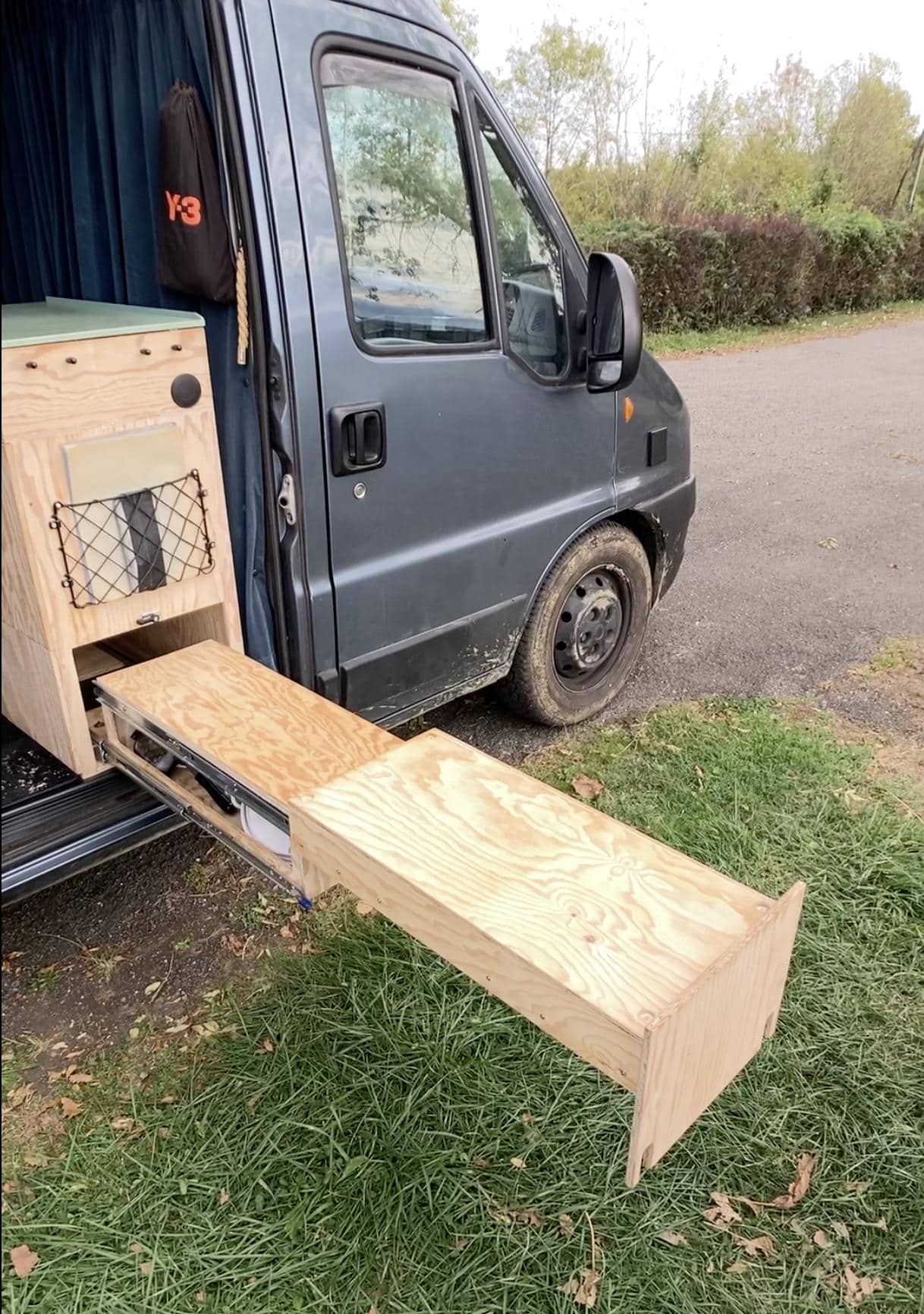
Another feature is an extension that you can pull out on the side of the cabinet with the stove when the sliding door is open. We have an extra gas stove that we can put on the extension to cook outside when the weather allows. There is a gas socket built into the side of the cabinet to connect it. The pull-out also serves as a storage area for larger cooking utensils, which is accessible through doors when not pulled out.
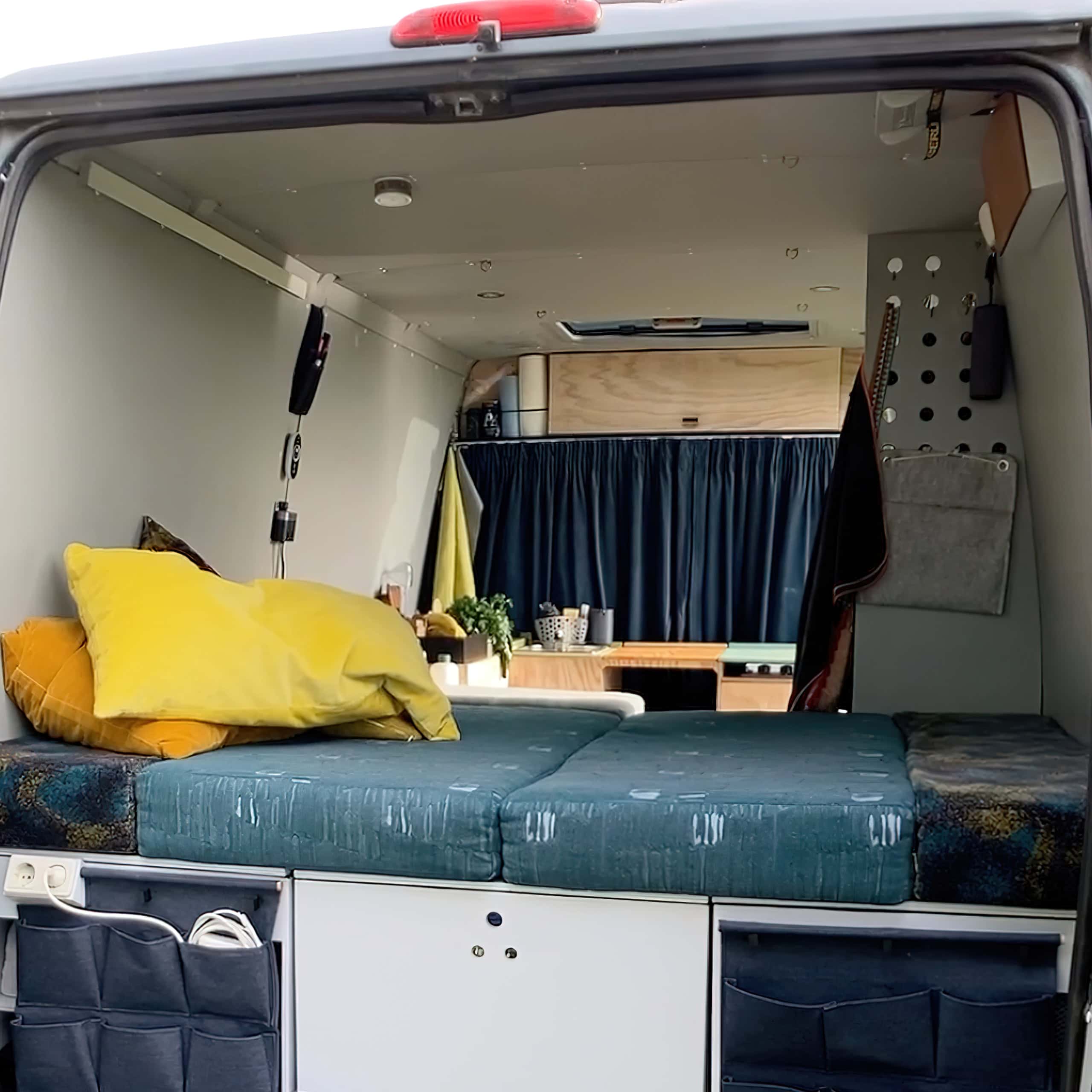
We have a movable table that also becomes the base for the bed, where we put the back cushions when we convert the sitting situation into a bed. There is a small pull-out with 2 extra cushions that can extend the bed situation for people who need more space. And if you don’t need it for the bed, you have a little extra space that offers a sort of table surface, which can come in handy when preparing a meal.
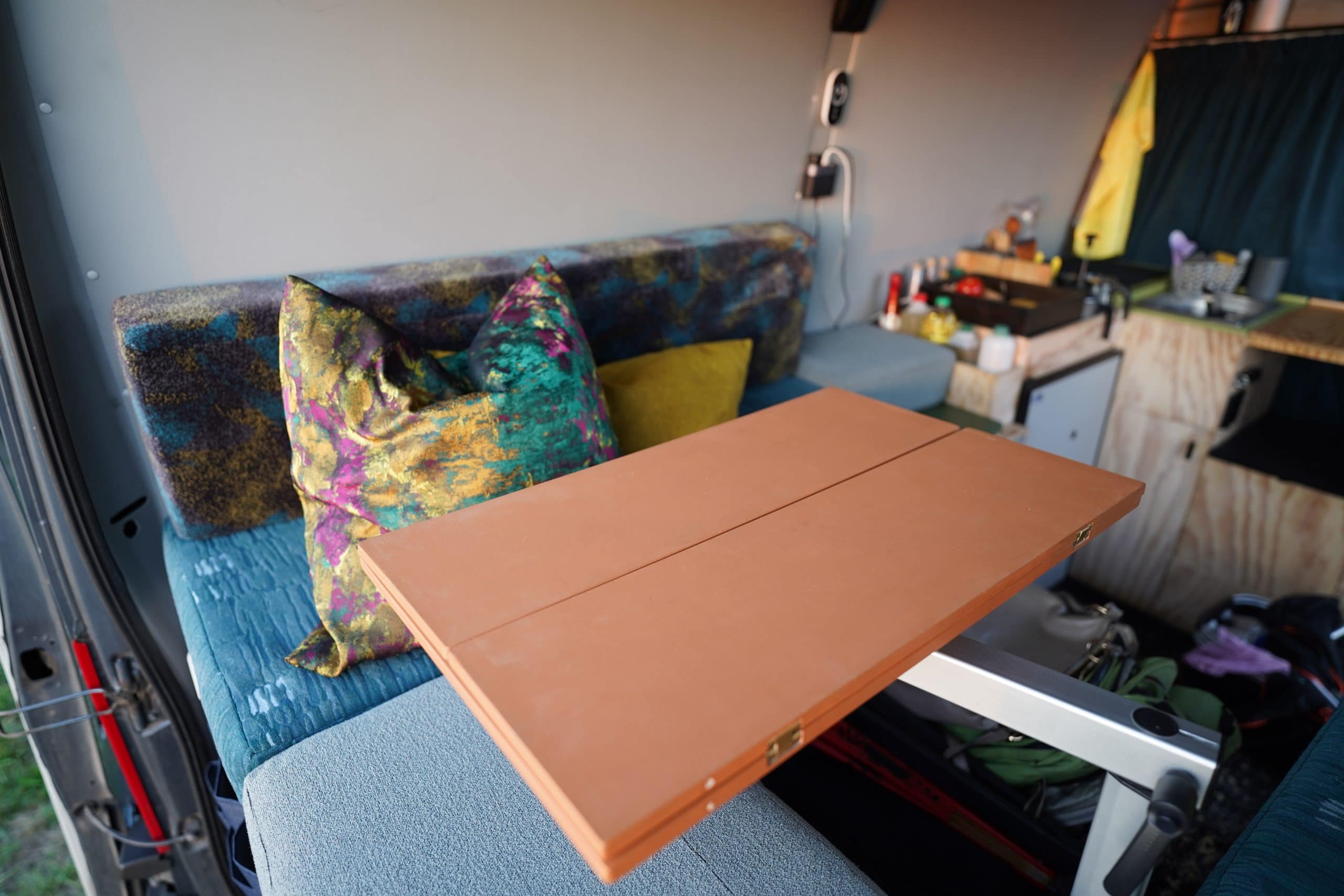
Here are some impressions of the two benches / bed for two building process and the final result:
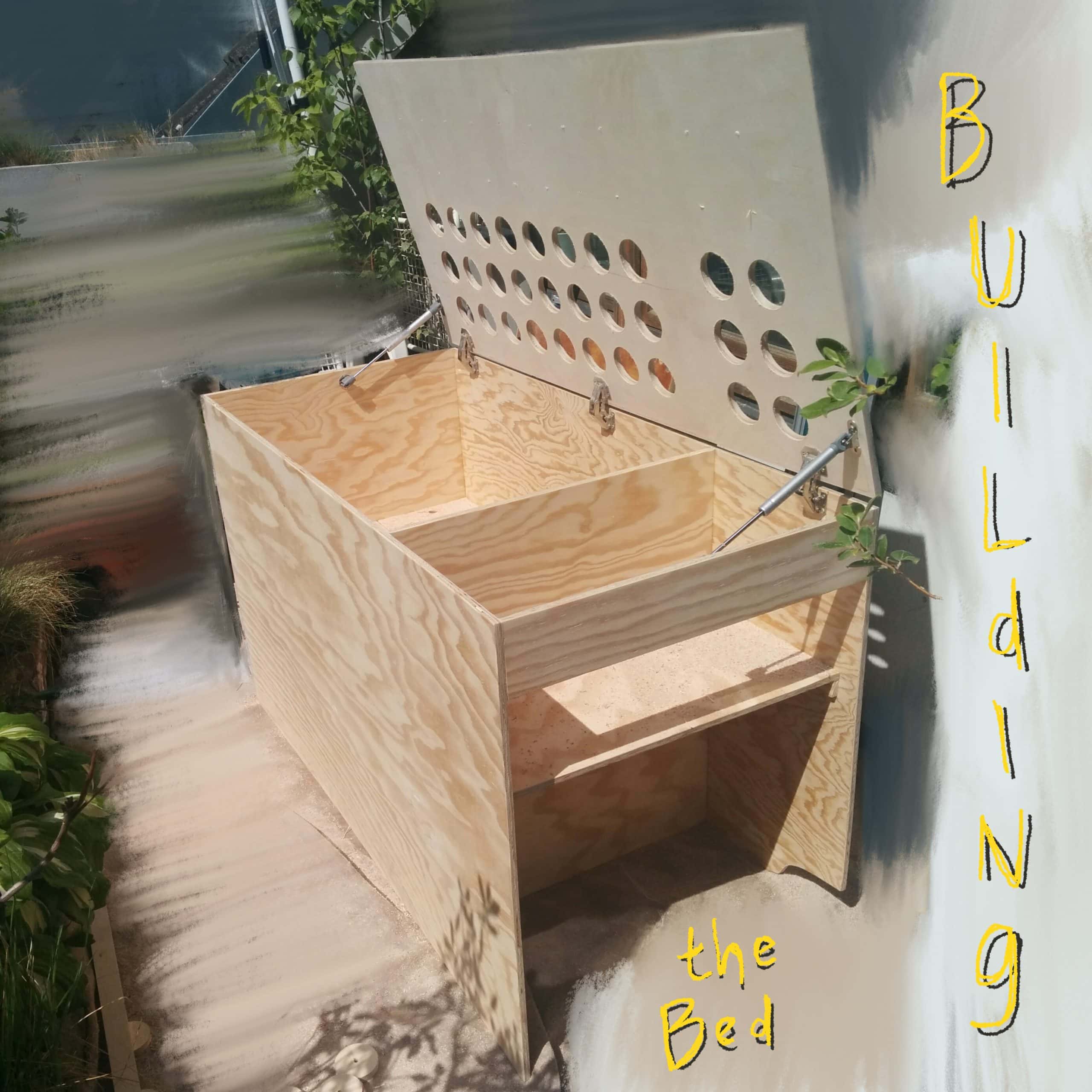
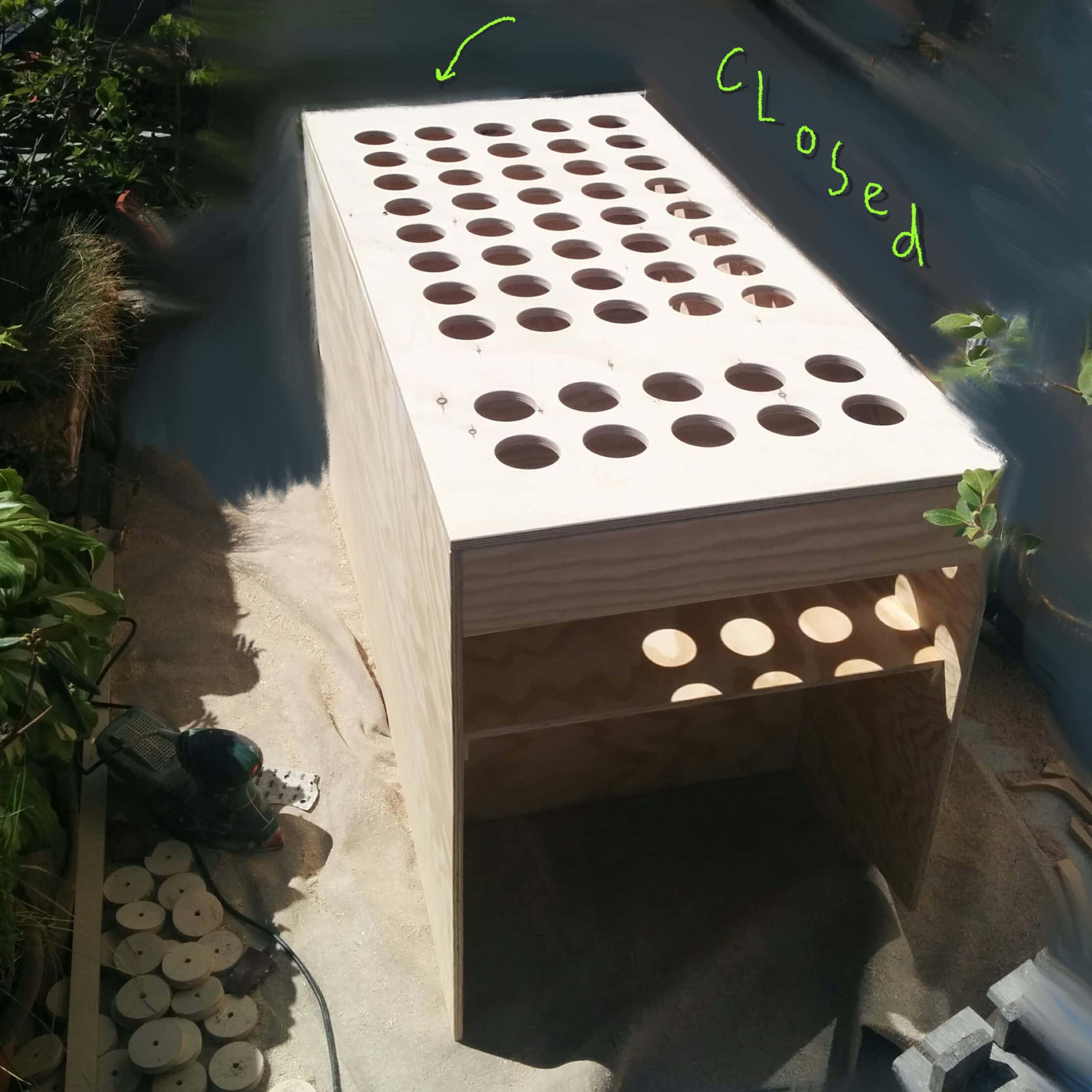
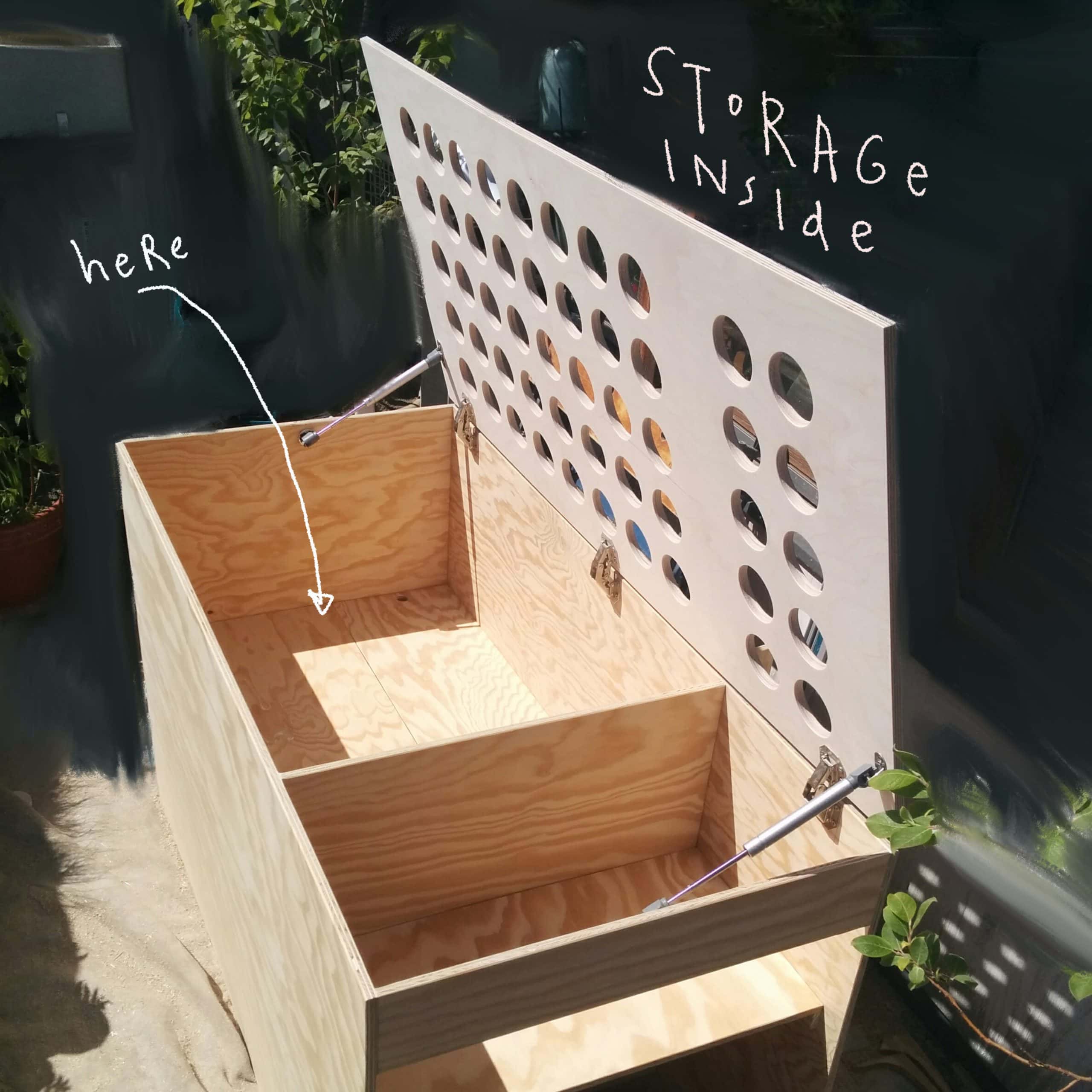
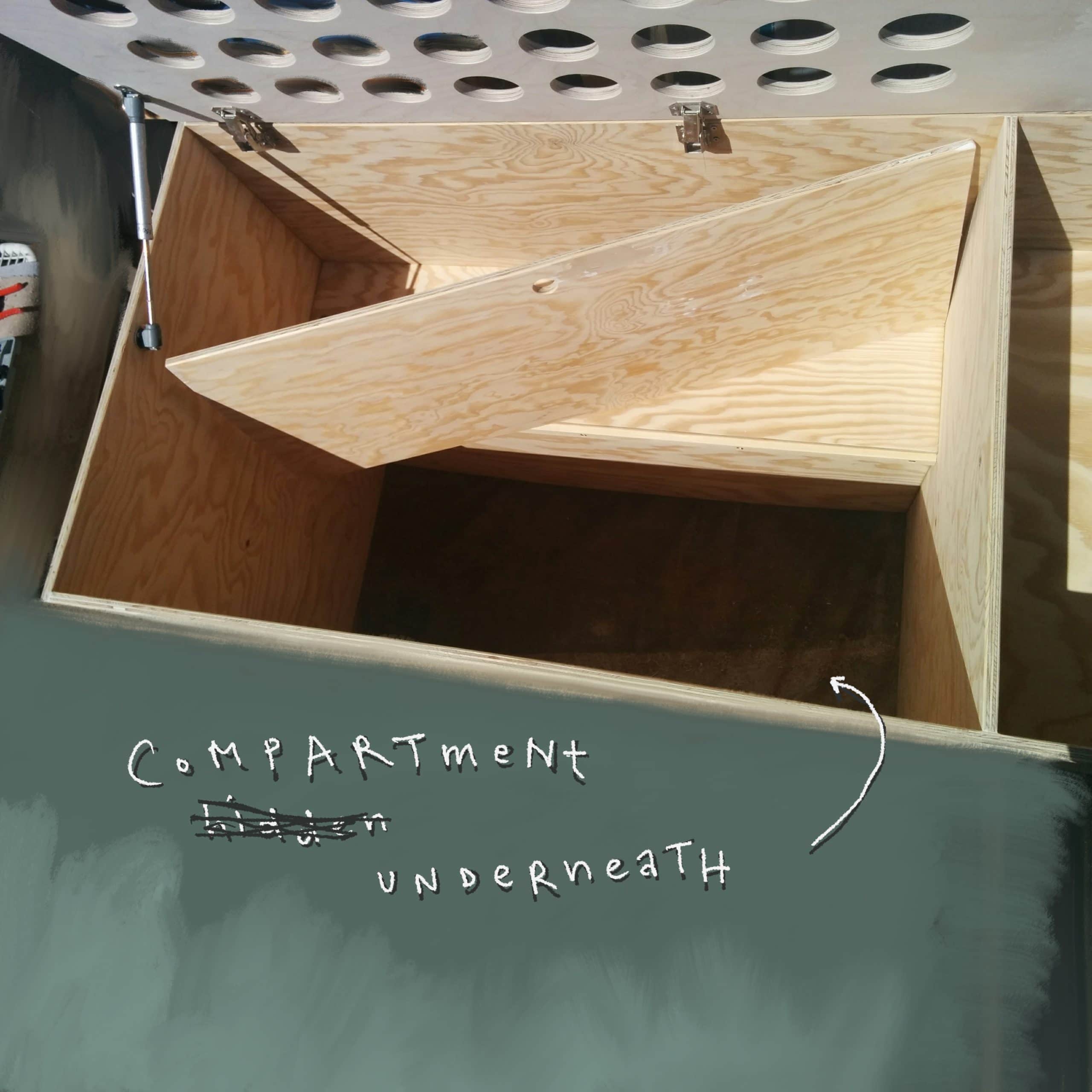
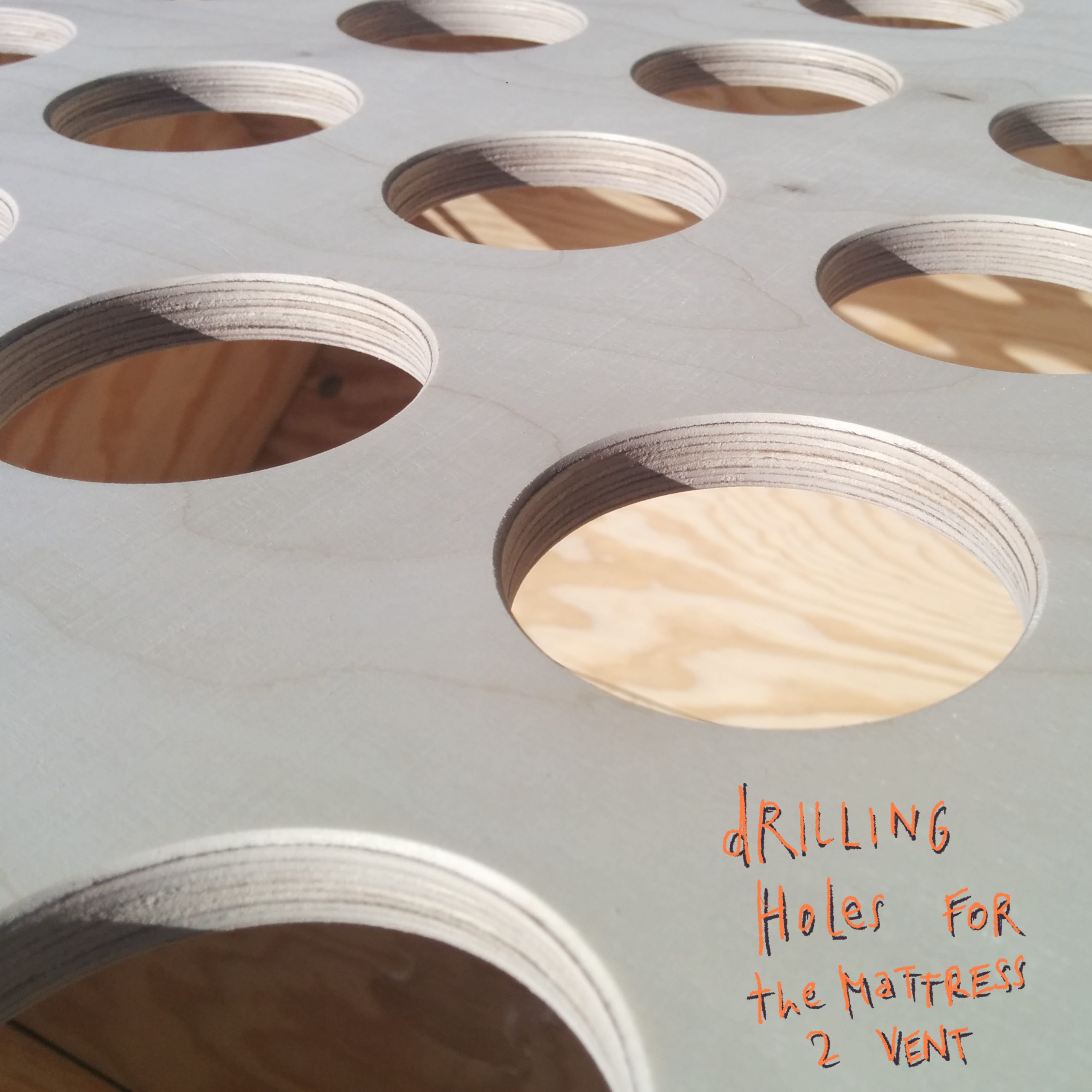
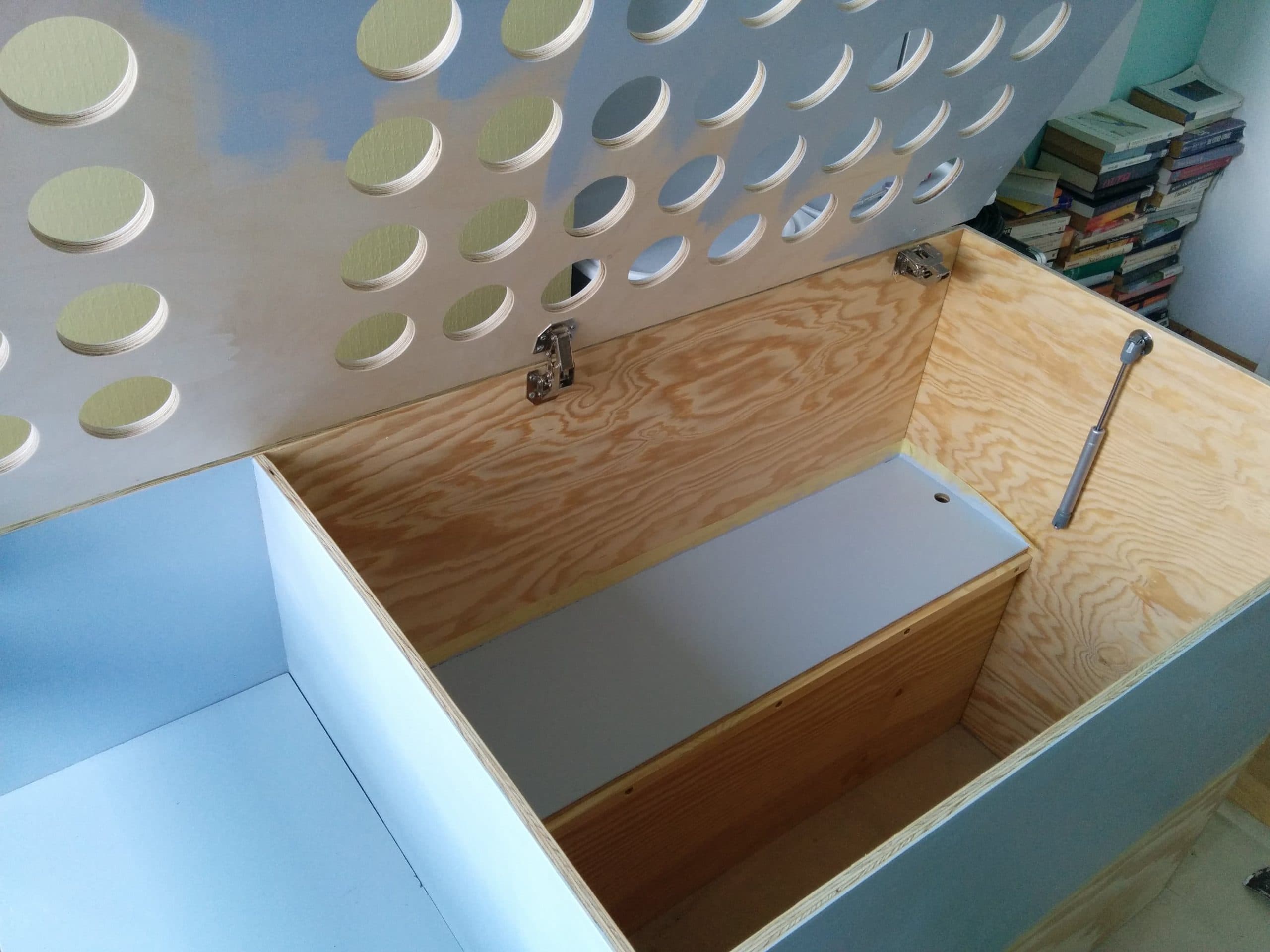
For the furniture we used 16mm and 12mm maritime pine and soaped it with some white pigment to give it a more modern look. The soap is a great protection against sun and liquids and you can reapply it from time to time to refresh it. In terms of woodworking, all you need to know is how to cut the wood, we used a plunge saw with a guide, a wood trimmer for the corners to make them look more refined and a tool to properly set round wood plugs or tenons for proper joints with wood glue and some tension ropes to hold it together while it cures.
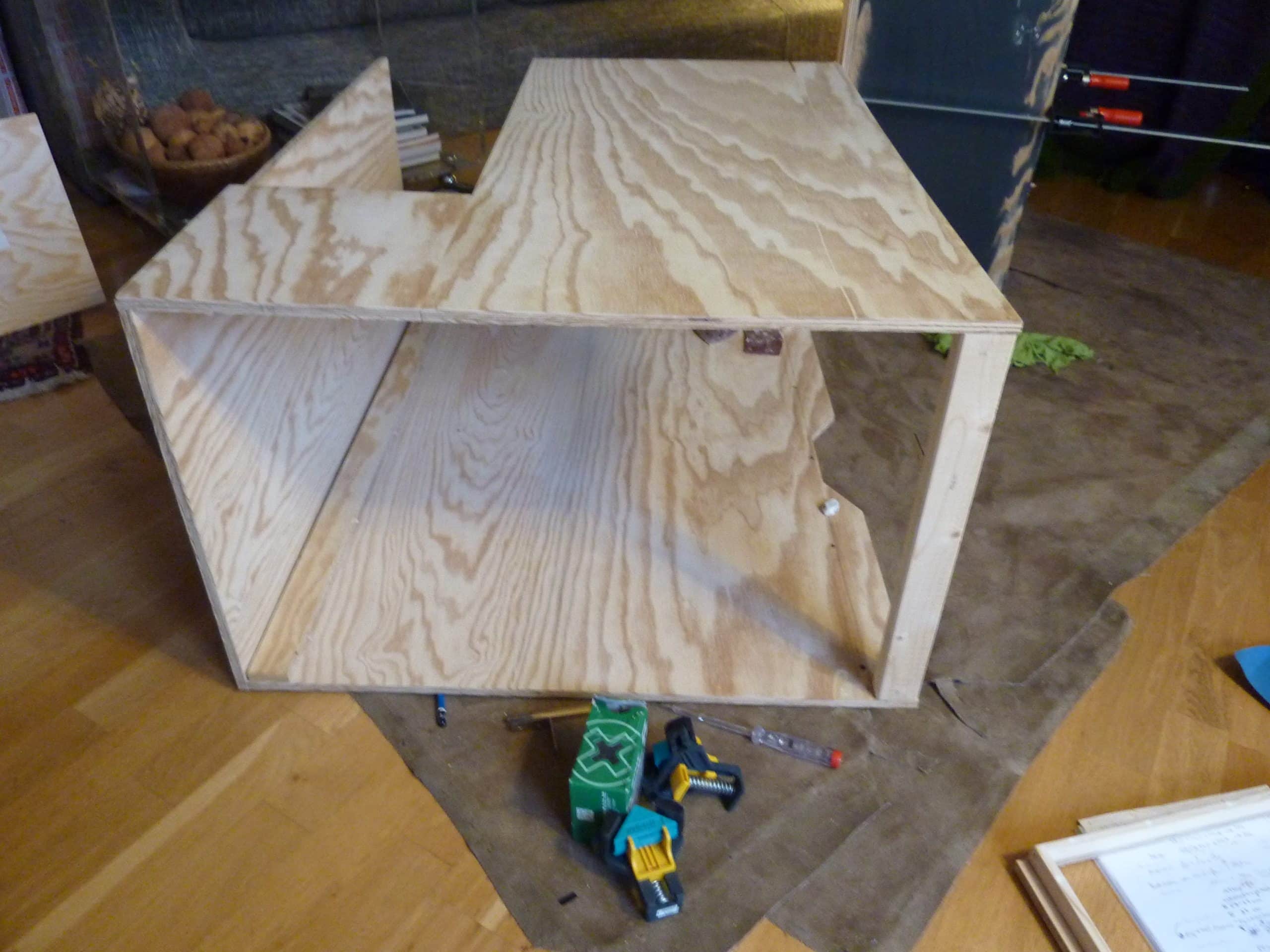
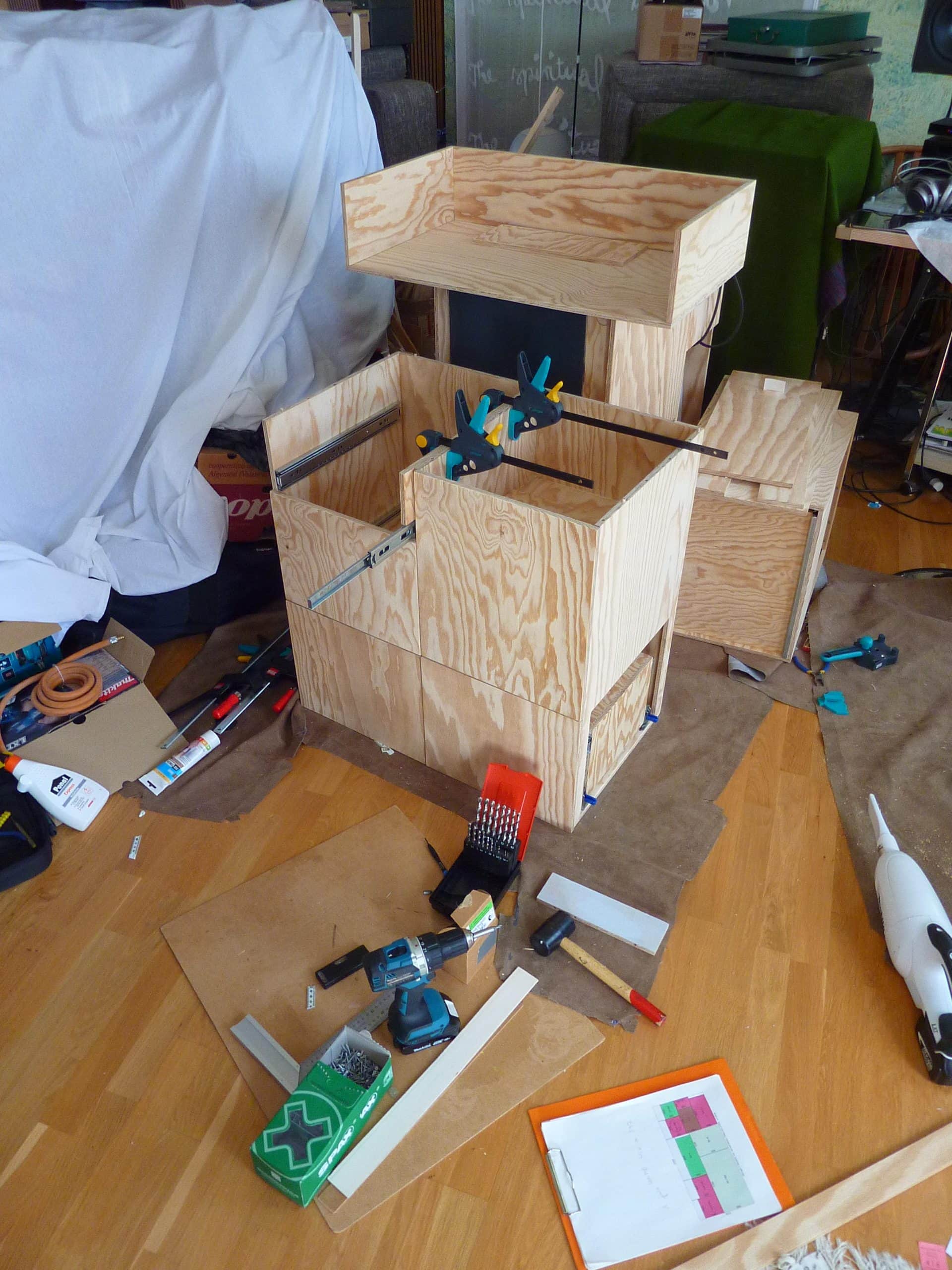
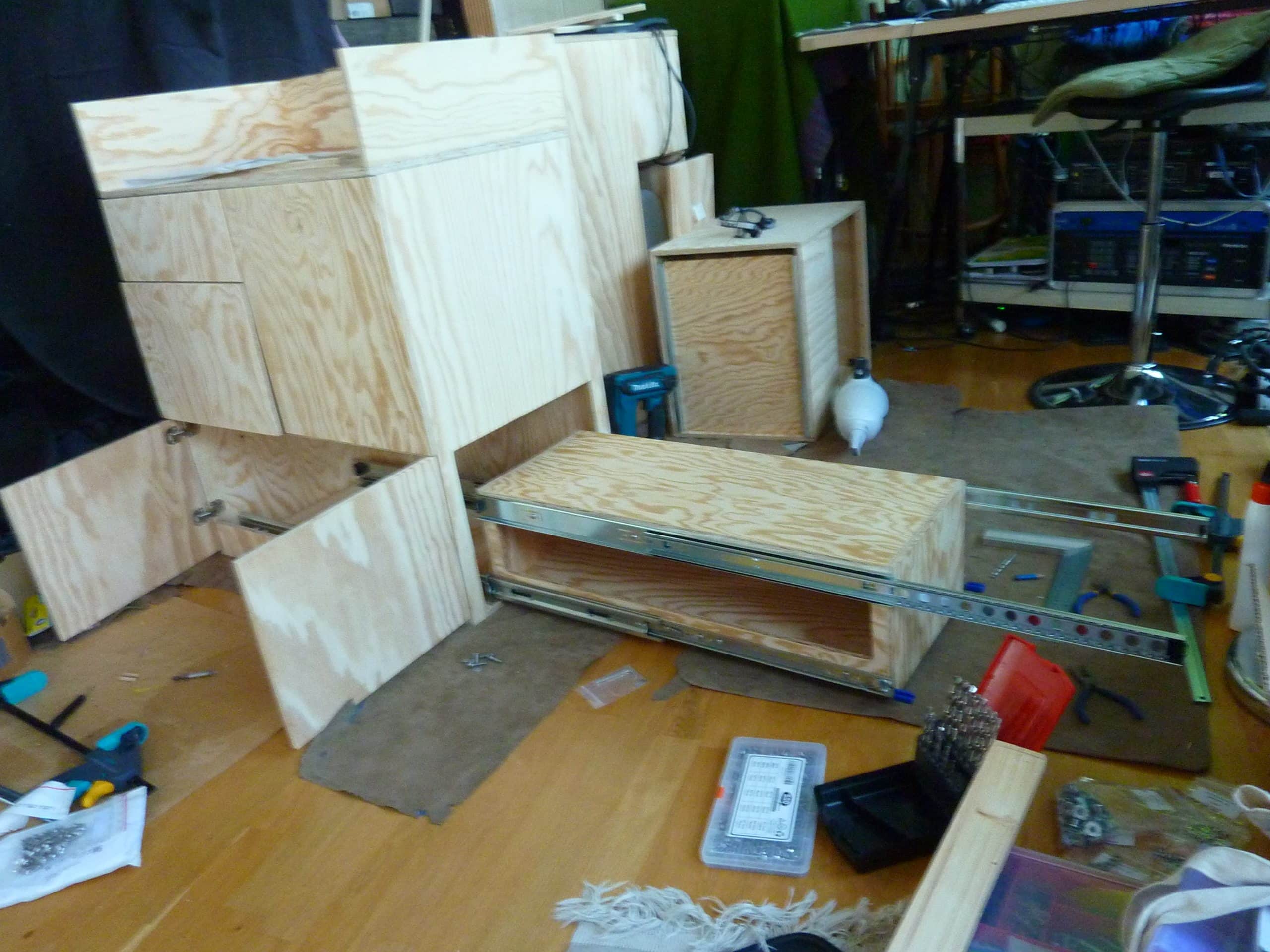
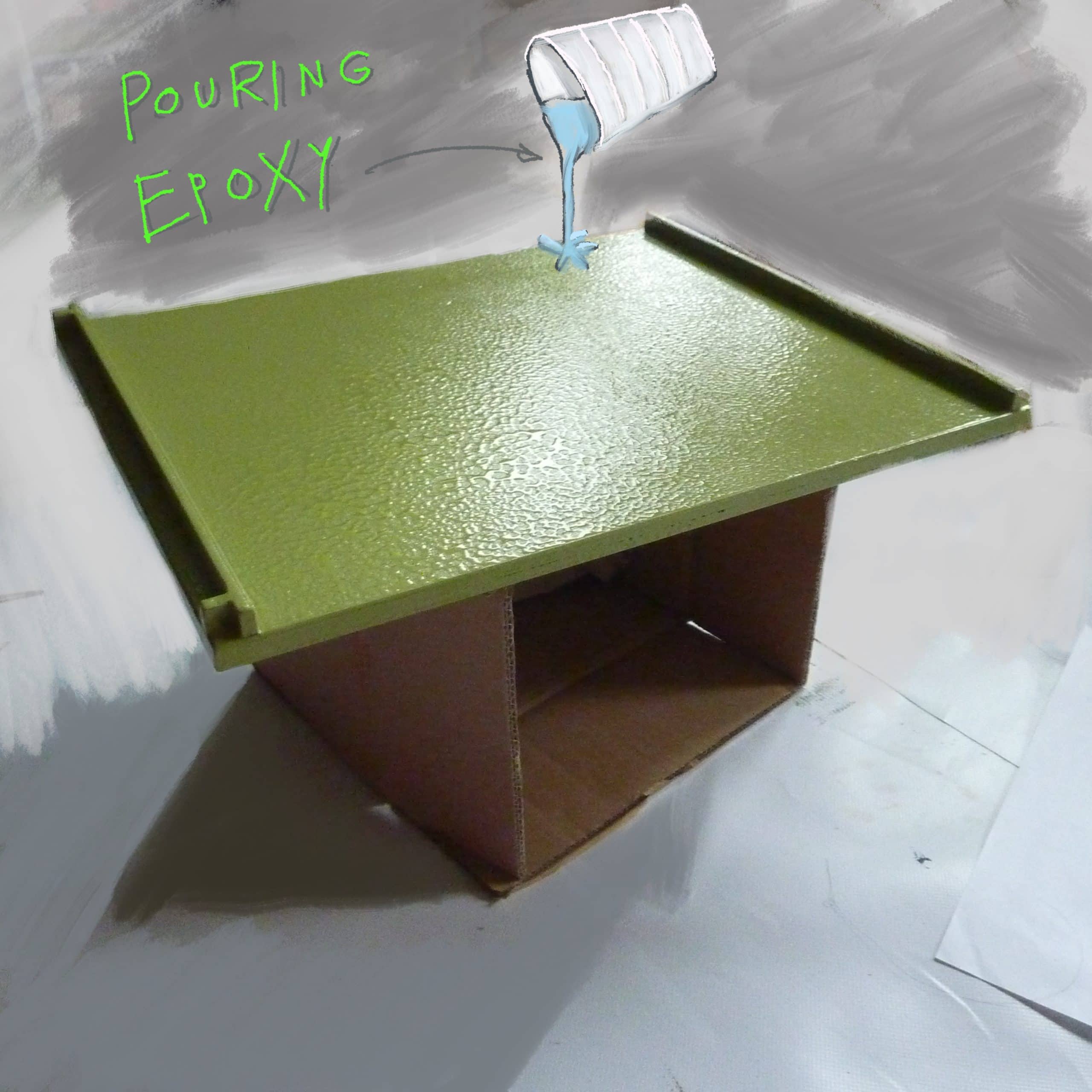
Some of the countertops have a special epoxy coating to make them more durable, especially against moisture from the sink and from cooking and drying dishes. We painted them first and then coated them with the epoxy to seal them. Epoxy is quite durable and so far it is working pretty well. The only board where we have some chipping is the foldout for the bed, as there is some mechanical force involved, but nothing that cannot be repaired with a little paint.
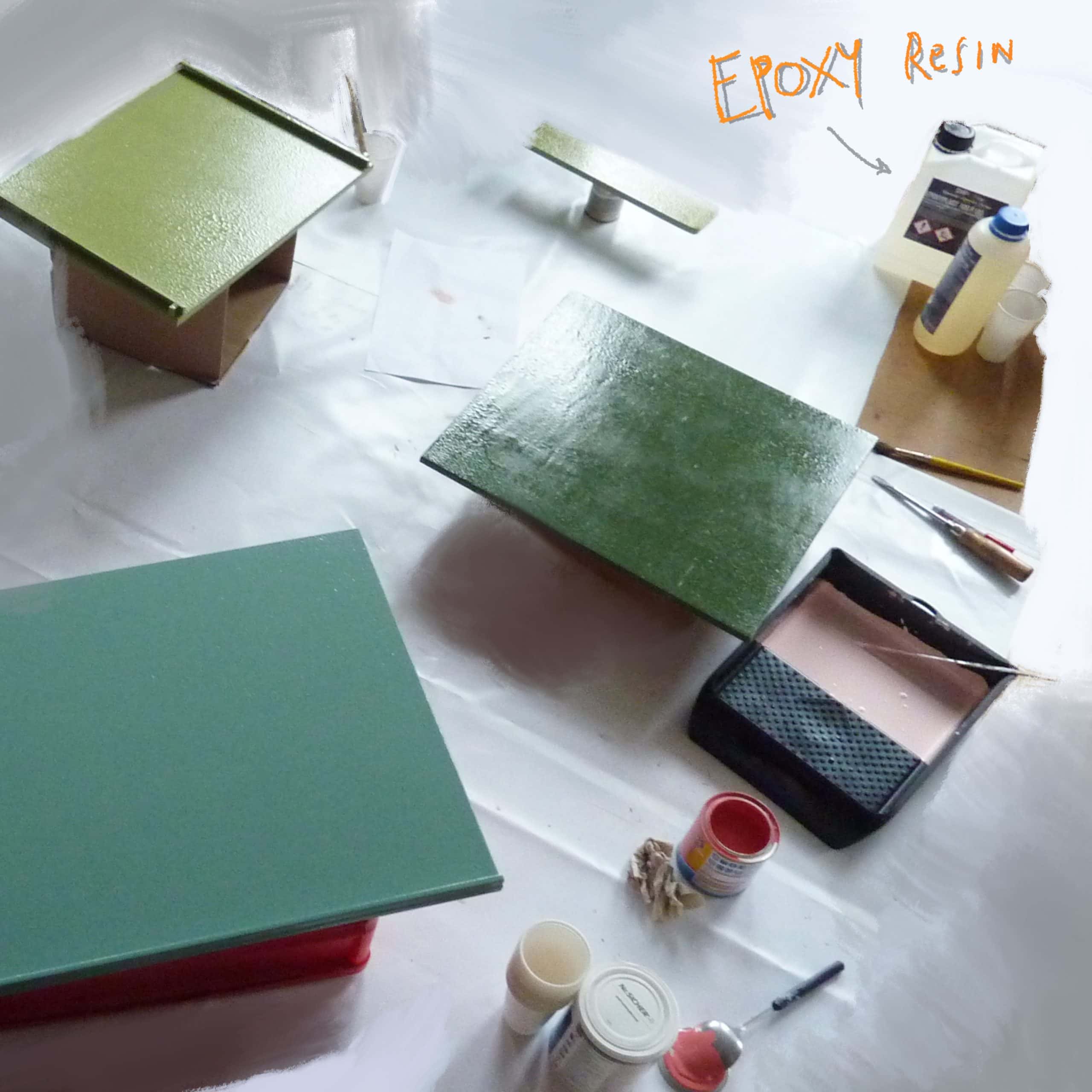
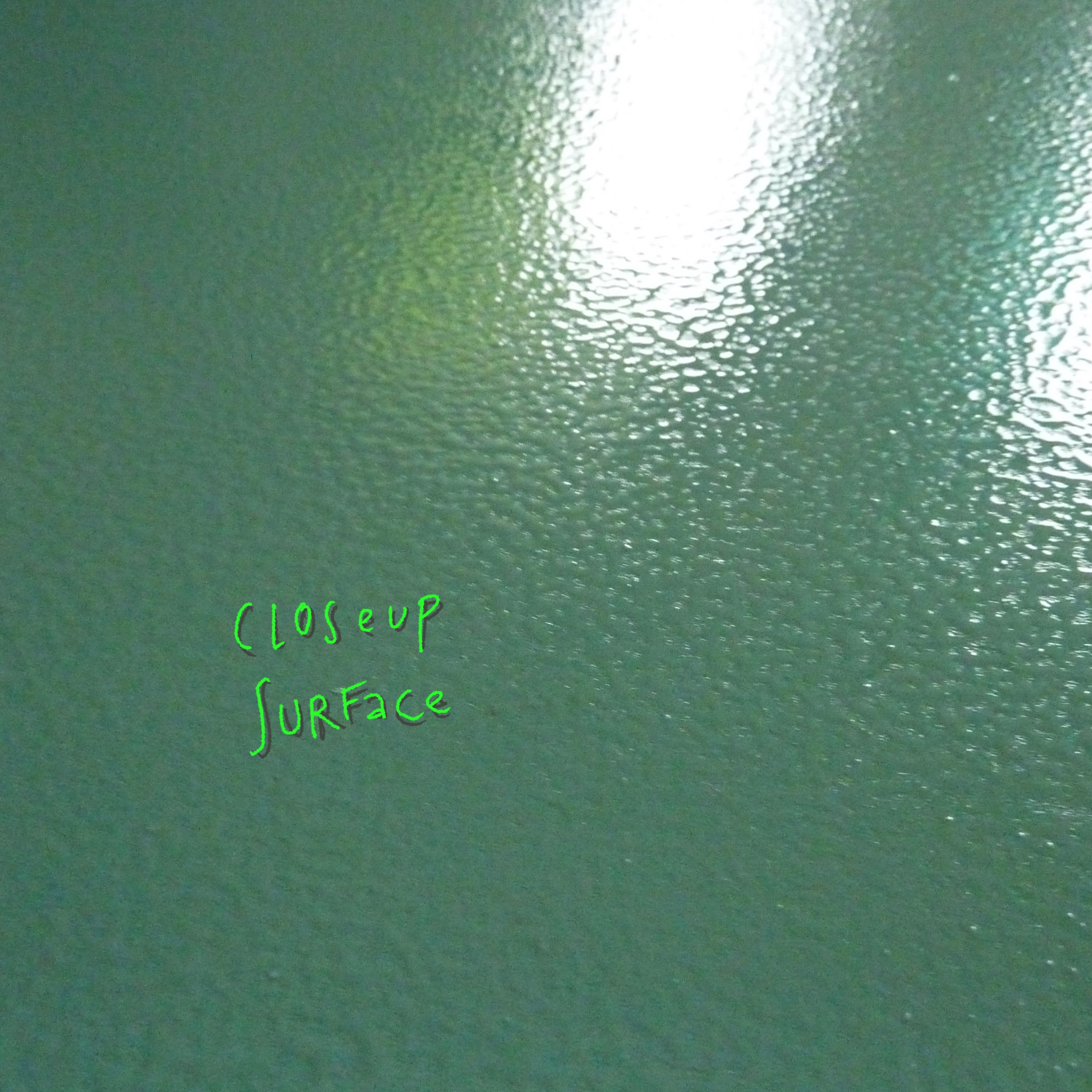
We were amazed at how everything fit in the end. While we expected some trial and error, it all worked perfectly on the first attempt. Sometimes it really comes down to just a few centimeters—you have to double-check that doors can open fully, that handles are reachable, and that nothing obstructs movement. These are the small details you need to anticipate ahead of time.
Overall, with a bit of patience and a willingness to learn (we spent quite a lot of time watching YouTube tutorials), the whole process is completely doable—even with little or no prior experience.
Happy building!
You may also like
Fitting WIFI & LTE in Our Camper Van
For telecommunications, we use a Netgear AirCard 810 WLAN router, and it’s been fantastic. Just…

How We Keep Our Camper Van Warm While Staying in Stealth Mode
Cutting a hole into the van’s floor was one of the more exciting moments of the build. You never…

Our Camper Van Project
We extend the concept of self-care to how we house our physical bodies, including the physical…