
RJ Mitte’s Death and the Parentified Child: The One Everyone Depends On, but Nobody Takes Care Of
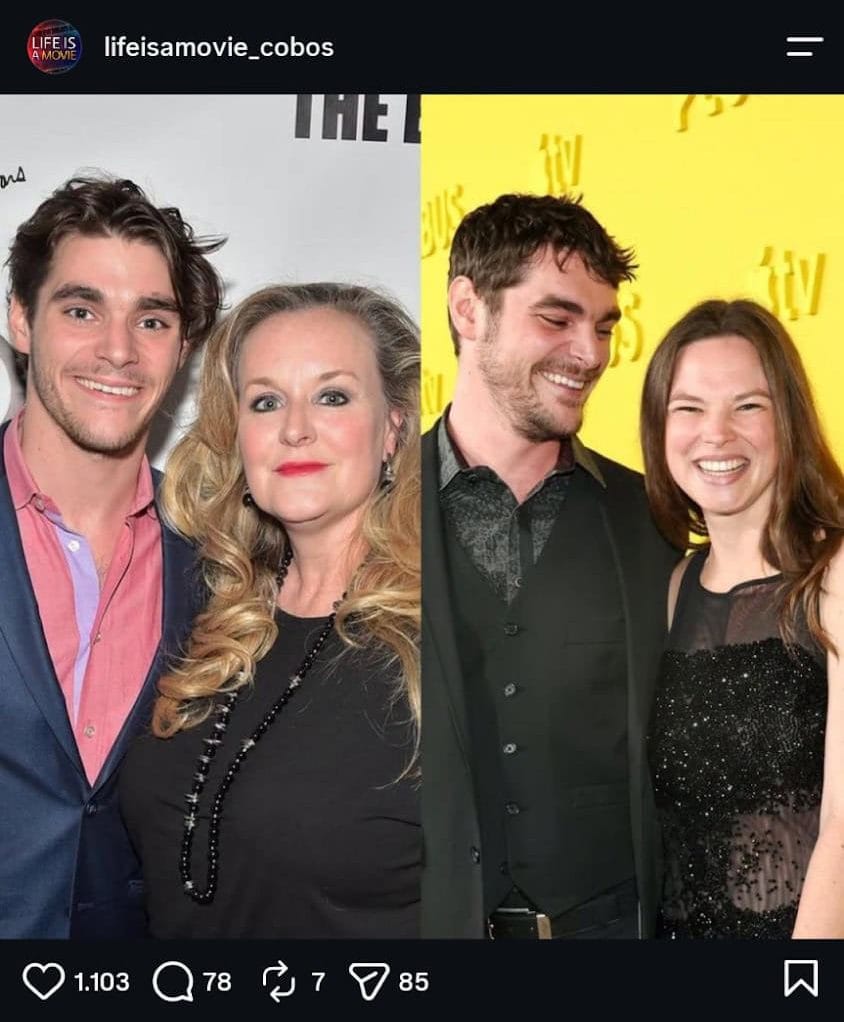
Image Credit: Instagram @ lifeisamovie_cobos
Parentification, emotional enmeshment, and the myth of the selfless mother
The media coverage surrounding the suicide of Breaking Bad actor RJ Mitte has focused on the reported tensions between him, his mother, Dyna, his sister, Lacianne, and his fiancée, Kennedy Suarez. According to media reports, tensions between his mother and fiancée had escalated, with reports alleging that he was asked to choose between the two women.
None of us can truly know what happened behind closed doors. But the story raises questions that extend far beyond one mother-son relationship or one conflict between a mother-in-law and her future daughter-in-law.
There are family dynamics that are difficult to see from the inside. Not because they are particularly complicated, but because they have become so normal that nobody questions them anymore.
One of them is the parentified child.
There are family dynamics that are difficult to see from the inside. Not because they are particularly complicated, but because they have become so normal that nobody questions them anymore.
The parentified child
In many ways, RJ Mitte became a public example of a parentified child. Reports about his life describe a young man who took on substantial responsibility for his family, including becoming the breadwinner and helping care for his younger sister after his mother was paralysed in an accident.
I was a parentified child, too.
All I cared about was my family. I helped wherever I could, even when that meant taking care of another child, my younger sibling. I did what needed to be done. And because I was doing it, because I was the one who could be relied upon, the function I had taken on gradually became my identity.
It took me a while to see this.
When conditioning becomes the way you see the world, it is difficult to see the conditioning itself. You don’t necessarily experience yourself as someone who has been given too much responsibility. You experience yourself as someone who is responsible. Someone who helps. Someone who gets things done.
And the worst part of being a parentified child is how lonely it can be.
You pour your heart into being there for everyone. You help, you listen, you carry things, you try to fix things. Somewhere inside, there may even be the hope that when you need help yourself, someone will be there for you in the same way.
But a parentified child hasn’t learned how to be the needy one. They had to be the reliable one. The dependable one. The one who could manage.
And because they look so capable, people often don’t notice when they are struggling.
Why didn’t you say something?
But what happens when you do say something? What happens when you try to explain that the problem is precisely that everyone comes to you with their problems, expecting you to help fix them?
Sometimes, the very people who depend on you cannot even understand that this could be a problem. They are so accustomed to you being there for them that they don’t know what to do with your needs. They know you as the person who helps, not the person who needs help.
You can end up feeling like nobody wants to hear about your problems – or worse, that they trivialize them. Because you are the one who is supposed to solve theirs.
The relationships you formed were one-sided from the get-go, even if nobody intended it to be.
There is a particular kind of exhaustion in being needed by everyone and feeling seen by no one. You can be surrounded by people who love you, or who believe they love you, and still feel profoundly alone.
And if parents think it is enough to recognize the warning signs and send their child to therapy, I would say: no, it isn’t.
Therapy may help the child understand what happened and learn to live differently. But the family dynamics that created the situation need to be examined, too. The parents have to look at their part in it. Otherwise, the child is left to untangle alone what the entire family helped weave.
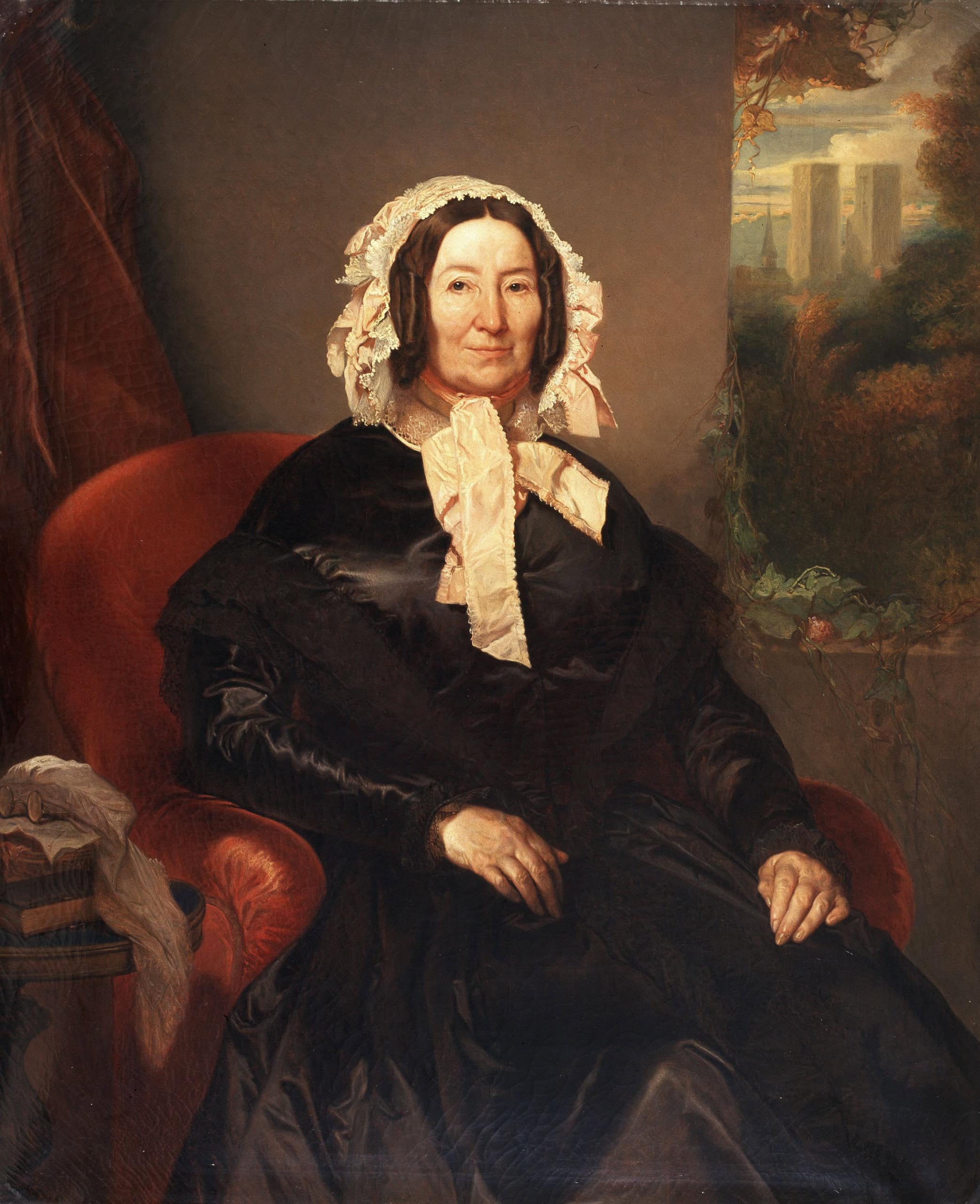
Portrait of Mrs Pick, Mother-in-law of the Artist
The surrogate partner
A particular form of parentification occurs when a child becomes a surrogate partner to a parent.
Imagine a mother whose partner is absent. He may be physically gone, or he may be present in the house but emotionally unavailable. Isolated within a traditional nuclear family setup, the mother is left without the support she needs, and her child begins to fill the gap.
An older son may become her emotional confidant, her protector, her chauffeur, her errand boy, the person who helps pay the bills, or the father figure to his younger siblings. He becomes the person she turns to when life gets difficult.
Sometimes this happens because a family is genuinely struggling and there is nobody else to help. Sometimes it develops gradually, without anyone consciously deciding that this is what should happen. But whatever the circumstances, the child is taking on a role that belongs to an adult.
Why would a mother become comfortable with such an arrangement? Because it can work for her. She has someone she can depend on, someone who knows her, someone who is already emotionally invested in her well-being. With a child, you don’t have to do the hard work that adult relationships demand – there’s no need to negotiate, meet halfway, or risk being vulnerable. The child is already there. He already belongs to her family. He already feels responsible.
The relationship may offer convenience, security and a sense of control. The mother may not even recognize what she is asking of her son because the arrangement has become so familiar. But there is a cost.
A child who becomes a parent’s emotional partner has little room to simply be a child. And when that child grows into an adult, the role doesn’t necessarily disappear. It can become the very framework through which the relationship continues to operate.
This is where emotional enmeshment becomes particularly difficult to disentangle. Because it looks like love from the outside. People in enmeshed families often take pride in how ‘tight-knit’ they are, unaware that what feels like exceptional closeness is actually a lack of boundaries. The mother and son may speak every day, do everything together, and consider each other inseparable. Their closeness may even be celebrated as proof of a special relationship. But closeness alone doesn’t tell us whether a relationship leaves room for two people to live their own lives.
The question is whether the son is free to become an independent adult without experiencing his mother’s distress as something he must fix, her disappointment as something he must resolve, or her needs as obligations he can never put down.
A son can love his mother deeply and still need to stop being the person who holds her life together.
These two things are not mutually exclusive. But in an enmeshed family, they can be made to feel that way.
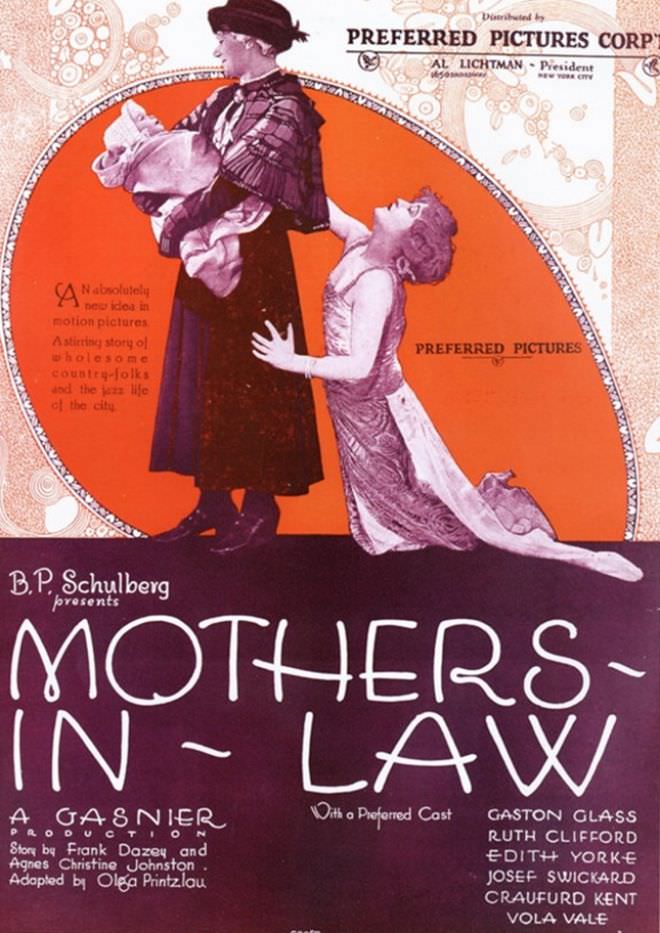
Poster for the film “Mothers-in-Law” (1923)
When the fiancée becomes the intruder
Plenty of mothers and daughters-in-law get along just fine. A close relationship between a mother and her son does not automatically make room for conflict with his partner.
But many of us also know the other version: the mother who struggles to accept the newcomer, who resents the time and attention her son gives his partner, or who treats the relationship as a threat to the family. What is often missed is that the conflict may be about more than losing time with her son.
A mother who has built her life around being indispensable to her child may experience his growing independence as a loss of her own position. She is no longer the person he turns to first. She is no longer at the centre of his everyday life. Another woman is now sharing the intimacy, decisions and responsibilities that once belonged primarily to the mother-son relationship.
And if the mother has come to experience her son as an extension of herself, this shift can feel like more than a change in family arrangements. It can feel like losing a part of herself.
Being the most important person in someone’s life can become an identity in its own right. It can also become addictive. The attention, the closeness, the feeling of being needed and the security of knowing that someone will always come back to you can be difficult to relinquish.
When that position is threatened, the mother may experience not only grief but also an identity crisis.
The newcomer is then no longer simply the woman her son loves. She becomes the person who is taking something away.
This is how a partner can become an intruder in a family she has done nothing wrong to enter.
The mother may criticize her, question her intentions, interfere in the couple’s decisions, or involve other family members in the conflict. She may frame her behaviour as concern for her son, when what is actually at stake is her own difficulty with the changing relationship.
Of course, the reverse can happen, too. A partner can be controlling, and a mother can have legitimate concerns about her son’s relationship. No single explanation fits every family.
But when a mother cannot tolerate her adult son’s independence, we need to ask what her relationship with him has come to depend on.
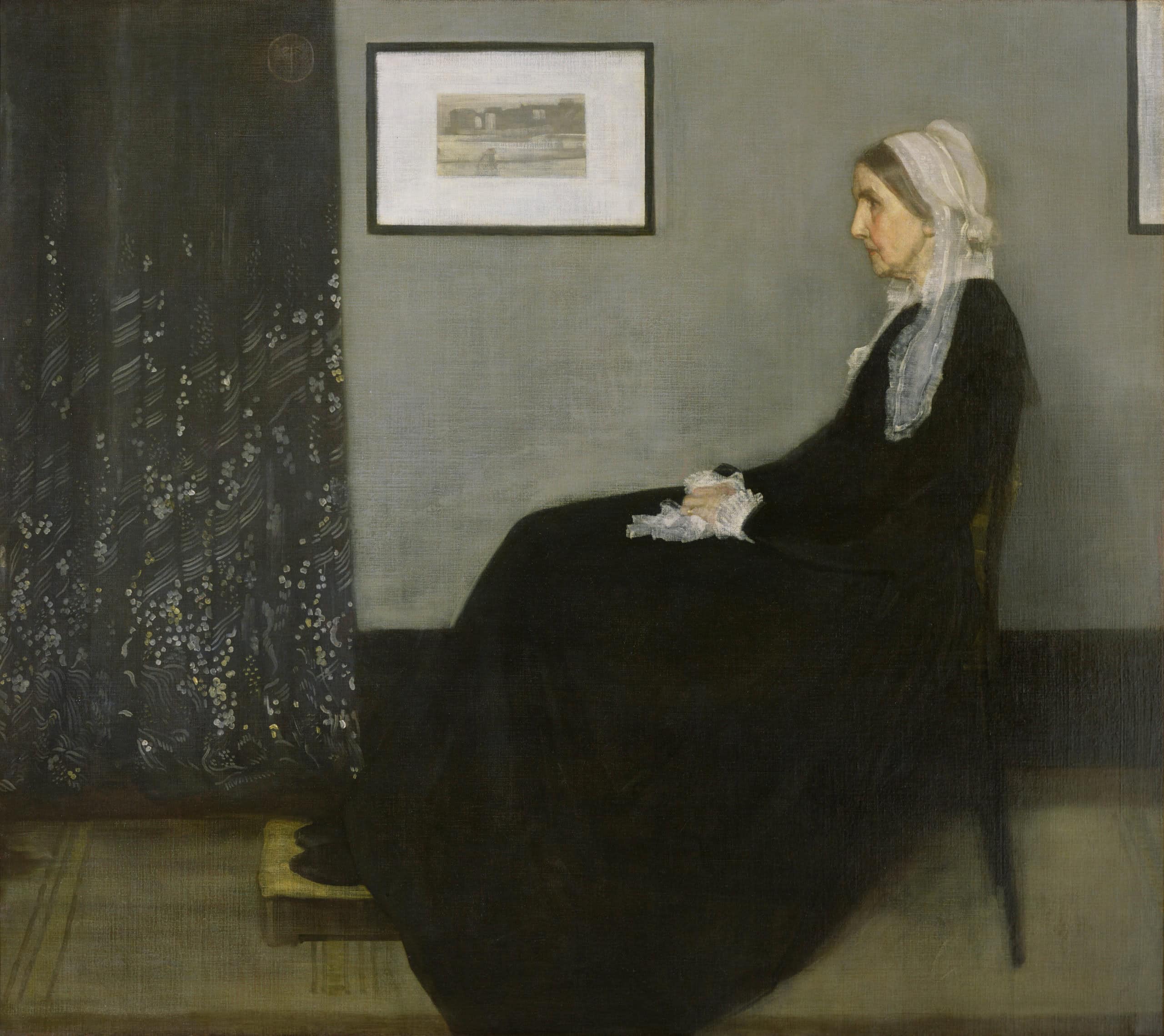
Whistlers Mother
Plenty of mothers and daughters-in-law get along just fine. But many of us also know the other version: the mother who struggles to accept the newcomer, who resents the time and attention her son gives his partner, or who treats the relationship as a threat to the family.
The guilt of leaving
Growing up and leaving your family of origin is supposed to be a natural part of life. You build relationships, make decisions, establish a home, and begin a family of your own.
But for a parentified child, leaving can feel like betrayal.
They may know intellectually that they are an adult and have the right to live their own life. Yet emotionally, they may still feel responsible for their mother’s happiness, their sister’s well-being, or the family’s ability to cope.
They may feel guilty for choosing their partner, guilty for not being available, guilty for disappointing their mother. They may understand that something needs to change and still find themselves unable to make that change without feeling that they are hurting the people they love.
And when the family has come to depend on them for emotional, practical or financial security, the consequences of leaving can feel enormous.
Think of a family in which a father has been emotionally absent and the son has stepped into the vacuum, helping raise his sister and supporting his mother, particularly after an accident. If that son begins to build a life of his own, the family may experience his departure as the loss of an entire support system.
That does not mean he is responsible for maintaining that system forever.
But it helps explain why the transition can be so difficult, both for the child who is leaving and for the people who have become dependent on him.
This is also where we need to look at survival.
When people feel overwhelmed, unsafe or unable to manage their lives, they may cling to whatever gives them a sense of security. They may resist change, try to maintain control, or interpret another person’s independence as a threat.
You can call some of this behavior selfish, narcissistic or controlling. Sometimes those words may be appropriate. But labels alone do not explain what is happening.
People can act in deeply self-centered ways when they feel threatened, even when they believe they are acting out of love.
Understanding this does not excuse the behavior. It helps us see why it happens and why it can be so difficult to change. In a family organised around dependency, one person’s freedom can feel like another person’s abandonment.
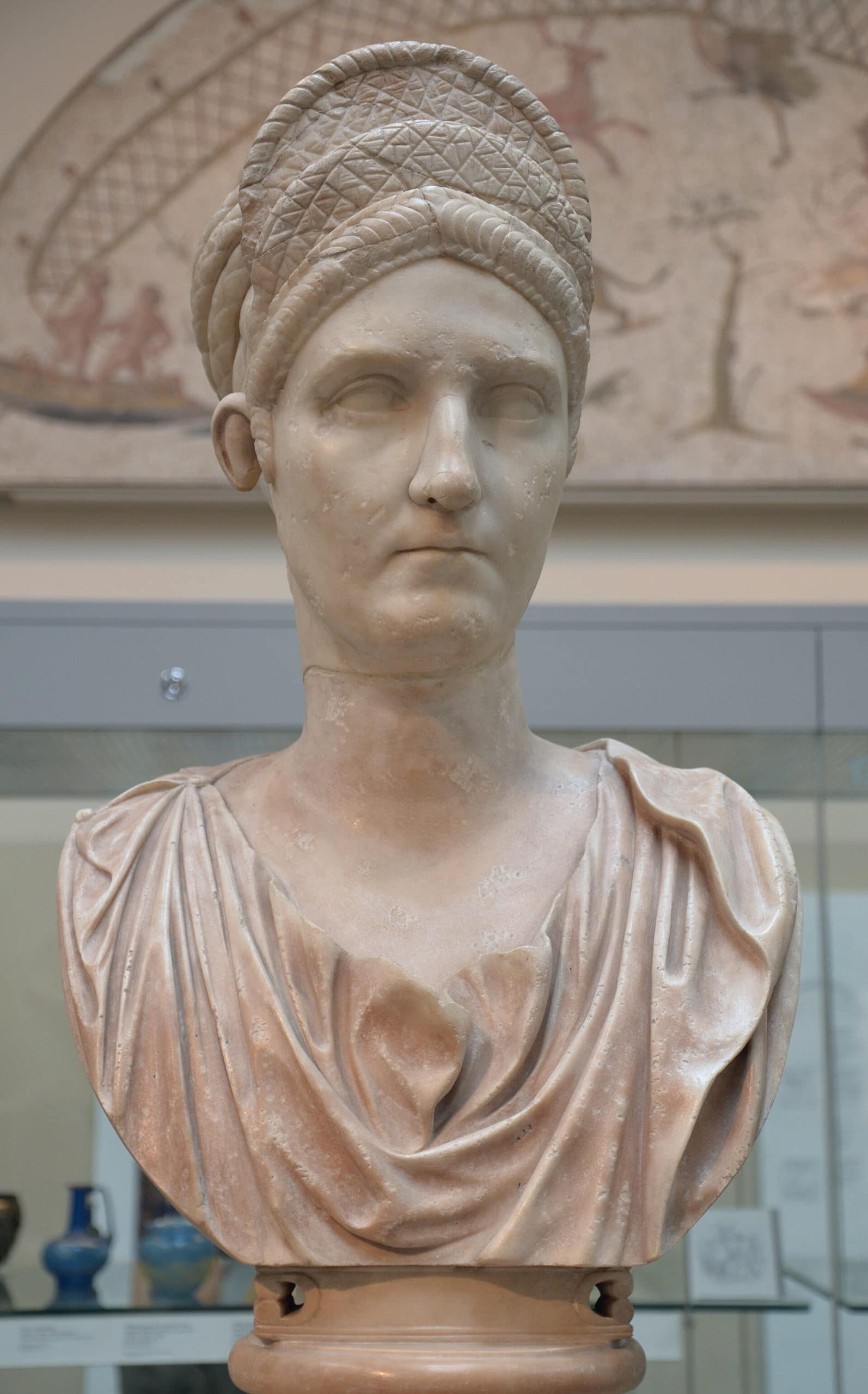
Mother in law of Hadrian and niece of Trajan
The myth of the selfless mother
This brings us to something we don’t like to talk about.
We have inherited a powerful cultural image of the mother as the person who loves unconditionally, who gives without expecting anything in return, who always puts her child’s best interests first.
While it is a beautiful, noble ideal, it remains precisely that: an ideal. In practice, it often serves as a convenient shield against the messier truth of actual human relationships.
Mothers are human beings. They have needs, fears, disappointments, unresolved experiences and their own histories of being children. They can love their children deeply and still use them to meet needs that those children were never meant to fulfil.
They can be generous and controlling. They can make sacrifices and use those sacrifices as leverage. They can genuinely believe they are protecting their child while making it difficult for him to become independent.
And sometimes, beneath the claim I’ve given you everything, there is an unspoken expectation: You owe me. This is where the idea of unconditional love becomes distorted.
The mother may feel that because she has given so much, she has earned the right to be selfish now. She may believe that her sacrifices entitle her to a particular place in her son’s life, a say in his decisions, or priority over his partner. But love does not give us ownership of another person. Having raised a child does not mean we get to keep him emotionally indebted to us for the rest of his life. And a child should not have to choose between being a good son and being a free adult.
When a mother cannot accept this distinction, conflict can become a way of preserving the old arrangement. She may sow discord between the couple, recruit other family members to her side, or cast the partner as the problem. The family closes ranks around what is familiar, and the person trying to establish a different life becomes the threat.
Sometimes nobody consciously plans any of this. The patterns simply play themselves out, each person responding to their own fear and pain. But the result can be devastating.
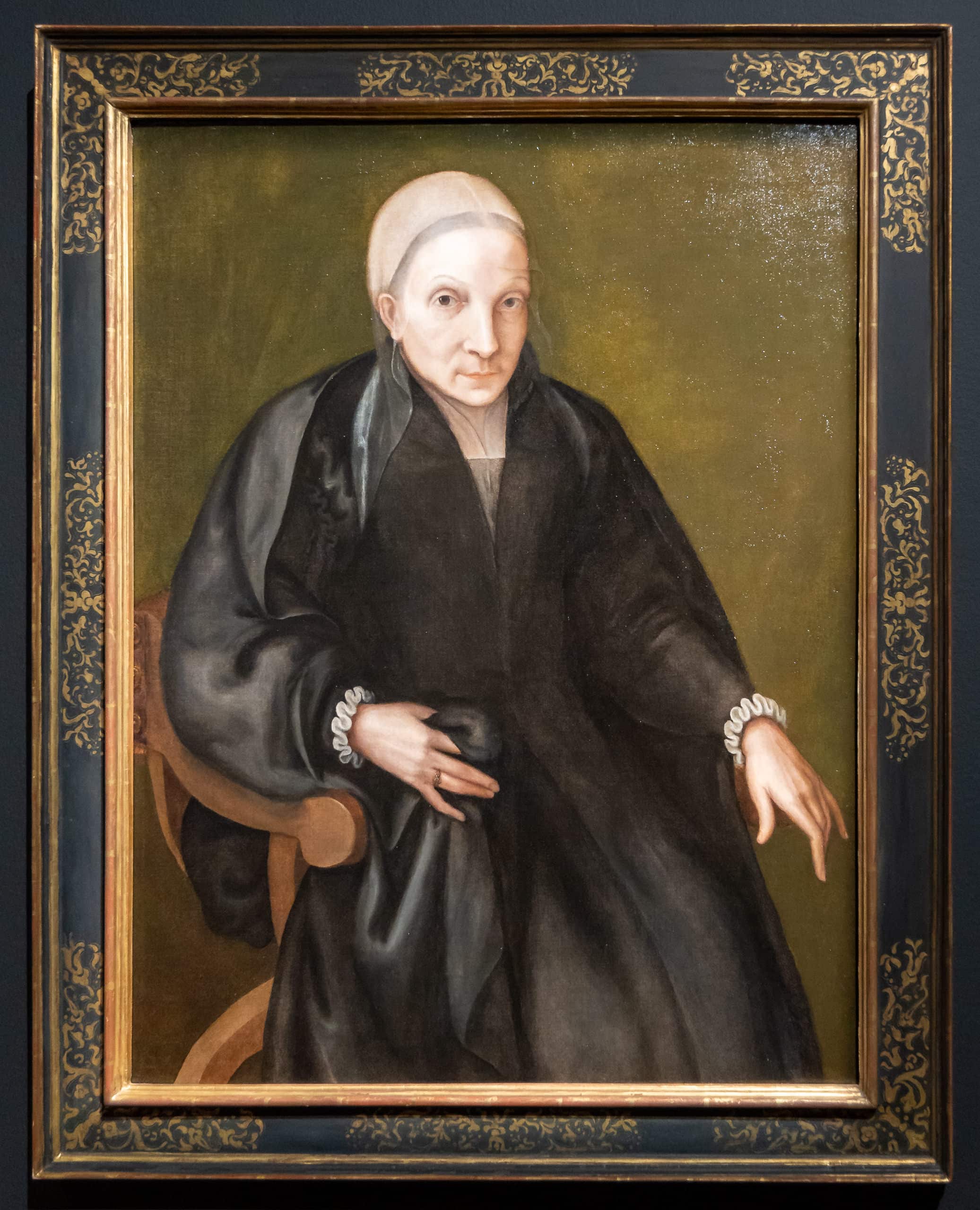
Portrait of the Artist’s Mother-in-Law (Europa Anguissola)
Mothers are human beings. They have needs, fears, disappointments, unresolved experiences and their own histories of being children. They can love their children deeply and still use them to meet needs that those children were never meant to fulfil.
What we refuse to see
We know these dynamics exist. Many of us have witnessed them in our own families, among friends, or in the relationships of people around us. Yet we continue to idealize motherhood as inherently selfless and maternal love as something that cannot harm.
We are much more comfortable talking about a difficult child than a parent who cannot let go. We are more comfortable asking why an adult son hasn’t set boundaries than asking why his family has made those boundaries feel like betrayal. And we are more comfortable sending the child to therapy than examining the family structure that taught him he had to be useful to deserve his place.
We sanctify the mask and stuff the shadow down into the cellar. But the shadow doesn’t disappear because we refuse to look at it. It continues to shape relationships, decisions and family loyalties. It gets passed from one generation to the next, often by people who sincerely believe they are doing their best.
This is not about declaring mothers bad or children innocent. It is about recognizing that love and harm can coexist, that good intentions do not erase consequences, and that a family can be loving in some ways while demanding far too much from one of its members.
Many mothers hold onto the idea that pure motives automatically yield good results. But good intentions are not an antidote to harm. The classic proverb exists for a reason: the road to hell is paved with good intentions.
And it is about recognizing the child who has become so good at taking care of everyone else that nobody thinks to ask whether they are being taken care of themselves.
The child who is always there. The one who never seems to need anything. The one everyone trusts to hold things together.
Who takes care of the child everyone depends on?
And what happens when that child finally tries to build a life that no longer revolves around being needed?
You may also like

What if saying yes to heartbreak is the key to love?
What if saying yes to heartbreak - like Noah Centineo in To All the Boys: P.S. I Still Love You -…
Part 1 — Louis C.K. and the Split Between High and Low
After years of what can only be described as cultural exile — touring outside the center of…

Superhero Translates to “Stuck in the Rescue Loop”
We’ve glamorized the rescuer. The one who shows up, cape fluttering. They’re dependable, strong,…
