Reality Isn’t Biased — Perception Is
How elemental bias shapes the way we perceive
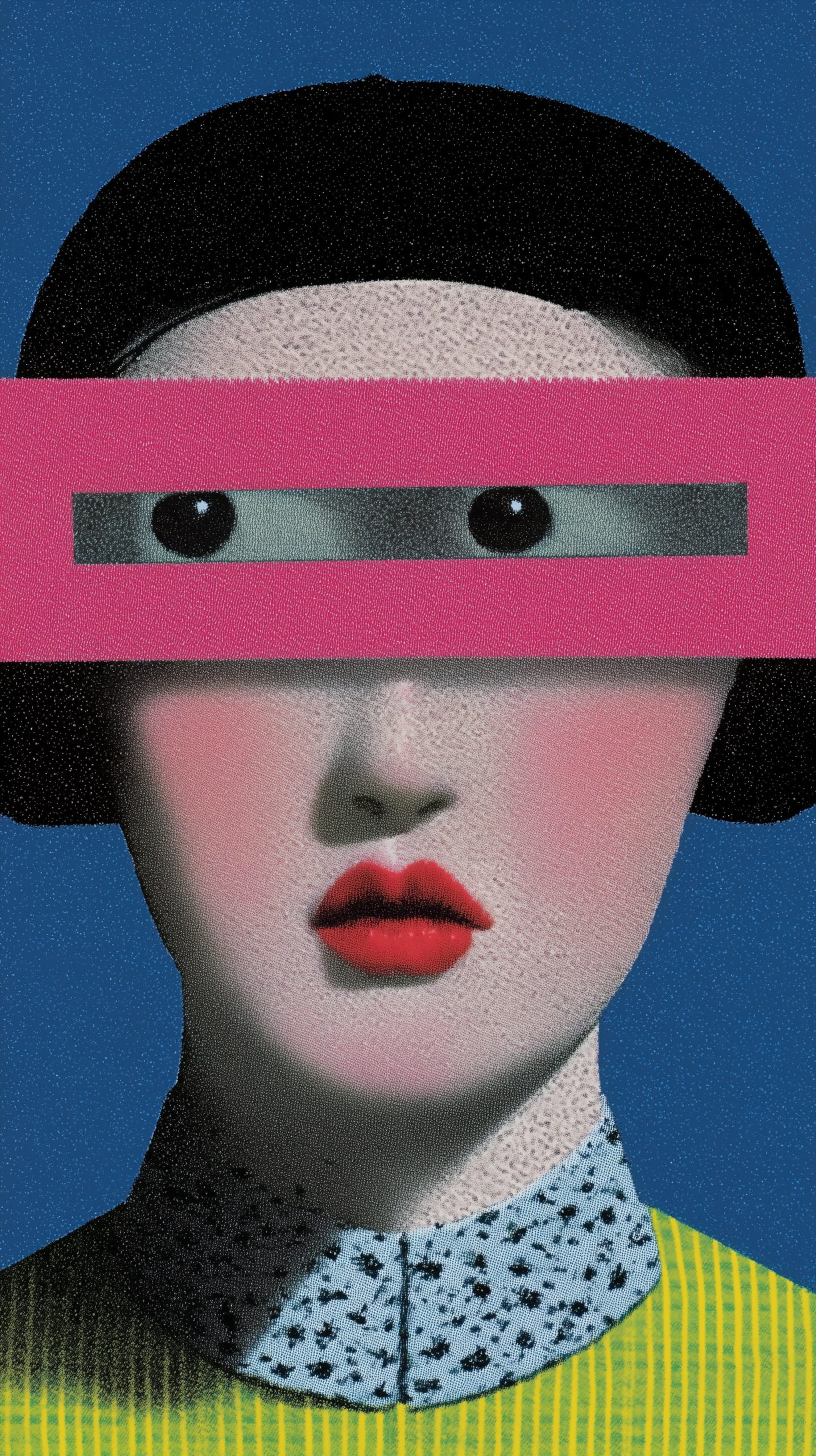
Different people can look at the exact same moment and see completely different things. One sees an opportunity for them to shine. Another sees a risk for the relationship. A third sees what does and what doesn’t make sense. And a fourth may look at whether the situation is reliable or not.
None of them is wrong to focus on what matters most to them. They’re just looking through a different window onto the same room, drawing different conclusions.
This piece is about those windows — where they come from, what they let each of us see clearly, and what quietly gets left out of the frame every time we look through just one of them.
Every elemental bias — Fire, Water, Air, Earth, even Space — acts like a distorted lens when it is unconscious. Not a personality trait — an elemental tendency based on an unmet need that brings certain relationships into focus while letting others fade into the background, pretending that’s reality.
Fire emphasizes agency.
Water emphasizes bond.
Air emphasizes distinction.
Earth emphasizes embodiment.
Space emphasizes completion.
Each one is real. Each one can be partial if we don’t recognize it as a pattern.
Fire sees possibility, initiative, what can be changed. It has to, because its whole outlook is organized around leading, acting, staying confident. Losing that — confidence, status, drive — doesn’t simply feel unpleasant to Fire. It threatens the very function Fire organizes around. So from inside that lens, vulnerability looks like weakness. Dependence feels like being trapped, unable to move. Waiting looks like passivity, with the danger of sliding into depression and losing one’s drive altogether. And accepting something as it is can feel like giving up, like having no impact at all.
The lens doesn’t make Fire wrong. It simply organizes perception around protecting what Fire believes it cannot afford to lose. Its capacity to lead the way.
The same structure repeats in every element. Each has a natural function. Each organizes perception around protecting that function once insecurity enters. The function itself isn’t the distortion. The distortion is what fear, desire and ignorance do to protect it.
Beneath the four elements sits also an even simpler polarity. Fire and Air organize around preserving liberty — the freedom to detach and move, Fire in the worldly plane, Air in that of imagination. Water and Earth organize around preserving unity and connection — Water through relationship, Earth through structure. One side naturally lets go. The other naturally holds on. Opposite needs, fears, and distortions — but the same basic dual structure underneath the two pairs.
Water notices relationship, emotional atmosphere, what binds people together. Bonding is its natural function, so the health of the relationship becomes its deepest concern. From inside that lens, separation and rejection can feel like dying. Enmeshment can look like love itself, while ordinary distance might get mistaken for abandonment — which can lead to clinging, and to undermining the healthy boundaries that might otherwise protect the very bond it’s trying so hard to keep.
Air discerns distinctions, patterns, differences that in reality never fully separate. Its natural function depends on distance — enough space to compare, to understand, to move freely between perspectives without getting pulled into something it hasn’t fully understood. From inside that lens, closeness can start to feel like fog blurring the boundaries. Commitment can resemble confinement. Strong emotion — especially someone else’s — can register as something to overcome rather than simply be with. And ambiguity, not yet knowing, not yet able to draw the line or bring to a point, can feel unbearable.
Earth yearns for structure, stability, something solid that can actually be relied upon. Staying grounded is its natural function. From inside that lens, uncertainty can feel like the ground giving way. Change looks like instability, something to resist rather than move through. What can’t yet be touched or measured — a feeling not yet acted on, an idea not yet built — can seem less real and of practical value than it actually is. Routine can be mistaken for safety long after it’s stopped serving anyone.
Each element looks for their own safety. Fire in power and status, Water in affection and bonds, Air in knowledge and the exchange of that understanding, while Earth looks for it in structure and solidity. Everything countering that need gets diminished, everything in favor of the norm. That is the basic design of the distorted lens.
Every elemental bias — Fire, Water, Air, Earth, even Space — acts like a distorted lens when it is not recognized as a pattern.

Space works differently. It is not like the other elements — it’s their ground, the unbound openness that encompasses the other four.
Space, in that sense, is more architectural. It’s the hidden “center” that includes them all, that makes movement between them possible — not a spatial position, not a container holding the other four elements, but the boundless openness that allows them to exist and interact with each other.
We might think that makes Space the answer, in terms of the reality tunnels we’ve been describing — the complete view that includes all the others with nothing missing, the place above the tunnel vision of the other four. But unity, wholeness, or whatever we call it, taken as an absolute viewpoint and resting place, has its own quiet cost: nothing pulls from there, nothing expresses as lack. No tension that moves us, no reaching, no longing in its own completion — because nothing is differentiated enough to move toward anything else. A one taste perception that has no necessary direction. You need love and compassion to call it down from its undifferentiated sky if you want to move it.
Even though Space is more architectural, it can still become its own lens. What it organizes around protecting is purity and completion — staying whole, staying undivided, untouched by the mess and contradiction of the embodied world. Losing that absolute position doesn’t just feel unpleasant. It feels like a downfall — exile from paradise back into the mess it was so sure it had risen above, a fall back into fragmentation. So from inside that lens, the physical, the particular, the partial and contradictory can start to look like something lesser, something faulty — something to rise above or transcend rather than meet.
This is what spiritual bypassing is all about: a refuge from the tension of opposites, mistaken for their transcendence rather than their ground. From that vantage point, the worldly can start to look lesser — a weariness with the world that quietly aims at leaving it all behind.
And the cost? If we lose our awareness of Space — if we stop recognizing ourselves as the consciousness holding all the elemental qualities, and instead start identifying with elemental tendencies — we lose the ability to move between the elemental modes. And once stuck in one perspective, its opposite function becomes unavailable, and with it goes our ability to balance and adapt to the ever-changing circumstances in and around us.
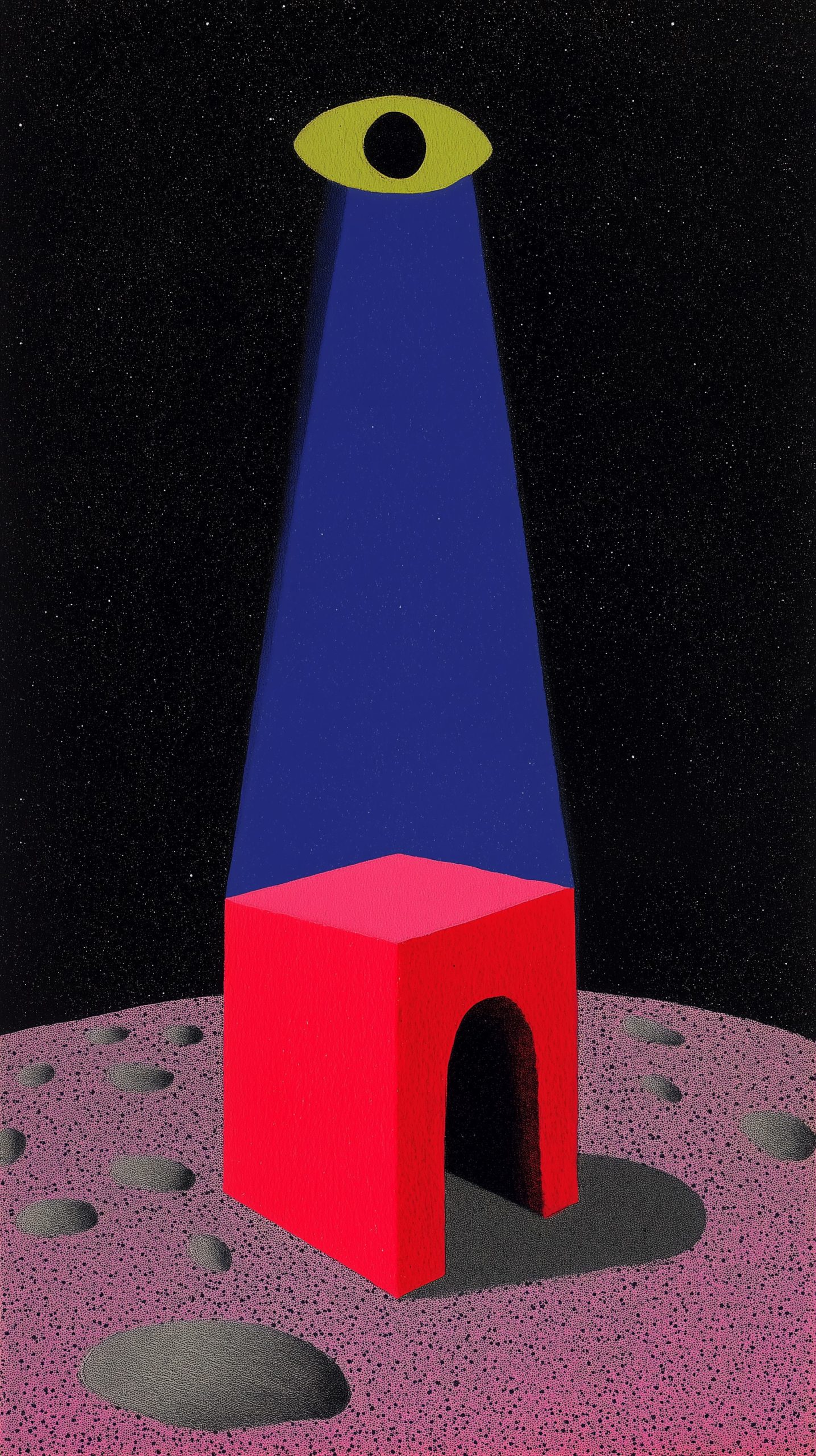
Every one of these distortions has the same shape underneath: perception bends around whatever seems impossible to survive losing.
But why does a distortion like this become hardened into identity, rather than remaining a strategy that can change into something else once it’s no longer needed?
When our recognition of Space collapses, the pattern stops being a strategy and becomes identity. We lose the overview of consciousness and become the pattern instead — which is why our survival strategies start protecting it as if it were us.
If we lose our awareness of Space — if we stop recognizing ourselves as the consciousness holding all the elemental qualities, and instead start identifying with elemental tendencies — we lose the ability to move between the elemental modes.
Two different fears quietly fuse together and keep us from returning to that conscious, centered position.
The first is the fear of rejection — if I don’t perform well enough, be helpful enough, be smart enough, be reliable enough, I won’t be loved and accepted. That’s the fear driving the visible striving each element does in its own territory, from excelling to bond-tending.
The second is quieter and goes deeper: the fear of not existing at all if the pattern is ever dropped. As if the pattern isn’t just a strategy for staying loved, but the only proof available that there’s someone here in the first place. It’s a reflection of Space’s own empty quality — mistaken for an all-consuming void, when it was always the breathing room that lets everything live.
These two fears reinforce each other, and together they’re what keeps the strategy running to look for security and stability in identification. If only the first fear were present, a person could still risk changing the strategy — it would just risk rejection, painful but survivable. It’s the second fear that removes even that option, because now changing doesn’t just risk being unloved. It risks not existing. That’s what makes a pattern feel like something to defend rather than something to simply use when it’s useful and set down when it isn’t.
And this waiting for recognition and acceptance can run an entire lifetime. We can be sixty years old and still wait for our parents to finally acknowledge and accept us. But all too often that recognition never comes. Once the lineage is broken, we can only find it in ourselves, and recognize it in awareness itself. The sky was never the weather, never the clouds. It never needed to be good enough or perform well enough to be okay. Even the patterns themselves only depend on circumstance. If they fit, they display their qualities. If they don’t, they display their downside — which doesn’t make them inherently faulty or bad, just out of context. And in the same way, we can recognize our own inherent okayness beyond context and condition — our existence found in change and adaptation, not mistaken for an artificial sense of solidity.
The lens itself was never the element. It was its compensation strategy. And once there’s nothing left to compensate for, what’s revealed is its original nature.
If we no longer fear losing our freedom and being trapped, we don’t need to distance ourselves from intimacy anymore. And if we don’t fear losing our connection, we don’t need to cling or solidify everything until nothing can move.
Fire that knows it is deeply seen doesn’t need to perform in order to lead.
Air that knows it is deeply seen doesn’t need to know everything in order to understand and communicate.
Water that trusts the bond because it feels deeply accepted doesn’t need to cling in order to love.
Earth, trusting that same acceptance, doesn’t need so much certainty that everything turns rigid. It can build structure and trust that the structure may change into something else it can rely on.
The basic elemental need — freedom, connection — becomes a feature rather than a necessity. We find the freedom in our own consciousness that we were looking for in the physical world, and we find the connection in recognizing that we share that same consciousness that imbues everything and everyone around us.
And once existence no longer depends on maintaining the pattern at any cost, perception no longer has to defend it. The lens doesn’t disappear. Only the survival distortion that made it seem like it was the whole picture.
You may also like
Unmasking the Astrological Illusion
Our astrological charts act as unique lenses that shape our perceptions, beliefs, and actions. By…

Is Our Experience Causal or Symbolic—Personal or Archetypal, Inherited or Chosen?
Human experience sits at the crossroads of three languages: the psychological, the mythic, and the…
Astrological Integration – Unlocking the secret identity of sister signs
In astrology the twelve zodiac signs form six pairs of opposing sister signs, each sharing a common…