I’m Aging
There is a moment in life that catches many people by surprise. Not when the first wrinkle appears. Not when the first grey hair is discovered. Not even when someone calls you “ma’am” or “sir” and you realize you’ve quietly crossed into another generation.
The moment comes when you look in the mirror and, for a second, you don’t quite recognize the person looking back. Because somehow, they no longer seem to match who you feel yourself to be. Inside, you may still feel remarkably unchanged. You still laugh at the same things. You still remember your teenage years as if they happened a few chapters ago rather than several decades ago. You still feel youthful, curious, hopeful, uncertain, excited, alive. And yet the mirror tells a different story.
Your face looks more tired than you remember. The skin that was once firm, fresh and juicy feels papery, thin, dry. Pores emerge where the skin once seemed almost seamless. Crow’s feet appear around the eyes. Lines settle around the mouth. Jowls begin to blur the jawline.
You start noticing words you never cared about before: marionette lines, sagging, volume loss, face yoga. A whole vocabulary materializes around the simple fact that time has passed.
But the face is only one part of it. Your body changes too. You notice it in ordinary moments. The way you bend to pick something up from the floor. The way your hand automatically reaches for the railing when going down the stairs. The way your body lands when you jump. The way your knees absorb impact. What once felt natural now feels slightly uncertain. Slightly stiff. Slightly heavy. The body that carried you through life without asking for attention suddenly begins asking for it.
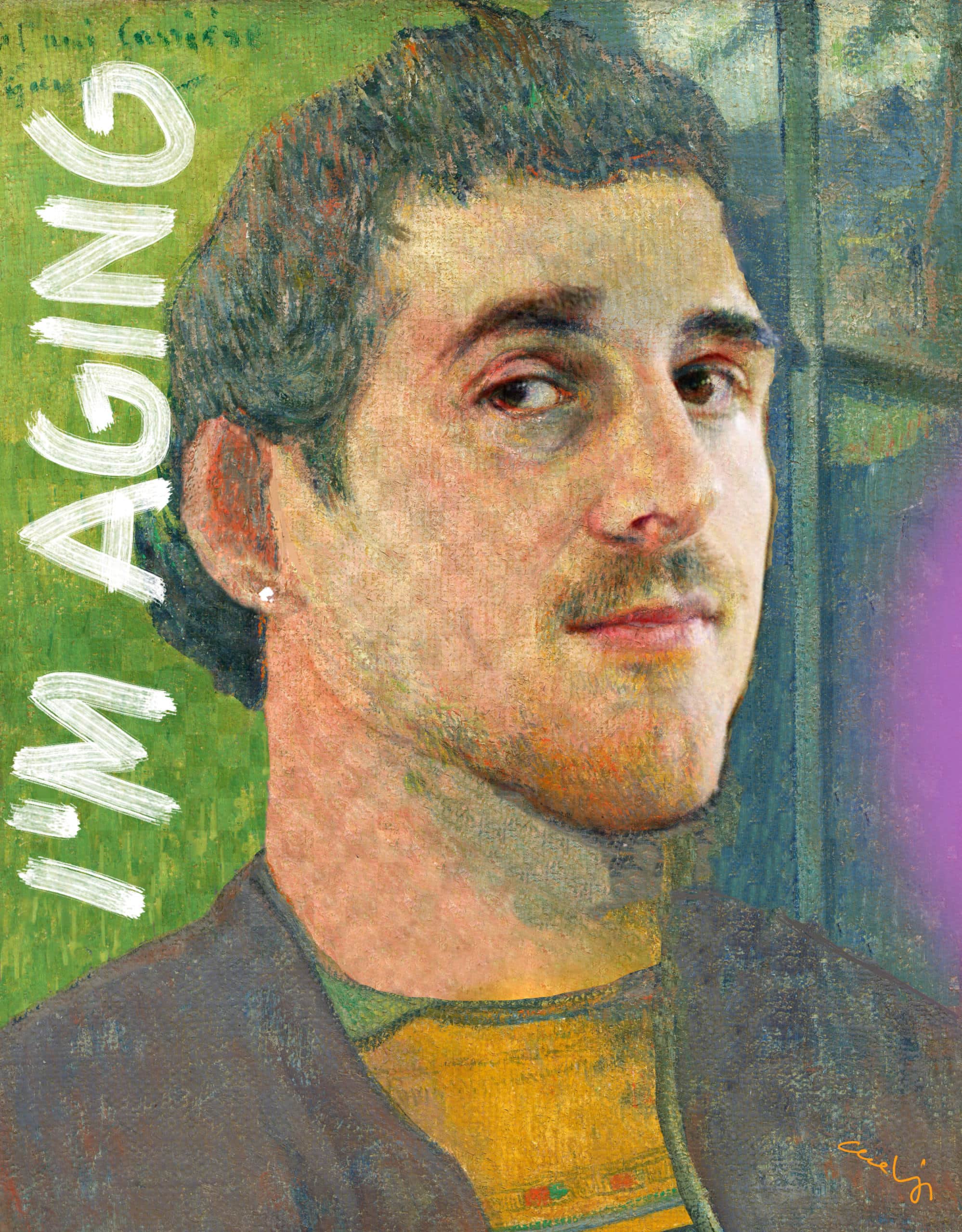
Image: cueljs
Your face looks more tired than you remember. The skin that was once firm, fresh and juicy feels papery, thin, dry. Pores emerge where the skin once seemed almost seamless. Crow’s feet appear around the eyes. Lines settle around the mouth. Jowls begin to blur the jawline.
And perhaps this is where aging becomes difficult. Not because age spots appear. But because two realities begin existing at the same time. The age you are. And the age you feel. One moves forward relentlessly. The other often remains surprisingly still.
Many people are sixty and still feel thirty. Many people are fifty and still feel twenty-five. Nobody warns us about this part. Nobody explains that aging is not simply becoming older. It is learning how to live with a widening gap between the image in the mirror and the person who experiences that image.
What makes it even more disorienting is that aging often doesn’t feel gradual. We imagine it as a slow and steady process. A receding hairline here. A few extra pounds there. Food getting stuck between your teeth where it never used to. Realizing the font on your computer has quietly gotten bigger. Tiny reminders that aging is happening in places you never even thought to look.
Often, it feels as though aging happens in chapters. Long stretches pass where very little seems to change. You recognize yourself. The face remains familiar. The body remains familiar. And then something shifts. Not overnight. But quickly enough that you cannot ignore it.
You look at a selfie. Catch your reflection in a shop window. Stand in front of the bathroom mirror. And suddenly you can’t unsee it. It is as though years of quiet change reveal themselves all at once. As though time has been writing silently in the background, only to turn an entire chapter in a single moment.
You don’t feel as though you’ve aged a little every year. You feel as though you’ve crossed a threshold.
For many women, menopause can deepen that realization. My grandparents belonged to a generation for whom reaching eighty was exceptional. My parents belong to a generation where eighty or ninety seems very possible.
Yet sometimes it feels as though the body never received the memo. Life expectancy has stretched further and further, but there are moments when the body feels as though it was built for a different timeline.
Hormones that quietly supported us for decades begin stepping away from their post. And yet we may still have thirty or forty years ahead of us. It can feel as though modern medicine extended life’s duration, while the body continues to age according to a much older rhythm. We are living longer than generations before us, but not always in bodies that feel eager to accompany us there.
You don’t feel as though you’ve aged a little every year. You feel as though you’ve crossed a threshold.
And for some women, there is another shift. Some spend much of their youth being noticed. They are looked at when they enter a room. Heads turn. Strangers smile. Whether welcomed or not, attention becomes part of the background noise of life. Then one day, that noise becomes quieter. Gradually. The attention shifts elsewhere. To younger faces. Younger bodies. Younger women. And for some, this loss is difficult to speak about. Not because they are shallow. But because being looked at and being seen are often more entangled than we realize. They become the women society no longer rushes toward. And it can feel strangely disorienting to discover that while the world responds differently, the person inside feels largely unchanged.
Perhaps this is why the anti-aging industry has become so powerful. Not necessarily because people are vain. But because many are grieving something they cannot quite name. They miss the face that once felt familiar. They miss the fire that once burned so naturally. They miss the energy they never thought about until it was gone.
So when surgery promises to restore a previous version of us, the appeal becomes understandable. A facelift. A blepharoplasty. Injectables. Buccal fat removal. Body sculpting. The list grows longer every year.
If given the choice between confronting one of life’s deepest insecurities or making the reflection in the mirror feel familiar again, many will choose the second.
Yet sometimes it feels as though the body never received the memo. Life expectancy has stretched further and further, but there are moments when the body feels as though it was built for a different timeline.
Self-acceptance sounds noble in theory. In practice, it can be extraordinarily difficult. Especially when the culture around us quietly suggests that aging is a problem to be solved rather than a reality to be lived. And perhaps that is the deeper question. Not whether someone should alter their appearance. That is a personal choice.
But why we find it so hard to stay with what is happening. Why our first instinct is often to run from change rather than meet it. Maybe because we have always done so. For as long as most of us can remember, we’ve been moving the goalposts.
“When I lose weight.” “When I find a partner.” “When I make enough money.” “When I finally look the way I should.”
Acceptance remains just beyond the next achievement. Just beyond the next improvement. Just beyond the next correction. The destination never arrives because the condition keeps changing.
And aging exposes this game in a particularly ruthless way. Eventually, no amount of effort can stop time. At some point, every face changes. Every body changes. Every life changes. The negotiation ends. And what remains is a question: Can I allow myself to be who I truly am? Not after the next procedure. Not after the next self-improvement project. Not after becoming a better version of myself. Now. With the lines. With the changes. With the evidence of a life that has actually been lived.
Because perhaps aging is not only the loss of youth. Perhaps it is the invitation to stop outsourcing our worth to our appearance. To stop demanding that life prove we are valuable. To stop asking the mirror for permission to belong. And perhaps that is why aging feels so confronting.
The mirror eventually takes away every excuse. Until all that remains is the question that was there from the beginning: If I can no longer rely on beauty, youth, performance, achievement, or appearance to tell me who I am, who am I then?
And maybe that is not the tragedy of aging. Maybe it is its gift.
You may also like
Unbecoming: The journey to rediscovering who you truly are
Self-transformation is a profound journey inward, one where we uncover the essence of who we truly…

Stand out of my Light – How Diogenes Overcame Social Hierarchies and Status
If we had the liberty to stop caring about approval, possessions, status, or fear of "authorities,"…

Not Perfect But Whole
Crazy wisdom doesn’t follow the rules. It doesn’t care about doctrines or what’s "acceptable." It…
