
Stay on your side
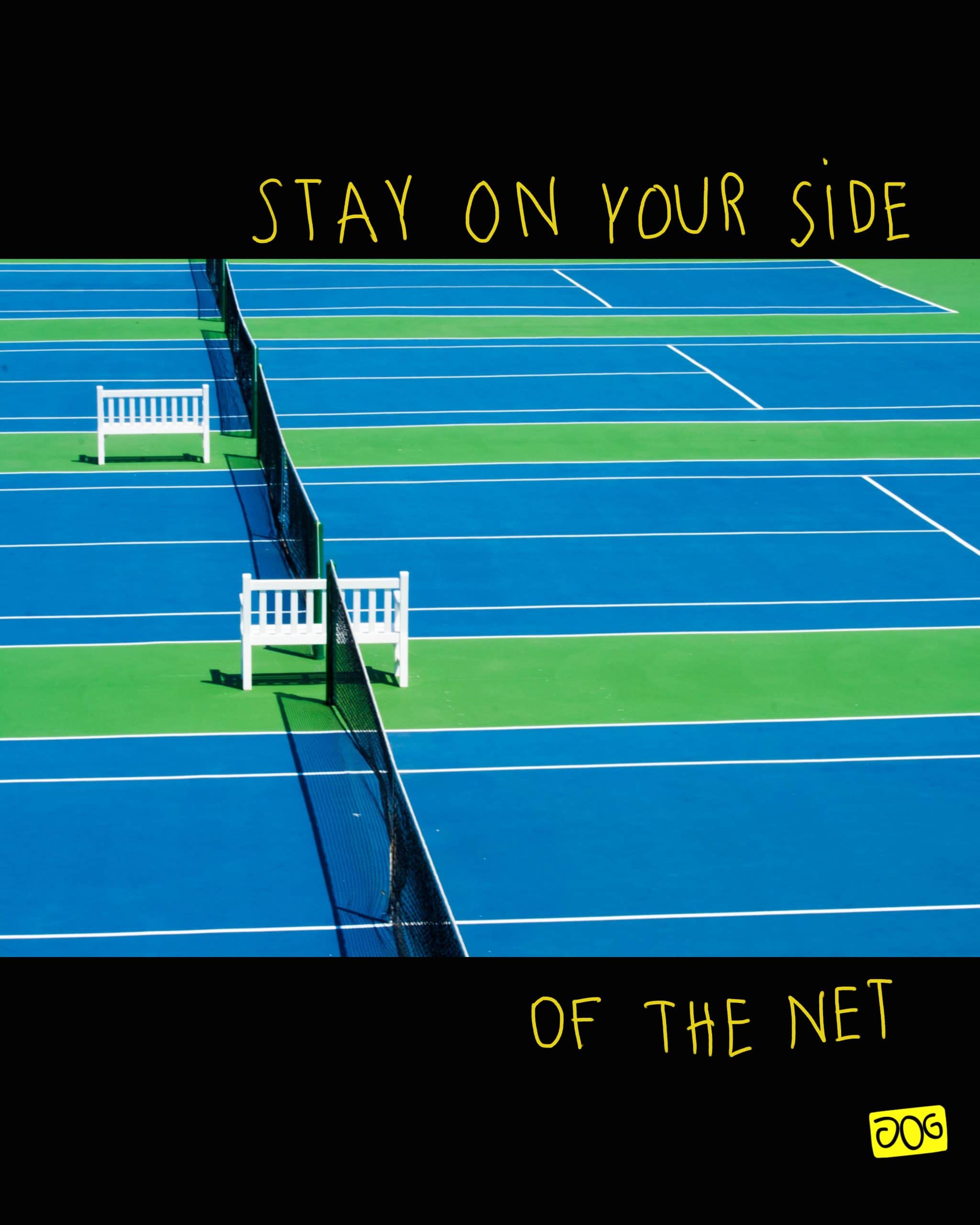
In tennis, there is an etiquette that players follow.
One of the principles is that each player stays on their own side of the net during a match.
It is a sign of respect for the other’s space, as well as a sign of the integrity of the relationship between the players.
Crossing the net without permission is considered a breach. Whatever the circumstances, every player is expected to stay on their side. 🎾👍🏼
In the Italian Open 2022 Shapovalov jumped over the net to point out a mark on his opponent’s side of the clay court to the chair umpire, receiving a penalty for the code violation.
“I feel like I’m always on stage, always under the pressure to perform.”
While in tennis, crossing the net is a clear boundary, in other relationships it is more difficult to become aware when we’ve crossed a line.
Here are some clues:
- ”Helping” or giving advice without being asked
- Focusing on others’ behaviors and shortcomings rather than our own
- Relying or projecting on others to handle our own emotions
- Using shame, guilt, obligation and threats to control and manipulate
- Making inappropriate comments and judgments
- Invalidating others’ feelings
- Dumping intense emotions, problems and stories on others without asking
- Ignoring boundaries set by others
- Losing our identity within a relationship
- Feeling pity (not the same as compassion) for others
- Micromanaging
- Snooping through others’ belongings or personal information
What else can you think of?
If relationships were guided by the same code of conduct as in tennis – where each person respects the boundaries and stays on their side – we might experience more harmonious connections.
Imagine a world where we honor personal space, avoid unnecessary interference, and maintain integrity within relationships. 🤝🏼💕
You may also like

You are the light – The Essence in You That Simply Is
You are the light because at the core of everything - beneath the confusion, the pain, the healing,…

Inclusion is an inside job
Real inclusion starts with us. We often believe it's someone else's job to make us feel included.…

Fix problems with band-aids
In 2008, when I was diagnosed with Grave’s disease, the endocrinologist suggested treating it with…
