Tyrant or Guide — True authority starts with policing the benefits you possess
Part 3 — How the Habit of Crushing Others Gets Passed Down from the Cradle
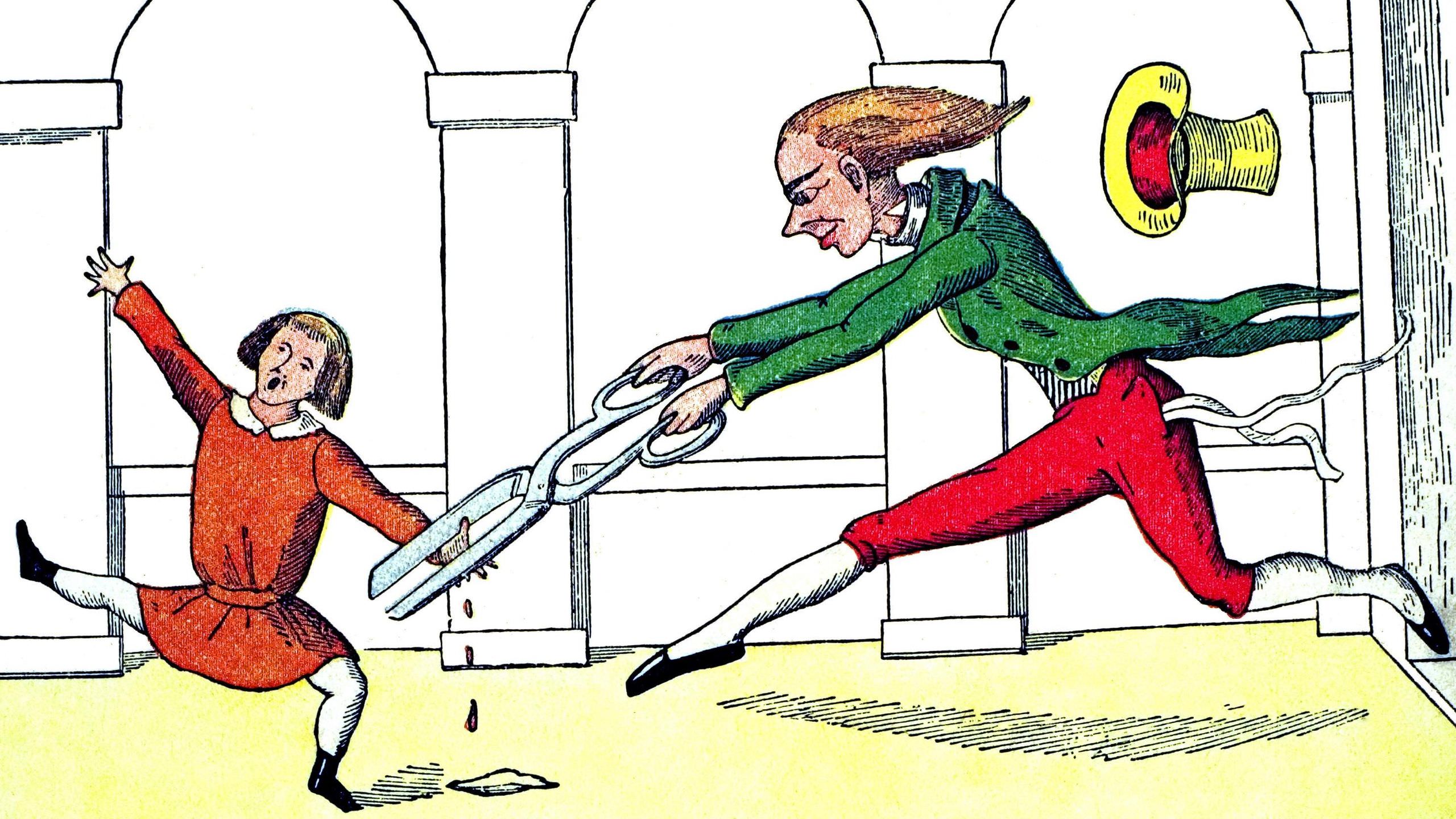
Image: Scene from the “children’s book” Der Struwwelpeter — Heinrich Hoffman, 1845
This is part 3 of a three-part-series and can be read on its own.
Part 1 is where it began: Leylah Fernandez and the Viral Coaching Moment That Sparked Debate
Part 2 is where it goes into the belly of the whale: The Hit We Get from Kicking Down
What we often call “discipline” is rarely about guidance, teaching, or setting healthy boundaries. More often than not, it is pure punishment — and punishment becomes the outlet we use to dump our own emotional stress onto someone else.
Under pressure, a mentor or a parent isn’t thinking about the other person’s long-term growth; they are thinking about their own immediate comfort. They want to feel powerful, certain, and in control right now.
Punishment becomes the perfect cover story for emotional dumping. It allows us to scream, shame, or isolate someone while convinced we are doing them a favor. We say, “This hurts me more than it hurts you,” or “You brought this on yourself.” But psychologically, the mask doesn’t hold: We aren’t leading anyone to a better place; we are making someone feel small just to feel bigger for a moment.
It tells them that the person they depend on for safety can hurt them — and worse, that the hurt is a form of care.
The child becomes the canvas where the adult paints over their own flaws, using them to restore a sense of superiority, rightness, capability and control. Because the child relies on that adult to survive, they can’t fight back.
They have to swallow the punishment along with the adult’s alibi: “You made me do this,” “This is your fault,” or “If you just behaved, I wouldn’t have to act like this.”
This flips a child’s world upside down. It tells them that the person they depend on for safety can hurt them — and worse, that the hurt is a form of care.
We think punishment teaches responsibility, but it actually just teaches survival. It doesn’t create real understanding — it just forces children to obey, perform, and hide. Instead of learning to think or reflect, they learn to be afraid. Instead of honesty, they learn to perform. A child in that environment doesn’t grow into a centered, mature human being. They just become incredibly good at walking on eggshells. They learn how to read moods, dodge emotional blows, and manage the adult’s chaos just to feel safe.
The child doesn’t learn how to be authentic; they learn how to survive us.
Fear is the death of connection. When a child is punished harshly, they withdraw behind a mask of compliance, survival, or lies. Sadly, we rarely recognize their distancing for what it is — a desperate defense mechanism. Instead, we label it as a bad attitude. We escalate and increase the force, convinced that a bigger hammer will fix the problem.
Because dominance gets a fast result, it tricks us into thinking it works. We read their fear as a breakthrough, when it’s really just fear.
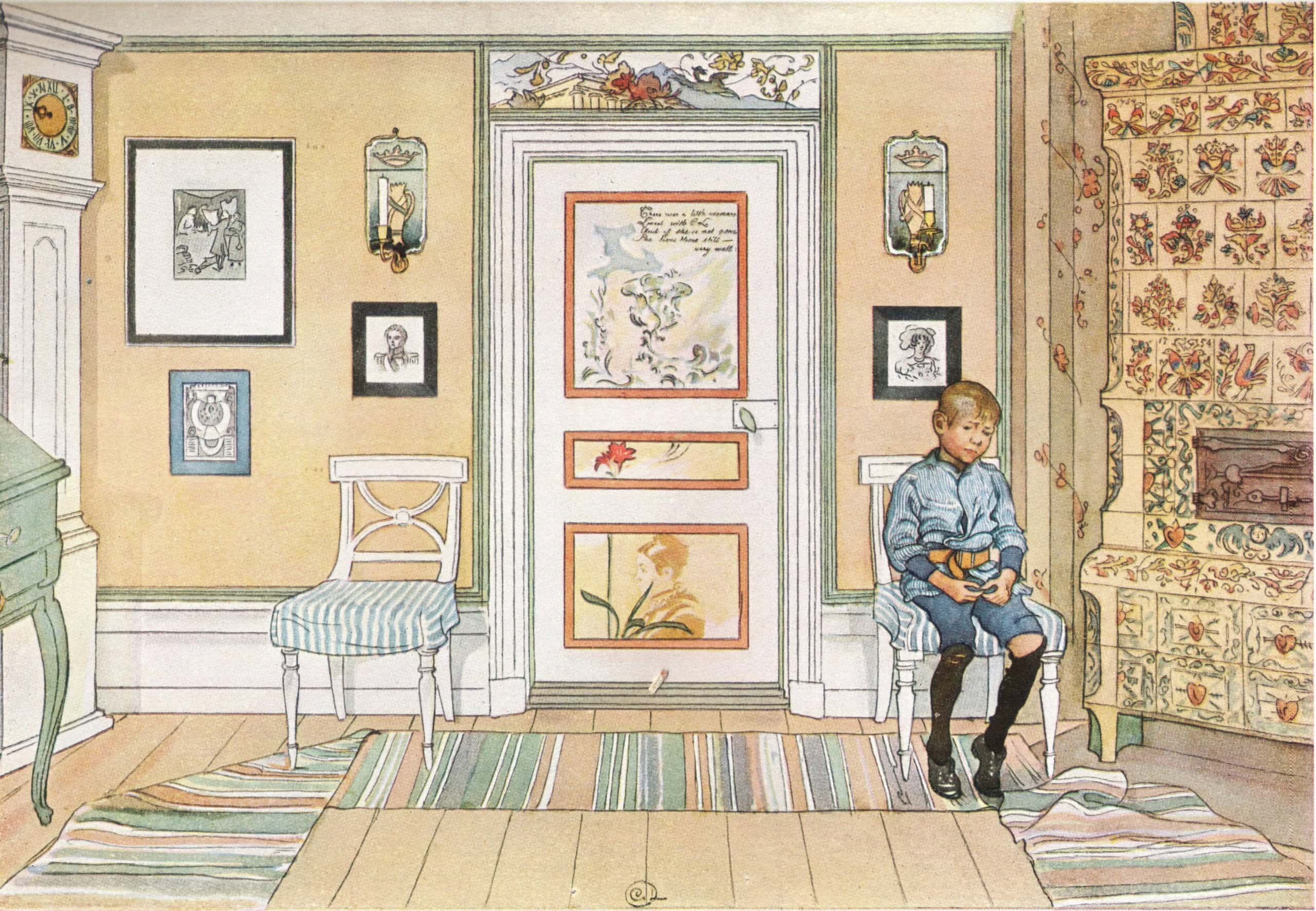
Image: In the Corner. From A Home — Carl Larsson, 1894
Physical violence is never just about the body. The deepest, longest-lasting scar is the emotional message it delivers. Years after the physical pain is gone, the child is left wondering if they are fundamentally unlovable. The ultimate tragedy of punishment is that it forces a child to look at the one person they depend on for safety and see their greatest source of fear.
While our society has mostly agreed that hitting is wrong, we constantly excuse verbal and emotional punishment. We laugh them off and excuse them with cheap alibis: “You’re taking this the wrong way,” “You’re too sensitive,” or “I’m just being honest.”
The dangerous lie here is that if there is no bruise, there is no damage. But emotional cruelty is often far more destructive precisely because it leaves no “crime scene.” There are no marks to photograph, no scars to point to, and no broken bones to prove you’ve been hurt. Because the wound is invisible, it can be talked away, hidden behind the guise of parenting, or reframed as necessary “honesty.”
This leaves a child stranded in a lonely reality. They have to carry the weight of being hurt, and the impossible task of proving it even happened.
While physical violence hurts the body, emotional weapons — like shame, rejection, and the cold shoulder — change a child’s psyche. A bruise is temporary, but being labeled as lazy, stupid, or difficult acts like a slow-release poison. The child swallows those words, believes them, and will eventually become them. This is why emotional cruelty is so hard to spot — it hides in plain sight while quietly shaping how someone sees themselves for decades.
Because fear gets a fast result, we copy what our parents did, passing the torch of cruelty down from generation to generation.
It is easy to confuse a terrified child with a well-behaved one. But while we see a victory, the child is learning a toxic blueprint. They are learning to ignore their own compass, to distrust the people around them, and to bury their resentment deep down inside.
Good intentions can still wound — and those wounds can last a lifetime. We bend, restrict, or break entire lives while genuinely believing we are helping. Because fear gets a fast result, we copy what our parents did, passing the torch of cruelty down from generation to generation.
When you teach a child that love means control, that authority figures have the right to inflict pain, you train them to become either a victim or a bully. When they face their own struggles in any kind of relationship later in life, they fall back on the only tool they know: “If you won’t listen to me, I will make you suffer until you do.”
We have to stop calling this care. We have to look in the mirror and ask: Why does their submission make us feel better?
True discipline never requires stripping someone of their dignity. Real consequences focus on the problem: “This doesn’t work, how do we handle it?” Punishment focuses entirely on suffering: “You made me uncomfortable, so now it’s your turn to bleed.”
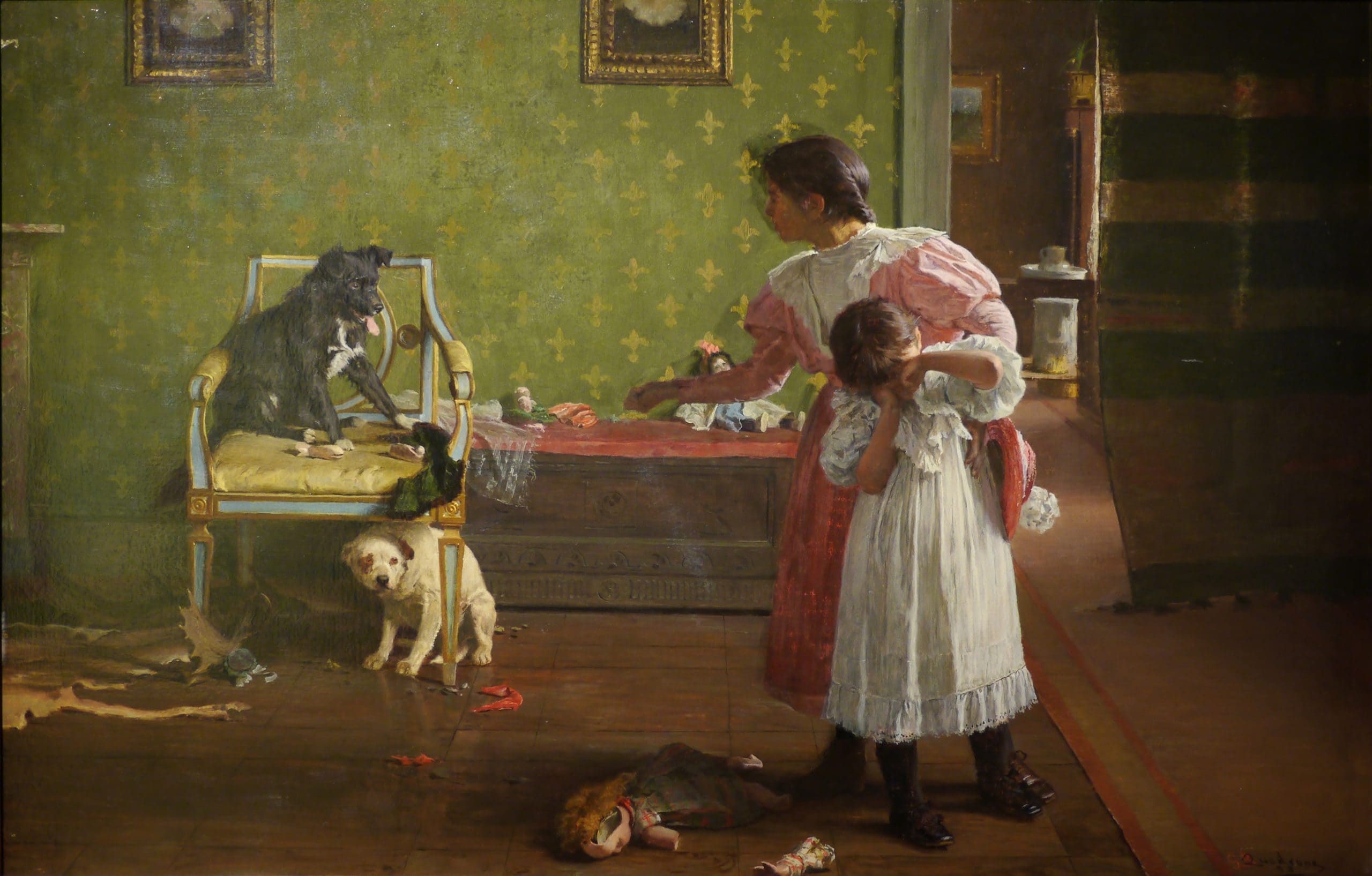
Image: First pains — Giovanni Battista Quadrone, 1898
This matters most in parenting, because family is the blueprint for every power dynamic we will ever face. It’s our first taste of authority, rules, and a system we cannot escape. We are entirely at the mercy of someone else’s moods, rewards, and punishments. It is where we first learn what approval feels like — and how terrifying it is when that approval is suddenly withdrawn.
Long before we can even speak, we are already tracking the environment. We learn what “love” looks like under stress. We learn if our vulnerability makes us safe, or if it makes us a target? We learn early on if our mistakes will be met with repair or resentment.
When emotional cruelty becomes the norm inside a home, the child learns the most dangerous lesson of all: that other people are just tools to regulate your own pain. They don’t understand the psychology of it; it just becomes a muscle memory. They learn to pass the hurt downhill because that is what was modeled for them since the cradle.
And that cycle always starts the exact same way: we stop seeing the other person as a human being.
This is exactly why the cruelty we face out in the world feels so deeply familiar. We’ve already seen the dress rehearsal at home. It’s where we first learn how to weaponize the dependence of those we care for.
And that cycle always starts the exact same way: we stop seeing the other person as a human being. They cease to be a living, breathing human with an inner life as real as our own. Instead, they become an instrument. We turn them into a function to serve us, a role to play, or an extension of our own ego. We start treating them as a reflection of our success, a problem we need to fix, or simply a bucket where we can dump our trash. That shift — that quiet erasure of their humanity — is the very first crack in the relationship.
Once that switch flips, we stop trying to understand them. We stop connecting and start commanding. We trade a genuine relationship for rules, compliance and performance. And once we erase their humanity, the door to cruelty swings wide open and we can keep hurting them without feeling a thing.
This is why controlling people through fear always fails. Domination doesn’t build character; it just builds scars. We only truly mature when we are safe enough to fail, heal, and find our footing without having to worry about being broken in the process.
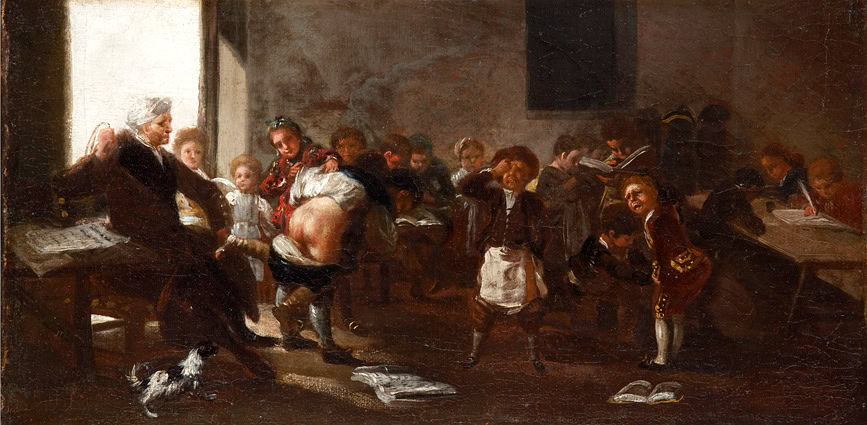
Image: La letra con sangre entra o Escena de escuela — Francisco Goya, 1785
We blindly accept these toxic dynamics because we confuse having authority with having privileges. We instinctively feel the hierarchy but we completely misunderstand what that leverage is actually for.
A child isn’t weaker so an adult can dominate them. A student doesn’t know less just so a teacher can belittle them. An athlete isn’t dependent on a coach just to become a punching bag for their frustration.
We misunderstand the purpose of power. True authority recognizes that a power imbalance requires absolute self-control. It demands that we protect the weaker person from the misuse of our own advantage.
That is the difference between leading and domineering/controlling. Controllers lean on the person beneath them to carry their stress, meet their needs, and prop up their ego. Genuine leaders do the exact opposite — they take the hit, tolerate the failures, and keep the space safe.
Power is not a free pass. Power isn’t about making vulnerable people carry your baggage. It’s about the responsibility to carry the weight until the person in front of you grows into their own strength.
Strip power down to its core and one question remains: who bears the load, and who benefits from it?
When we abuse power, the relationship breaks down from the inside out. A twisted reversal takes place: the vulnerable person becomes the protector of our comfort, forced to tip-toe around our fragile egos and our moods. The weight rolls downhill, and the person at the bottom gets crushed.
Strip power down to its core and one question remains: who bears the load, and who benefits from it?
Perhaps this is where the entire discussion ultimately leads. Power, in itself, carries no meaning. It becomes significant only when those with the ability to act exercise that ability — not because they should, but because they can. When the weight is pushed downward onto those beneath, suffering multiplies across generations. But when the stronger person chooses to absorb the chaos, they create a sanctuary where human beings can actually learn, fail, and grow. This doesn’t mean there are no consequences — it means the consequences are designed to build people up, not break them down.
It comes back to this: Genuine power isn’t a license to extract or offload. It fulfills itself the moment it turns from domination to service — when the one who can carry more chooses to do so.
You may also like

Utopia – a distant dream?
While the concept of a perfect society holds enormous promise, it also calls for deep changes that…
The Reiner Tragedy — How Families Displace What They Cannot Face
At Nick Reiner's arraignment, one family member showed up. Not to defend him. Not to excuse what he…

The collapse of the village: From isolated families to the possibility of true community
We’re told that the nuclear family is the cornerstone of modern society—a safe, private unit where…