
What the Shane Gillis controvery is hiding: Are We Passing on Self-Objectification as Empowerment?

As seen on Alibaba
What are we passing on to the next generation of girls and women — and what are we perpetuating without even realizing it?
When comedian Shane Gillis appeared on Saturday Night Live, his joke about women in gyms dressing like “whores” provoked the predictable controversy. Women and men called it misogyny. The message was clear: women have the right to wear what they want without being insulted, shamed or reduced to their clothing.
But there is another question here. What interests me is something that seems to have escaped the debate altogether: what if the cultural pattern we are defending as female liberation is itself something we need to question?
Because there is a much bigger issue here. It concerns what we have normalized, what we have come to regard as empowerment, and what we are passing on to the next generation of girls and women without even realizing it.
What if the cultural pattern we are defending as female liberation is itself something we need to question?
From being objectified to objectifying ourselves
The word whore is meant to demean. It carries the historical association with prostitution and has long been used to shame women for their perceived sexuality.
But the image invoked by the word also points towards something worth examining: the display of sexual attributes as an offering. The presentation of the body to attract attention, to make oneself desirable, to advertise one’s appeal. Think of a market stall displaying its produce.
I am not suggesting that women who dress revealingly are prostitutes, nor that showing one’s body means offering sexual access. The insult isn’t really the point here. The deeper problem is how we’ve normalized seeing the body as an object to be put on show, evaluated, and lusted after. That dynamic doesn’t stop at sex work – it touches almost every part of modern life.
We live in a culture in which the body has become a form of social currency. It can attract attention, generate visibility, establish status and even be monetized. We package ourselves, present ourselves and compete to make ourselves stand out.
This is self-commodification: turning aspects of ourselves into something marketable. And when the commodity is our own body, our own sexuality, our own desirability, self-commodification can become a particular form of self-objectification. We are no longer merely the objects of someone else’s gaze. We learn to see ourselves through that gaze and become the managers, marketers and promoters of our own desirability.

As seen on Amazon
When did this become normal?
Consider the clothes women wear to the gym. Leggings existed long before modern fitness culture, but the aerobics boom of the 1970s and 1980s helped bring close-fitting athletic clothing into the mainstream. Fitness became increasingly connected with the ideal of a toned, sculpted body, and clothing became part of a wider aesthetic of displaying that body.
Today, tight leggings that emphasize the buttocks and outline the crotch are commonplace. Sports bras are worn as tops. The contours of the female body are not merely visible; they are accentuated.
I sometimes look at what women wear to yoga classes and wonder how we arrived here. A practice associated with turning inward, reconnecting with your body and being present has become another setting in which the body shrink-wrapped and staged for an audience.
We’ve made showing off a woman’s body the default setting, even in everyday spaces that shouldn’t be about sexuality at all. The gym. The yoga studio. Social media. Everyday fashion.
And then there is celebrity culture, where the same aesthetic reaches its most spectacular expression. Women arrive at red-carpet events in increasingly revealing dresses, competing for attention and the distinction of being the night’s ultimate showstopper. The naked dress has become a familiar feature of celebrity fashion. These are women who already possess fame, wealth and access to enormous audiences. Yet the spectacle of the body remains a powerful means of commanding attention.
What does it say about our culture that revealing more can be a way of standing out, and that standing out is so often treated as a measure of success? The body has become a stage on which women perform their visibility. And the more attention the performance generates, the more it can be rewarded. We see this so often that we barely think to question it.
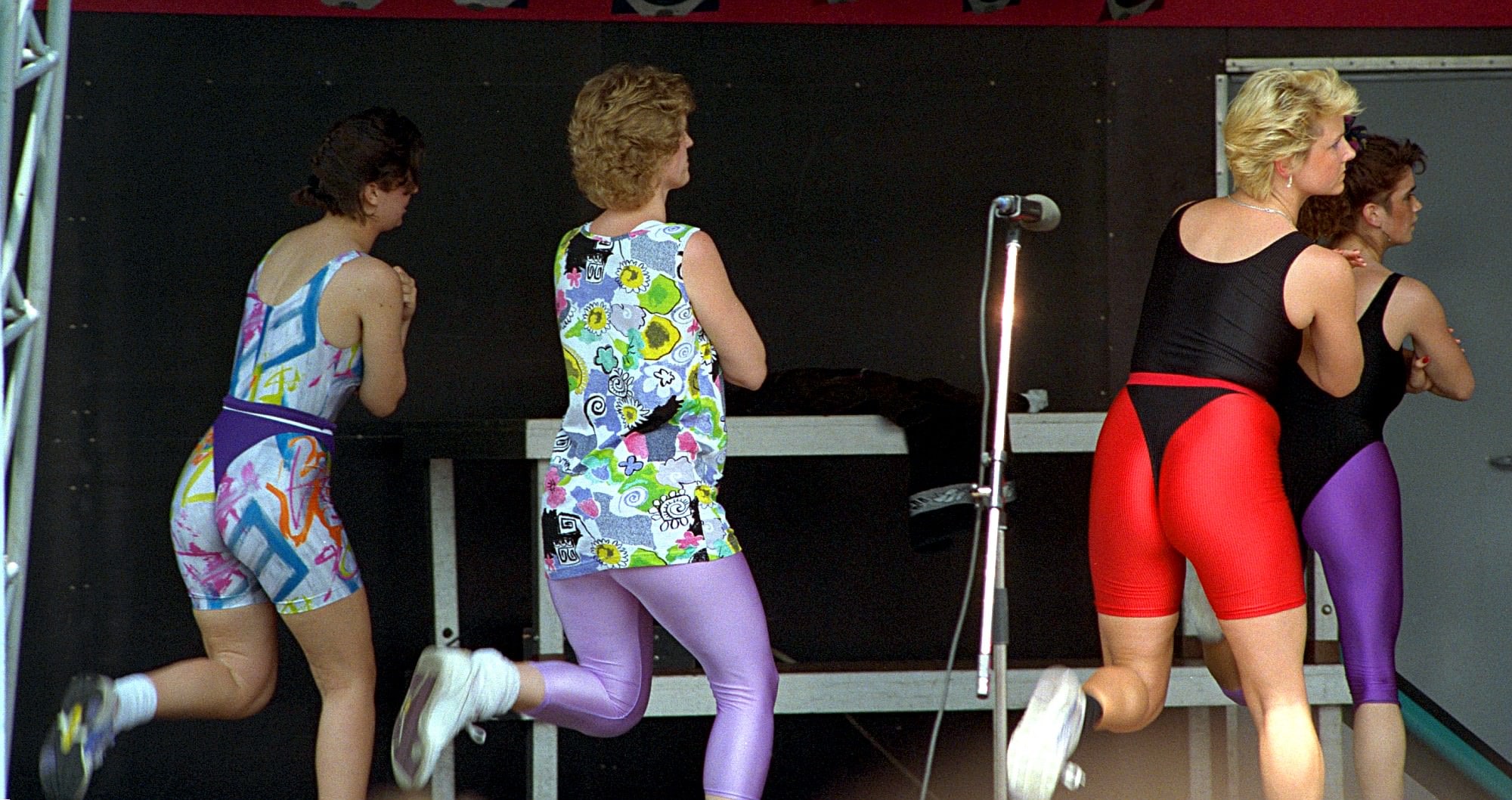
Image Credit: myself, CC-BY-SA-2.5
The language of liberation
There was a time when women were told to cover their bodies, conceal their sexuality and behave respectably. Their bodies were subject to rules imposed by religion, family and society.
Feminism challenged these restrictions. Women fought for bodily autonomy, sexual freedom and the right to determine their own lives. We told women they no longer had to hide their bodies. But somewhere along the way, showing them became a way of demonstrating just how free they were.
Showing more skin could signify confidence. Sexual display could be interpreted as empowerment. The woman who openly presented her sexuality could be celebrated as someone who owned her body and refused to be ashamed of it.
And so we arrived at a curious reversal. The old message was that a respectable woman covered herself. The new message can be that an empowered woman is comfortable showing herself. The contradiction is obvious. But underneath it lies a question we seem reluctant to ask: why is the female body a central measure of female freedom in the first place?
We haven’t stopped caring about how women are displayed; we’ve just changed what that display means to us. A habit that used to be criticized is now praised, but the deep-seated obsession with the female body never really went away. What if we’ve just rewritten the rules without ever unlearning the mindset that created them?

As seen on Alibaba
Why is the female body a central measure of female freedom in the first place?
The unconscious nature of self-commodification
The difficulty with conditioning is that it doesn’t necessarily feel like conditioning. We don’t experience every inherited idea as external. We experience many of them as our own preferences, desires and ambitions.
We grow up surrounded by images of what makes a woman attractive, desirable and successful. We observe which bodies receive attention, which women become famous, which appearances are rewarded and which forms of femininity are celebrated. We absorb these messages long before we have the language to examine them. Eventually, what we have learned to value can feel like what we naturally value.
That’s how something society expects of us starts to feel like something we genuinely want for ourselves. A woman can genuinely feel like showing her body is an act of empowerment, and that feeling is real. But it’s worth asking: did she define that freedom for herself, or did a culture obsessed with women’s looks define it for her?
This is the trick of treating ourselves like a product: we freely play by the rules without ever questioning who made them. We actively join in on our own objectification – and it actually feels like empowerment. Because it’s our choice, the social pressure behind it becomes almost invisible.
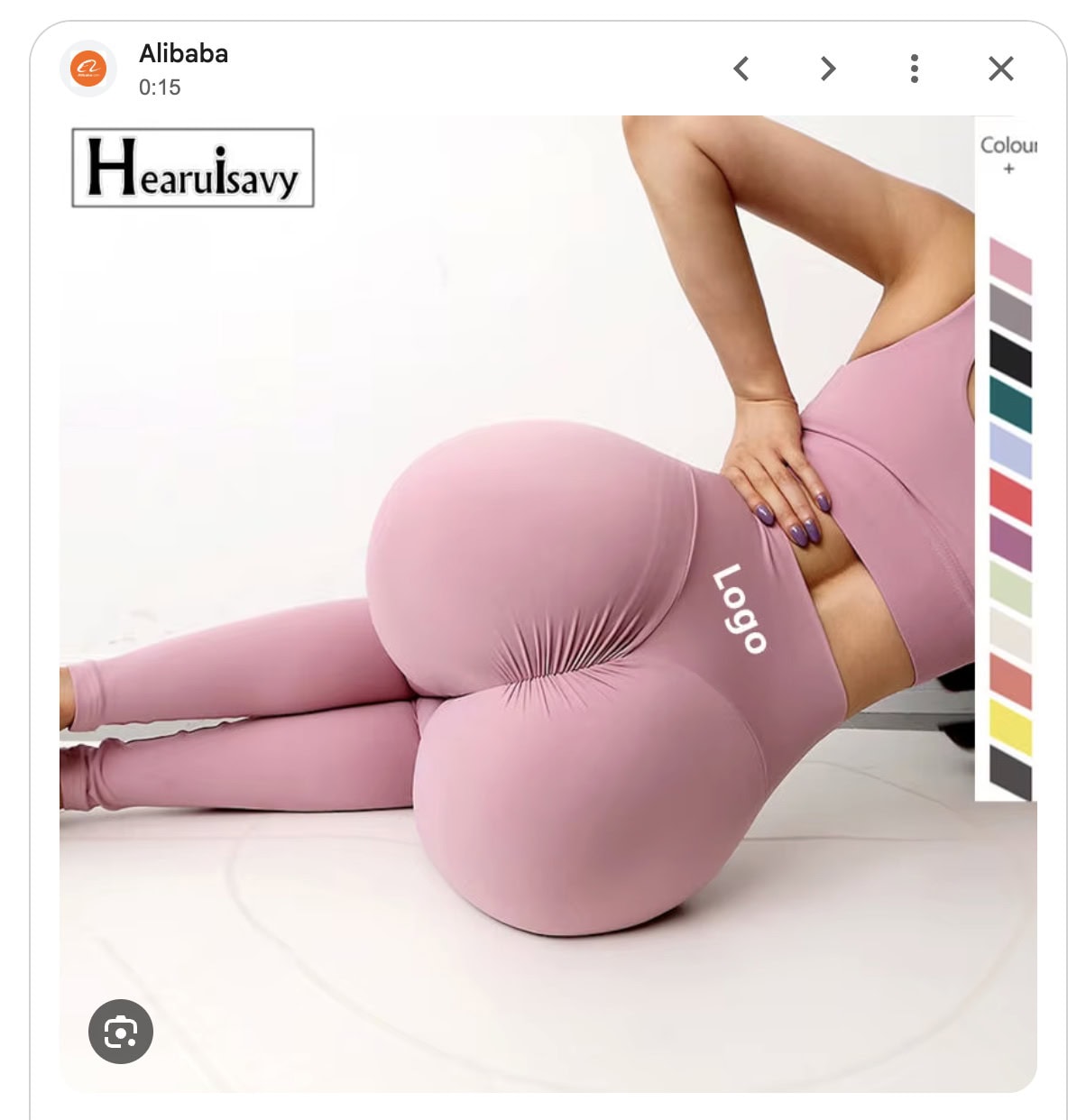
As seen on Alibaba
And what are the girls learning?
This is where the discussion becomes much bigger than Shane Gillis, gym attire or naked dresses.
Girls are watching.
They see which women are admired, which bodies are celebrated, which appearances attract attention and which forms of self-presentation are rewarded. They see women competing for visibility and are surrounded by images that connect femininity with beauty, youth, sexuality and desirability.
Nobody needs to sit a girl down and tell her that her body is a commodity. She learns it by watching the world around her. She learns that her appearance is an asset, that her desirability gives her value, that being seen is important and that sexual visibility can be a sign of power. She can absorb all of this while being told that she is free.
And when she grows up, she may pass these same ideas on to her own daughters, not as restrictions, but as possibilities, aspirations and expressions of confidence. This is how conditioning travels across generations. Not necessarily through explicit instructions, but through what we model, normalise, celebrate and leave unquestioned.
The next generation can break all the old rules and still end up driven by the very same mindset. Instead of hiding away, they’re invited to step into the spotlight. Shame gets traded in for self-promotion, and being seen sexually starts to feel like real strength. But the core question gets left behind: why was a woman’s body made into something to trade and value in the first place?
The language changes. The practices evolve. The conditioning survives.

Image Credit: Quintin Soloviev, CC-BY-4.0
The cycle we need to break
We tend to think that when a generation rejects the rules of the previous generation, it has freed itself from its conditioning. But rejecting an expectation isn’t the same as dismantling the belief behind it. We may no longer expect women to cover up or keep quiet, but we still tend to make female identity revolve entirely around sexuality and attractiveness.
We may believe we have broken with the past when we have merely found a new way to reproduce it.
And this is not exclusive to sexuality. It is how inherited patterns persist in families, relationships and societies. We change the outward behavior while leaving the underlying concepts untouched. We pass on what we have never learned to see.
The cycle is not broken simply because the next generation does things differently. It is broken when the next generation becomes conscious of what it has inherited and is no longer compelled to reproduce it.
That requires something more than changing rules, reversing judgments or celebrating new freedoms. It requires us to examine the concepts that have become so familiar that they no longer look like concepts at all.
We tend to think that when a generation rejects the rules of the previous generation, it has freed itself from its conditioning. But rejecting an expectation isn’t the same as dismantling the belief behind it.
What are we passing on?
This is not an argument for returning to a world in which women’s bodies are policed, their sexuality suppressed or their clothing used to determine their worth. Nor is it about blaming individual women for participating in the culture they have inherited.
It is about becoming conscious of that culture.
We have to learn the difference between having the freedom to make our own choices and blindly accepting the societal expectations that tell us what we should want. We have to ask ourselves: Why have we tied a woman’s worth so tightly to showing off her body? Why does being sexually desirable take up so much room in our definition of a successful woman? And why has competing for attention become so normal that we don’t even notice we’re playing the game?
We need to ask what this means for young girls who are still figuring out who they are. Because we don’t just teach kids with our words – we teach them by what we applaud, what we value, and the habits we never bother to question.
Shane Gillis may have talked about women in gyms. But the question it opens up reaches far beyond the skit itself.
What are we passing on to the next generation of girls and women — and what are we perpetuating without even realizing it?
Are women genuinely breaking free, or have we just learned to participate in our own objectification and call it progress? Unless we step back and look closely, we risk teaching the next generation the very habits we thought we had overcome.
You may also like

The Dark Truth Behind Celebrity Overdoses: Why Our Search For Blame Is Missing The Bigger Picture
Addiction is a devastating reality, and when loved ones like Matthew Perry’s stepfather, Keith…

Spiritual superiority is still superiority – John Allen Chau didn’t die for faith
John Allen Chau was the missionary who tried to convert the isolated Sentinelese tribe in 2018 and…

Part 1 — Louis C.K. and the Split Between High and Low
After years of what can only be described as cultural exile — touring outside the center of…
