
These Are Not Children’s Stories
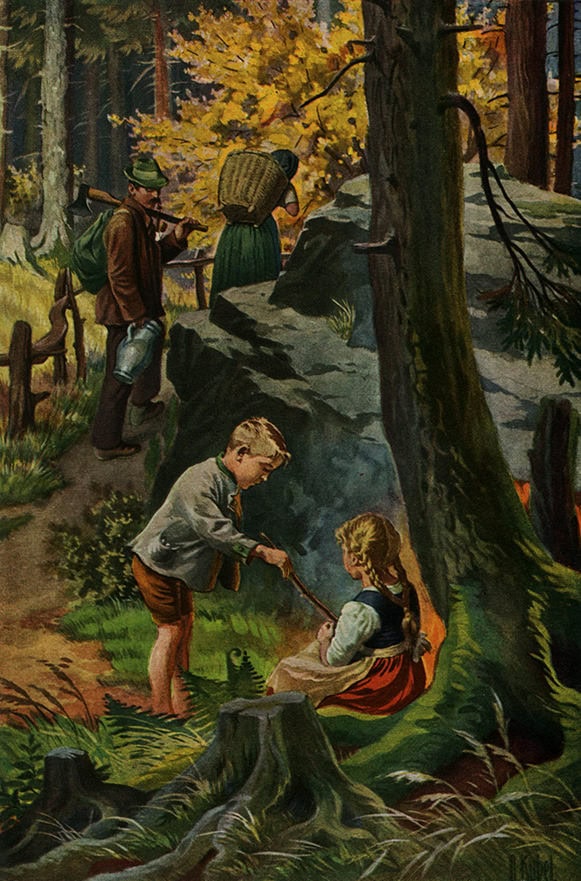
The first book my parents ever gave me was a fairy tale book. I loved it. Not because of the fairy tales. Because I loved reading. I would read anything.
But as a child, I remember feeling quiet disturbed by many of the stories: There was a wolf who wanted to devour a little girl. There was a girl who was forced into servitude by her own family. Threatened, abandoned, cursed, eaten, or left to die – the horrors inflicted on children in those tales were staggering. Yet, incredibly, this gruesome catalog of trauma was and is still categorized as children’s literature.
The horrors inflicted on children in those tales were staggering.
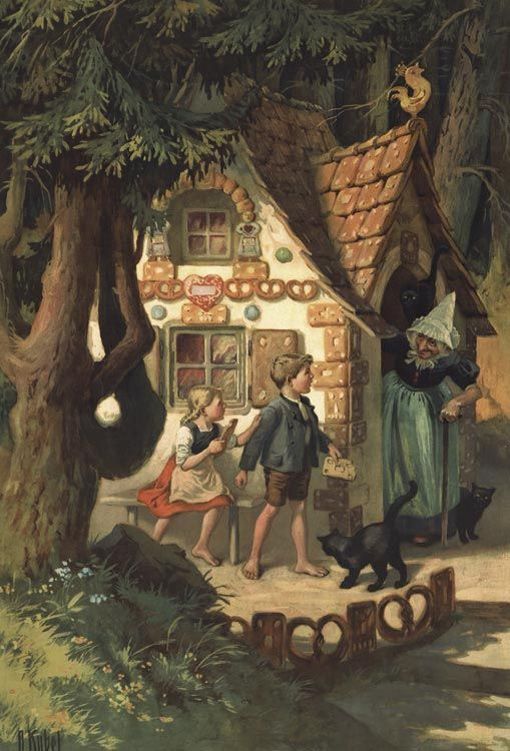
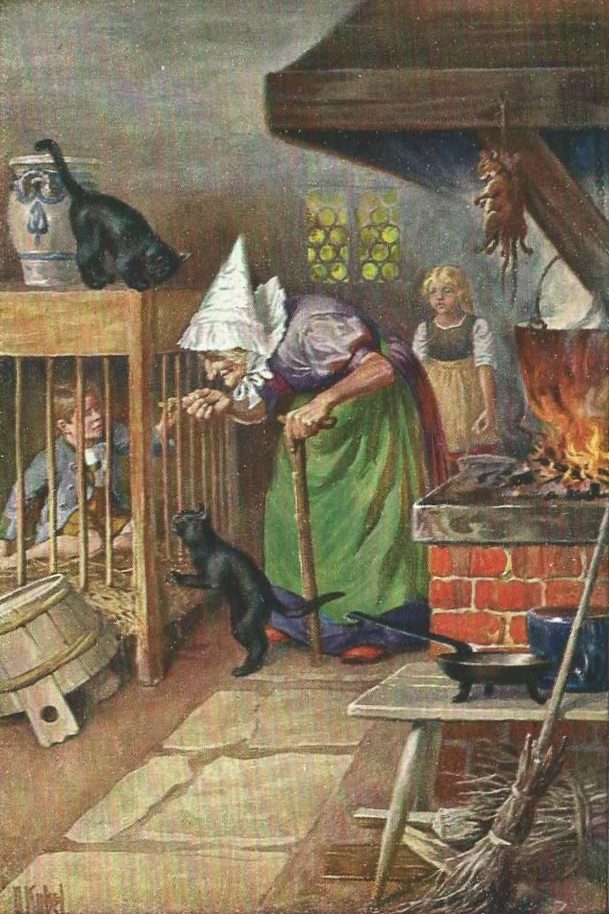
Take Hansel and Gretel. Two children are abandoned in a forest by their parents, imprisoned by a witch, and marked to be eaten. This is considered a children’s story.
Or The Little Match Girl. A neglected child freezes to death alone in the snow on New Year’s Eve. This is considered a children’s story.
Or Struwwelpeter. Children are mutilated, starved, or burned alive as punishment for misbehavior. This is considered a children’s story.
Children are mutilated, starved, or burned alive as punishment for misbehavior.
Or The Little Prince. People describe it as a beautiful story for children. Yet, what I encountered was a child carrying a profound, isolating sorrow and a desperate longing to leave it all behind. Every question they asked seemed haunted by death. To say it bluntly: the little prince was suicidal. I still remember watching a school play adaptation and feeling an intense sense of unease. It wasn’t the confusion of a child failing to grasp the plot; it was the chilling clarity of realizing that something under the surface was deeply twisted.
These stories were never meant for children at all. Children encounter these stories literally. Adults can encounter them symbolically.
That is an important difference. An adult can read Hansel and Gretel as a story about abandonment, survival, and the literally cutthroat aspects of human existence.
The Little Match Girl shifts from a sad tale to a devastating critique of a society that looks the other way.
The Little Prince deepens into a philosophical exploration of innocence, loneliness, and the search for meaning.
Children encounter these stories literally. Adults can encounter them symbolically.
But children do not necessarily read symbolism. Children often absorb experience directly. They do not extract the critique. They absorb the atmosphere. The feeling. The imagery. The emotional landscape.
And this raises a question.
Why do we keep handing stories filled with abandonment, starvation, death, violence, despair, punishment, and existential loneliness to children while insisting they are children’s stories?
A story can contain a child and still be speaking to adults.
They were never children’s stories in the first place. They were observations about human life. About society. About adults. About suffering. About greed. About the misuse of power. About the things people can’t say directly.
And perhaps somewhere along the way we confused the presence of a child protagonist with a child audience. Those are not the same thing.
A story can contain a child and still be speaking to adults. In fact, many of the greatest stories seem to do exactly that. The child becomes a mirror. A way of revealing something about the adult world that has lost its humanness. A way of exposing its corruptibility. Its ignorance. Its cruelty.
Which leaves me with another question.
Why do we inherit children a world already burdened by fear and then immediately begin teaching them its nightmares? What would happen if we created stories that did not merely prepare children for the wounds of the world, but strengthened their trust in their own capacity to meet it? What if the stories we gave children cultivated resilience without terror? What if they allowed us to plumb the depths without losing the light, offering a vision of the world built on absolute clarity rather than mistrust? The task is not to hide life’s darkness. But neither is it to impress it upon minds that are only just beginning to discover the world.
Children do not need to inherit all of our unresolved fears.
It is a bizarre cultural blind spot that narratives drenched in graphic violence, abhorrent child abuse, and existential dread are casually packaged as bedtime stories.
Children do not need to inherit all of our unresolved fears. They already have a life of their own waiting to unfold. Our task is not merely to pass on the world we inherited. Our task is to leave them something better.
You may also like
The Strange Upside-Downness of Fairy Tales
Something about fairy tales has always puzzled me. We place them in the children's section. We read…

The Christmas lie and the cost of performance
Every year, well-meaning – and I say this with a wink, because it is, after all, the pass that…
The Real Work of Parenting is About You
Most parenting today is built on the idea of educating children. Teaching them how to behave.…