
The Scapegoat and The Identified Patient
Every System Has Somewhere It Puts What It Cannot Hold

Image Credit: Unknown
Every family has an undercurrent of things it cannot hold in the open.
This isn’t about families that are broken or troubled. It happens in every family. We all carry more than we can fully process at once — more pain, more contradiction, more unspoken truth than can move through the family system without threatening something. Eventually, the weight becomes too much for the group to hold. The container overflows. The question isn’t whether that extra weight exists; it’s where we choose to put it when we can’t carry it anymore.
Usually, it ends up being carried by a person.
It forms when a system protects itself from its own reality instead of turning toward it — when the realities of being human — being wrong, limited, and capable of harm — feel more threatening than the cost of keeping them hidden.
The Weight of the Unspoken
In the heart of every family, there’s a divide between what is actually happening and what we allow to exist as shared reality. This isn’t a structural necessity; it’s a boundary we draw. It’s the line where our need to protect the family “image” overrides our ability to handle the truth. The divide is present across generations, across cultures and across families that consider themselves loving and families that do not.
The content varies: sometimes it’s anger — the kind that, if it were named out loud, would threaten the attachment holding everything together. Sometimes it is grief that was buried before it had a chance to be felt. Sometimes it is shame passed down like an old furniture no one remembers buying. Sometimes it is as simple as the need to be seen, or told the truth, or held — needs the family never learned how to meet.
This isn’t just “how it is.” It is a trade-off.
The difference between families isn’t whether this divide exists, but how much truth they can handle before the story starts to feel too heavy. We all have an image of our family — a version of who we are and what we value. That image isn’t necessarily false — but it is partial. It keeps what the system can bear and quietly excludes what it cannot.
Every family has a limit: This much reality we can hold, and no more.
The divide is not inevitable. It forms when a system protects itself from its own reality instead of turning toward it — when the realities of being human — being wrong, limited, and capable of harm — feel more threatening than the cost of keeping them hidden.
If the tolerance were higher — if the system could meet its own failings with something like compassion — the excess would have somewhere to go. It could move toward repair. It could be distributed, shared, held together. But when a family refuses to let the image crack, and when the truth finally exceeds what the family can carry, the energy doesn’t just evaporate. It doesn’t go into healing. It gets displaced.
It simply finds a person to carry it.
The inversion happens in an instant, instinctively: Something is not okay becomes You are not okay.
The Precise Inversion
It usually starts with something small. Someone — often a child, often the most perceptive one in the room — points at a crack in the foundation.
The way they point might be clumsy. It might come out as anger, as withdrawal, as behavior that is genuinely hard to be around. But underneath it, the message is valid and essential. They are naming a reality that the rest of the family has silently agreed to ignore.
In a family with enough tolerance for truth, this lands as information. It might be uncomfortable or spark a difficult conversation, but the person who spoke is still seen as a person. Their message is heard, even if it’s hard to swallow.
But in a family that prioritizes its image over its honesty, that same observation doesn’t land as information. It lands as a threat. The family doesn’t look at what was pointed out; they look at the finger pointing it.
The inversion happens in an instant, instinctively: Something is not okay becomes You are not okay.
The original message vanishes. The person who noticed it becomes the problem itself. And in that one, sharp turn, the family finds exactly what it was looking for: a place to put the weight it wasn’t undefended enough to carry together.

Image Credit: Unknown
Managed Stability
This is one of the oldest instincts we have.
The idea of the scapegoat is not a metaphor that psychology borrowed. It is ancient — likely as old as the first time we lived in groups. When a group feels a weight it can’t handle, it gathers up all that tension, loads it onto one person, and pushes them away. The system stabilizes in the absence, cleansed by the exit and restored to an image of itself that feels safe to look at again.
The logic is watertight. The problem isn’t examined or distributed; it is simply located. It is placed entirely on one individual, and then that individual is removed.
And it works. That is the uncomfortable truth about it. The group survives. The tension dissolves. From the inside, the expulsion feels justified — even “right” —because by the time that person is pushed out, they’ve been carrying the weight so long that they’ve developed real wounds. They’ve become difficult, reactive, or broken. To everyone else, it looks like the weight belongs to them, rather than realizing they were simply the ones holding it.
What we are finally starting to understand is that the dysfunction was never theirs to begin with. It was placed there. Pushing that person away didn’t actually solve the problem; it just removed the person who was carrying the problem for everyone else.
This realization doesn’t stop the cycle from happening, but it changes everything about how we see it.
The identified patient is the scapegoat that the modern family keeps within its system.
In Exile
This is where the identified patient enters.
The identified patient is the scapegoat that the modern family keeps within its system. The mechanics are exactly the same: the same heavy weight, the same displacement of truth, and the same unloading of what the family cannot bear to face. But instead of being pushed out, the person is contained. They aren’t driven away; they are managed. They are sent to therapy, to specialists, or to rehab — places where professionals will find a clinical name for what is “wrong” with them.
This concept grew out of family therapy in the middle of the last century when psychologists started noticing a pattern: the person labeled as “the problem” was rarely where the problem actually started. The symptoms belonged to the whole family; the individual was just the place where those symptoms landed. They were identifying the scapegoat who is managed instead of driven out.
The person stays inside the family system, and often inside a cycle of “care,” but they remain outside the family’s story. They are held just close enough to keep serving their purpose, while they are not truly included. They become a project to be fixed, managed, or worried over. They are medicated and supported, brought home and worried over again. But none of this touches the root of the issue — because the issue isn’t living inside that person.
The Cost of Seeing Clearly
The person who ends up in this role isn’t the weakest link in the family. Usually, they are the most porous, the most perceptive. The one who registers the cracks in the foundation most acutely and who — long before they have the words for it — are the ones pointing toward them.
This is the painful irony that sits at the center of all of this. Most likely to become the identified patient or the scapegoat is often the one most awake to what is actually happening. They are not inventing the dysfunction, and they are not imagining the tension. They are simply reacting to a reality that the rest of the family has decided shouldn’t be real.
But when that pointing goes ignored, it doesn’t stop — it just gets louder. It becomes more desperate and more charged, making it easy for the family to dismiss it as the behavior of someone who is just “difficult.” Their accuracy is turned into an indictment; their sensitivity is turned into a diagnosis.
What started as a child bravely saying, Something is not okay here, ends, years later, as an adult who has been told in a thousand different ways that they are the thing that isn’t right. The very honesty that started it all eventually becomes the evidence used against them.
This is why a family will often inadvertently save the role even when they truly believe they are trying to save the person.
The Load-Bearing Truth
Once this role is established — whether we call it “the problem child” — the scapegoat or the identified patient — the entire family begins to build itself around it. What started as an escape valve becomes load-bearing. If you were to suddenly remove that person from the equation, things don’t simply improve; they destabilize, at least temporarily, in ways the system experiences as dangerous. This is why a family will often inadvertently save the role even when they truly believe they are trying to save the person.
The role performs the heavy lifting for the entire system.
As long as the family’s pain has a specific home, no one else has to examine what the scapegoat or identified patient carries. The family image remains protected: We are loving, we are stable, we did everything we could. The friction between parents, the resentment between siblings, and the ghosts of the family’s history can all be redirected toward the one who is already “the problem.”
The pressure finds an exit, sparing everyone the discomfort of identifying where it truly began. Relationships that might not survive an honest conversation can survive this way. It gives everyone a solid place to stand: if one person is the “unstable” one, the rest get to be “stable.” If one person is the “failure,” the rest can be “successful.” The entire role system depends on that contrast.
This isn’t malice. It is rarely even conscious. It is simply a system doing what systems do — holding the only coherence it has ever known.
But the cost is precise. And it is paid, in full, by one person.
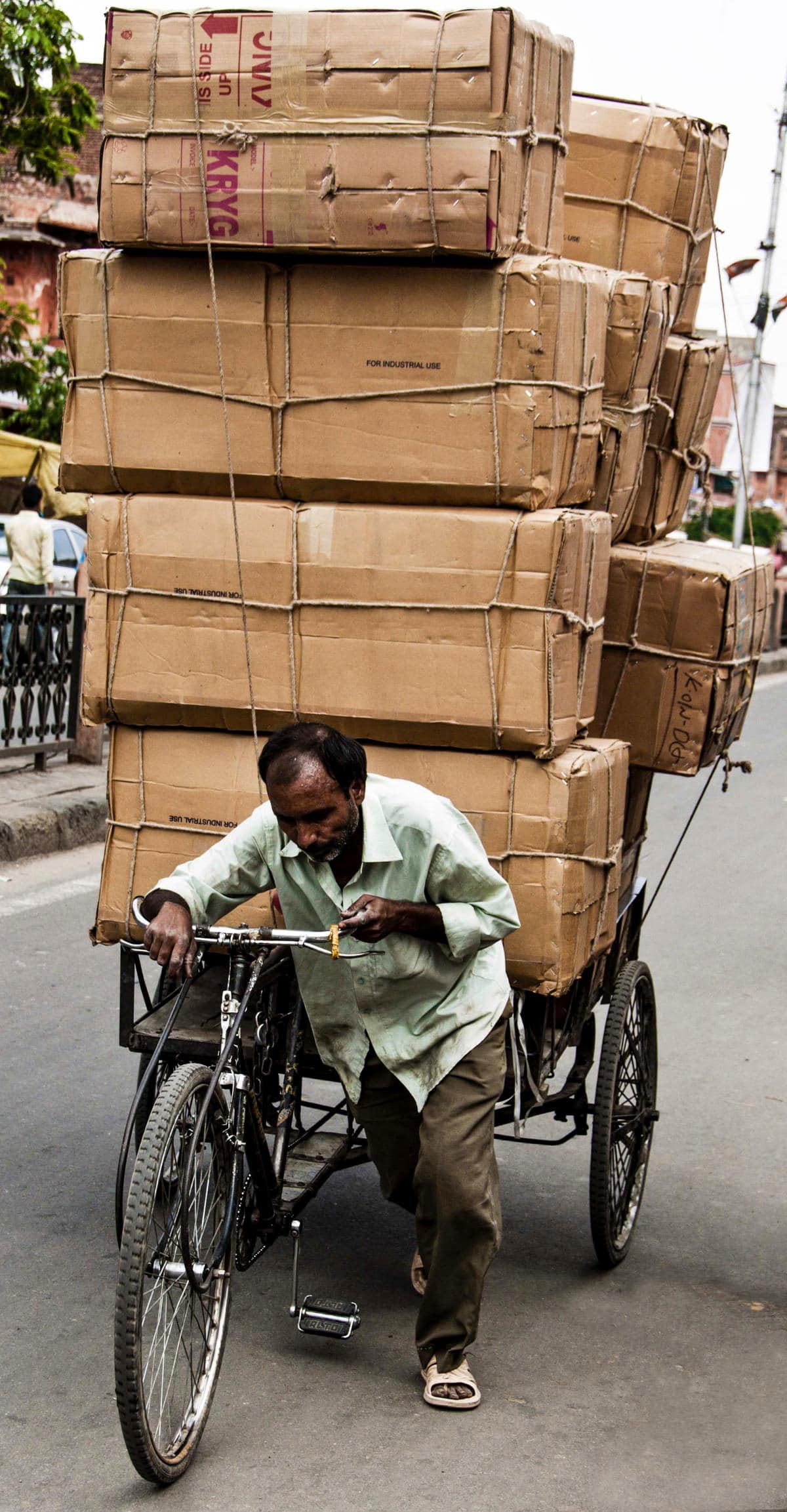
Image Credit: Unknown
The Gravity of the Defended
What makes this structure so durable is how fiercely it resists being changed.
When the “identified patient” starts to recover — not just surviving, but truly finding their footing — the family system doesn’t celebrate. It destabilizes. Quietly, and without anyone even realizing it, the group begins to move to restore the balance it has lost.
The sabotage doesn’t look like sabotage. It looks like concern. It wears the mask of care, or even love.
In practice, the ‘tells’ of this sabotage are consistent: It looks like only noticing the person when they stumble. It looks like dismissing real growth as a performance — belittling progress with a ‘wait and see’ attitude. It is the tactical withdrawal of support at the exact moment it matters most. It is the way the family uses the past to haunt the present. It looks like turning a healthy boundary into a reason for guilt. It is a slow, steady pressure — small enough to be denied — until the person eventually folds back into the shape the system knows how to hold.
And if that fails — if the person holds their ground — the system may simply reassign the role. It looks for a new carrier. Because the function is still needed, even if the original person refuses to serve it anymore.
Ultimately, the system isn’t attached to the person. It is attached to the role they played.
The Shared Burden
This is the inversion that keeps the whole structure standing.
The identified patient isn’t actually the most disturbed person in the family. More often, they are simply the one through whom the family’s hidden pain becomes impossible to ignore. They aren’t the source of the dysfunction; they are its most visible evidence. They are the living proof of the family’s inability to face its own reality — the place where the accumulated cost of everyone’s secrets shows up in a single human life, a single body, and the weight of a burden that was never theirs to carry alone.
The scapegoat and the identified patient are the same figure seen through different degrees of awareness. The only difference is how much the family, the group is willing to see. One is driven out; the other is kept within the system. Both are loaded with what the group cannot face in itself. Both are forced to live out, in their actual daily existence, a struggle that belongs to everyone.
The central truth is this: what belongs to everyone cannot be healed in just one person.
A family will try. They will treat, manage, and rehabilitate that one individual — sometimes for decades — with a mix of genuine love and genuine exhaustion. But the structure of the family remains exactly the same. It stays frozen because the medicine is being aimed at the symptom, while the source of the wound is left untouched.
At scale, it becomes systemic injustice, long-term marginalization, and – at the deepest level of this failure – collective violation.
Where the World Puts Its Pain
This mechanism doesn’t stop at the front door of the family home. It scales.
In a family, the weight lands on a single person. In larger systems — communities, institutions, and entire societies — it lands on groups, narratives, and categories of people. The movement is identical: whatever we cannot hold collectively, we locate somewhere else. Only the container changes. It simply gets bigger, more abstract, and more powerful in what it can justify.
The container is no longer just relationships. It is shared identity. It is the dominant story of who we are and what we stand for. Norms and institutions define what we can include in our collective self-image and what must be kept outside of it.
At this scale, we don’t just see a single child carrying the weight of unprocessed pain. We see entire categories of people — minorities, outsiders, those labeled as “deviant,” “dangerous,” or “lazy.” They absorb what the society cannot face in itself. The function remains the same: This is not us; they are the problem. We also see the societal equivalent of the “identified patient”: the vulnerable population, the “at-risk” community or the “broken” neighborhood. These groups are contained and managed, becoming sites of intervention that never quite address the conditions that created the struggle in the first place. The message is familiar: The problem is theirs, but we are helping.
The same inversion happens here. A clear message — something is not okay here — is reframed as what is wrong with them. Over decades, this is reinforced through media framing, political language, and cultural narratives until it feels like the natural order of things. It becomes normalized.
What large systems gain from this is structurally identical to what families gain. Problems are treated as local rather than systemic, allowing collective responsibility to dissolve. The group identity stays protected — we are good, advanced, and ethical — while our contradictions live elsewhere. Fear and anger are directed toward a target, and in that directing, the group finds a sense of unity. People bond over blaming, over “fixing,” and over opposing. The displacement doesn’t just manage tension; it creates a sense of community.
The crucial difference at scale is distance. In a family, you usually stay in a relationship with the person you’ve displaced. That proximity creates friction — moments where their humanity breaks through the role and the cost becomes visible. At scale, that friction disappears. You don’t have to look into the eyes of the group being scapegoated. Empathy drops as abstraction rises. Without the check of proximity, the displacement can go further, hold longer and justify far more.
In a family, the cost is concentrated in one life. At scale, it becomes systemic injustice, long-term marginalization, and – at the deepest level of this failure – collective violation. Because once this displacement is woven into our laws, embedded in institutions and narrated as common sense, it no longer feels like displacement.
It simply feels like reality.

Image Credit: Clive Limpkin
The Shared Weight of a Lie
Whether we are talking about a small family or an entire civilization, the architecture is the same.
When a truth is too heavy or too painful to be held by the group, it gets displaced. It travels until it finds a home in a person or a category of people. Once it lands, we begin to treat that person — or that group — as the actual source of what we placed in them.
We call this human. We say: Of course this happens, we are only human. But that is precisely the self-forgiveness the system uses to avoid looking at itself. It uses humanity as an excuse rather than as the standard.
Because what is truly human — what is perhaps the most difficult and most distinctly human capacity there is — is the ability to turn toward what is painful in ourselves. To sit with our own imperfection, our failings, our shame, without needing to exile them into someone else. Animals cannot do this. Only we can choose to look.
But when the image must be protected at all costs, the excess travels. And the displacement that follows is not inevitable. It is what happens instead of the harder thing.
A shift in perspective is possible, though it becomes exponentially harder as the system grows. It is the shift from saying The problem is them to saying The problem is ours — in how we have organized ourselves, and in what we cannot afford to see about ourselves.
Most systems don’t make that turn easily. The benefits of blaming someone else are too real, and the structures that keep the blame in place are incredibly strong. Distance — whether it’s the emotional walls within a family or the layer of abstraction between those who make the rules and those who feel their weight — helps the system maintain its polished, outward mask while the cost is paid elsewhere.
But that lie is a structure built on the sacrifice of actual lives. Always, and precisely.
The problem is not in the person. The problem is not in the group. That is simply where the problem was put.
Until a system — at any scale — finds the vulnerability to say This is the lie we have all participated in creating, the old structure will hold. The public image will remain polished. And someone, somewhere, will be forced to suffer and carry what actually belongs to everyone.
In families, the role passes to the next generation like a heavy inheritance no one chose and no one named. In societies, the weight simply finds a new target in the next crisis.
The mechanism does not tire. It does not forget. It simply waits — for the next person, or the next group, to carry what the rest of us refuse to look at in ourselves.
You may also like
When the Promise of Self-Worth Stops Working — Revealing the Invisible System
Every system — family, school, workplace, culture, spiritual community — runs on the same…

Some Are Shamed for Their Mistakes. Others Are Applauded Because Those Mistakes Sell.
Why don’t companies have their employees’ backs? Even if they get caught on a kiss cam, - clearly…

The Reiner Tragedy — How Families Displace What They Cannot Face
At Nick Reiner's arraignment, one family member showed up. Not to defend him. Not to excuse what he…